
The Way It Was for Saint Barbara
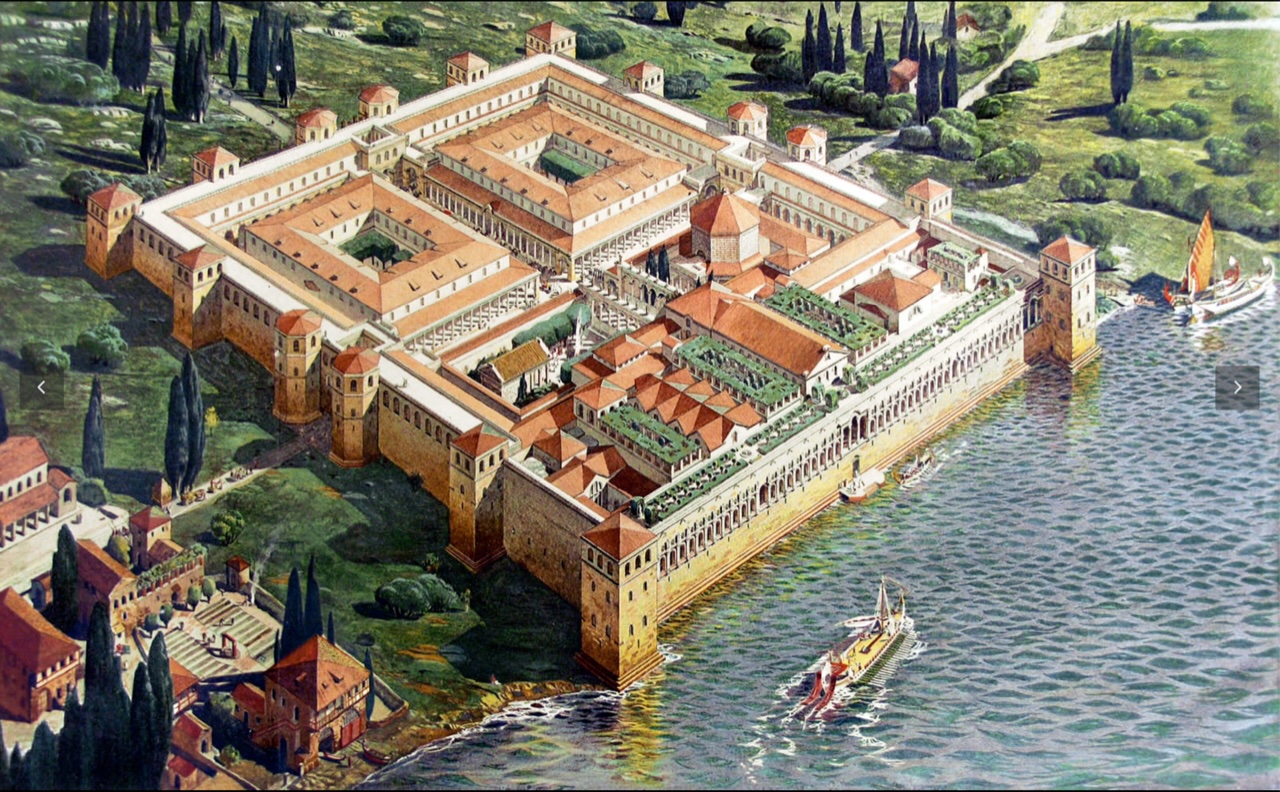
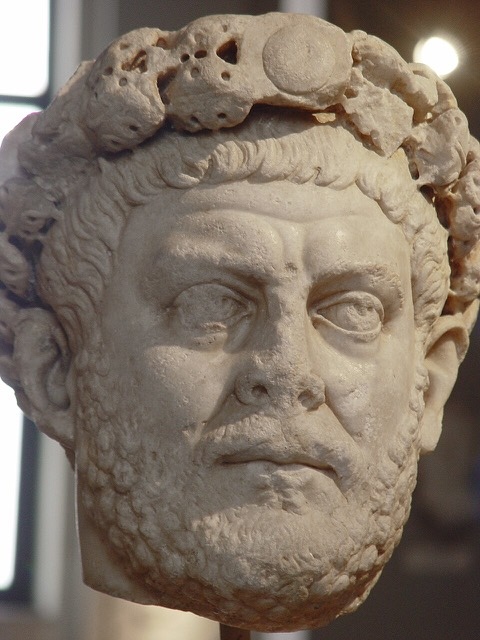
This month’s “Way It Was” takes us back to the 3rd century AD when Diocletian Augustus was the Eastern Roman emperor and Maximianus was his co-emperor. They forced people to participate in the Imperial Cult, which considered members of the ruling family to be among the pantheon of the divine who must be obeyed and worshiped. Not participating in the Cult was an act of treason, punishable by death.
In AD 303 Diocletian, who had a history of subjugating Christians, went on a rampage of terror against them. He ordered their homes destroyed and their sacred books burned. Christians were arrested, tortured, mutilated, burned and starved, and some were condemned to gladiatorial contests to amuse the Byzantine citizens.
Worn out by his strenuous divine duties, Diocletian abdicated and built himself a retirement home in AD 305. The Great Persecution ended in AD 311 with the Edict of Toleration, ironically put out by Galerius, who had been a fierce supporter of the persecution, but the tide had changed. Constantine, who by this time was emperor of the Western empire (and later the whole empire) was himself a professed Christian, but didn’t officially convert until in AD 337, the year he died.
The Life of Barbara
During this time, Barbara was born near Byzantium, now Istanbul (not Constantinople). Most sources say she was probably born in Nicomedia, a town on the eastern side of the Bosphorus. The Greek Orthodox church says she was born in Heliopolis in Egypt or Lebanon. The places of her birth seem to be many and varied. The details of her life’s story also differ tremendously, some versions taking unbelievable flights of fancy. One of the many simpler versions follows.
Barbara’s father was Dioscorus, a rich merchant who held an important position in the Roman government. His daughter Barbara was beautiful beyond compare, but that headstrong girl just wouldn’t stop feeding and helping the poor, something the authorities frowned upon. Not only that, but her beauty drew a host of undesirable suitors. Since Dioscorus was often away, he imprisoned her in a tower and saw to her education by hiring tutors. One of her tutors was Origen of Alexandria, whose teachings convinced Barbara to accept Christianity. (Another version is “a take” on the Rapunzel fairytale in which Barbara lets down her long unlikely-blond locks to which fellow Christians attached the writings of Origen.) In any case, she had a third window cut into her tower to let in the light of the Holy Trinity.
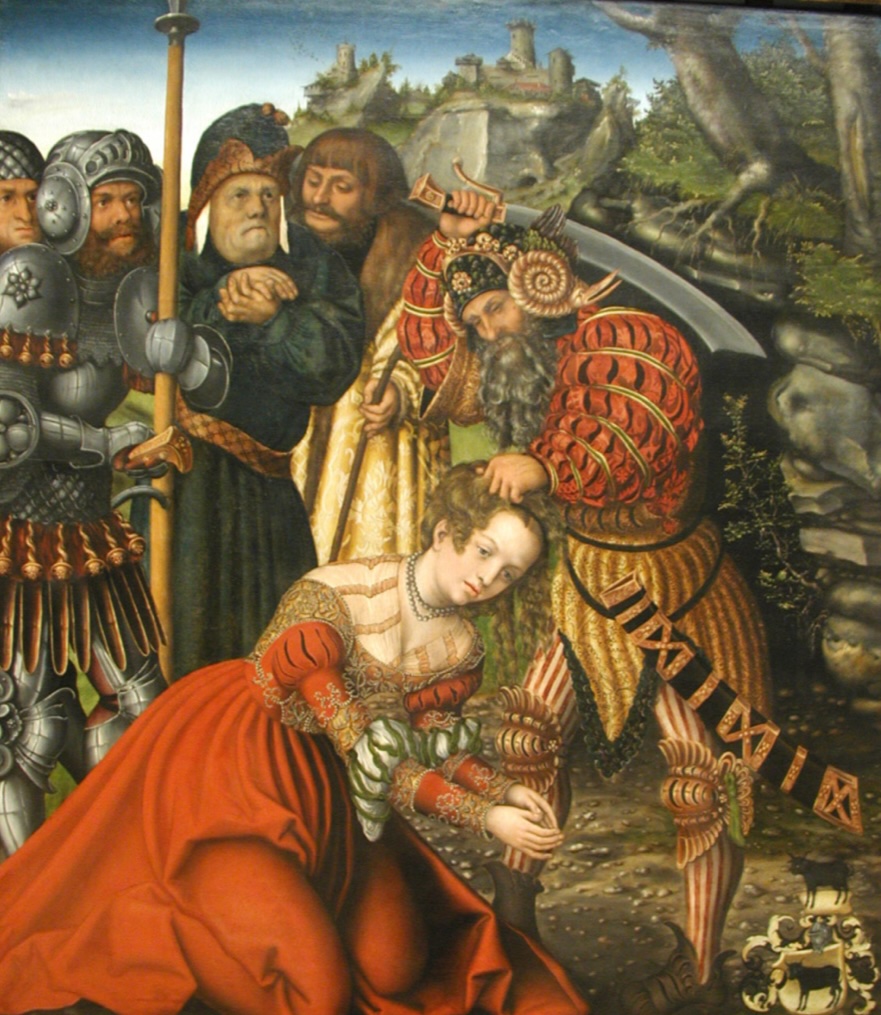
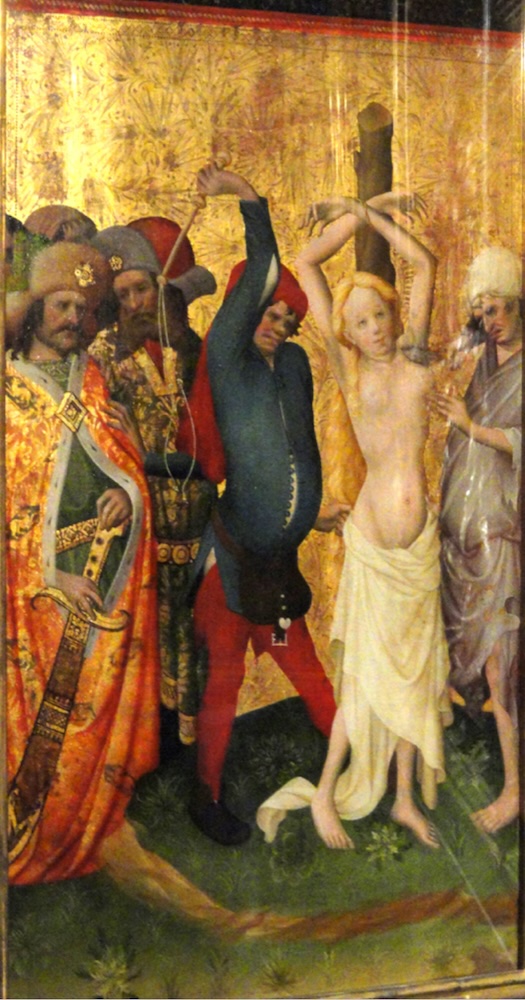
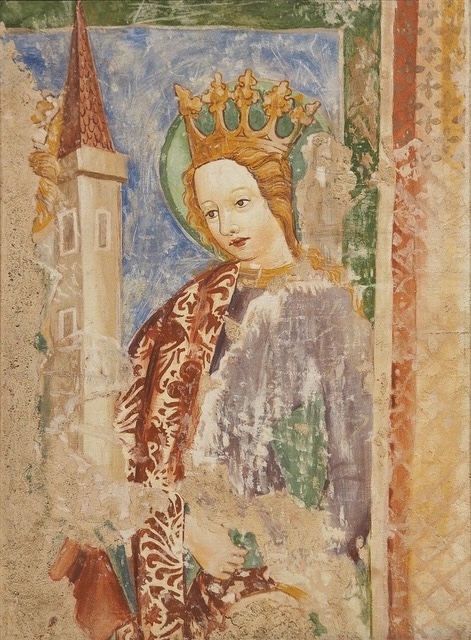
So, back to the story. When Barbara’s father returns one day from a long journey, he asks her why she has cut a third window into the tower. Barbara announces her conversion to Christianity and her belief in the Holy Trinity. Her father is infuriated and aghast. She has imperiled the entire family. He insists she recant. She refuses. He takes her before the magistrates who threaten and then torture her. And then the miracles begin. They approach her with burning torches and before they reach her, they are snuffed out. They beat her and the next day all her wounds are healed. Eventually, they strip her and cut off her breasts. Still, she won’t recant.
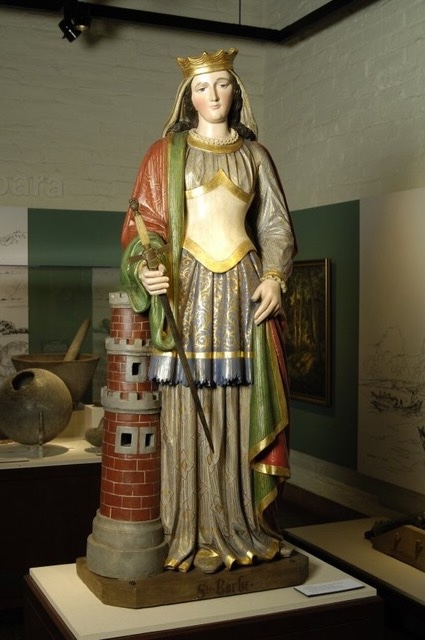
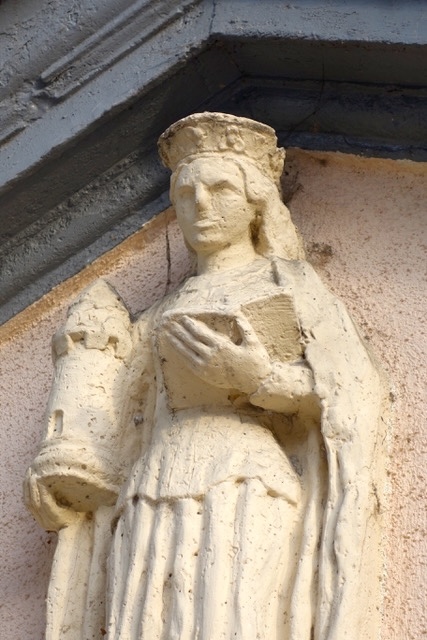
Finally, they tell her father to behead her. He agrees. The beheading does the trick and Barbara dies. On his way home, a tremendous storm arises with ferocious lightning and thunder. Her father gets his just desserts and is struck by lightning and killed.
It is said that Barbara’s remains were preserved in Constantinople, the new name for Byzantium. In the 1100s, her relics were brought to Kyiv in today’s Ukraine, and in 2012 the Ukrainian Orthodox Church transferred a small part of St. Barbara’s relics to St. Andrew Ukrainian Orthodox Cathedral in Illinois. Another source, however, says her remains were sent to Venice and later to the island of Burano. Still others have her remains in Egypt. So, the question becomes, where in the world is Barbara?
Barbara as Patron Saint and Holy Helper
According to the Vatican website, Mondo Cattolico, the story of Saint Barbara serves as a powerful reminder of the significance of faith and determination. Her unwavering courage in the face of relentless adversity and her resolute Christian faith are considered a model for confronting life’s harshest challenges with hope and an indomitable spirit. Barbara, like other Christian martyrs, remained true to her convictions despite the cost.
Barbara is also one of the 14 saints who are designated as Holy Helpers by the Roman Catholic Church. These are saints that can intercede with God to assist people. With the spread of Christianity, Barbara came to be revered the world over. Saint Barbara is invoked to prevent lightning and fire and sudden death. She is therefore the patron saint of anyone working with fire, which includes artillery and explosives. In some countries, miners put a statue of her at the entrance to the shafts. Sailors refer to the powder magazine on a ship as the saintbarbara. She is also considered the patron saint of mathematicians (go figure!) and architects (I guess one can build a case for that).
The Saint in Santa Barbara
Sixty years after Juan Rodriquez Cabrillo came sailing along the yet-to-be-named Santa Barbara Channel and managed to die after a fall on one of the Channel Islands, Sebastián Vizcaino cruised by. On December 3, 1602, a terrific storm blew up, with lightning and thunder and surging seas. The crew battled the storm all night and prayed for deliverance. By morning the seas were calm and still as the sun rose over the tranquil waters. It was the feast day of Santa Barbara and Vizcaino named the channel in honor of her aid in their survival of the storm.
The Portola Expedition of exploration and settlement reached Santa Barbara in 1769 and by 1782, a presidio was built and named after the Channel. In 1786, a mission for Santa Barbara was established and the pueblo that grew up around it became known as Santa Barbara as well.
Consequently, images of the blessed saint proliferated in her namesake town. The late Erin Graffy de Garcia, in her book chronicling the presence of the saint in town, lists at least 30 places where her image can be seen. Images of St. Barbara, however, can be found throughout the world.
Saint Barbara Throughout the American West
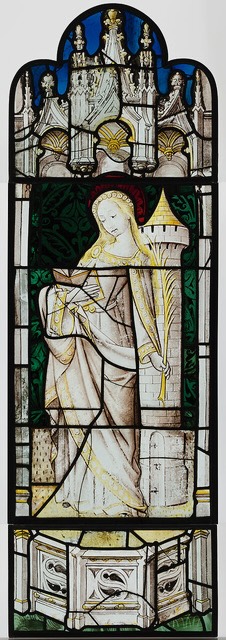
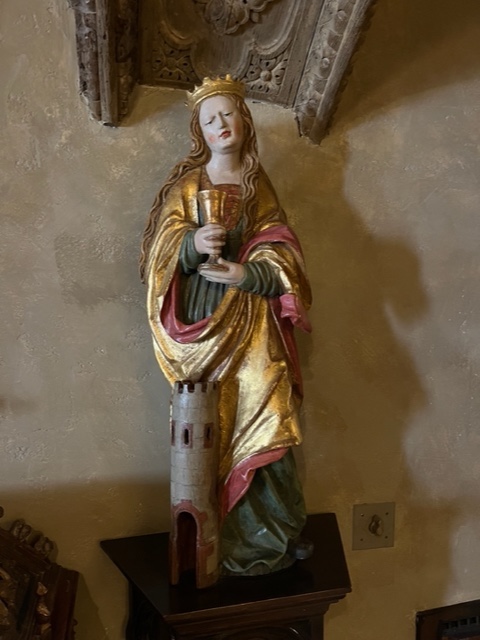
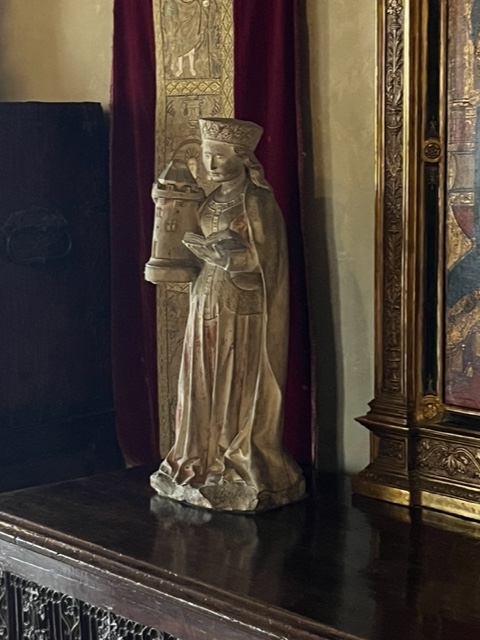
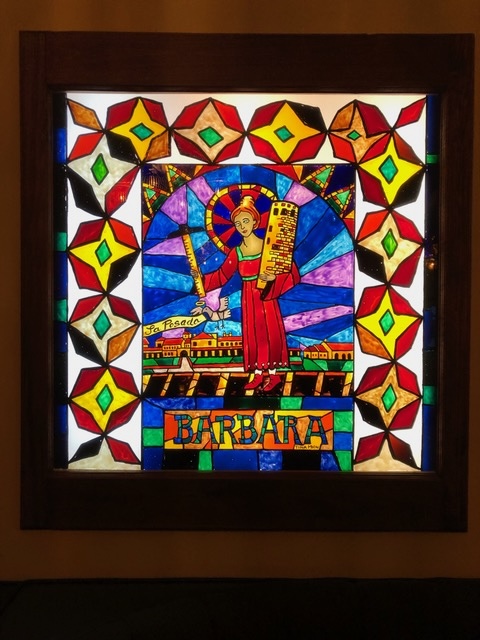
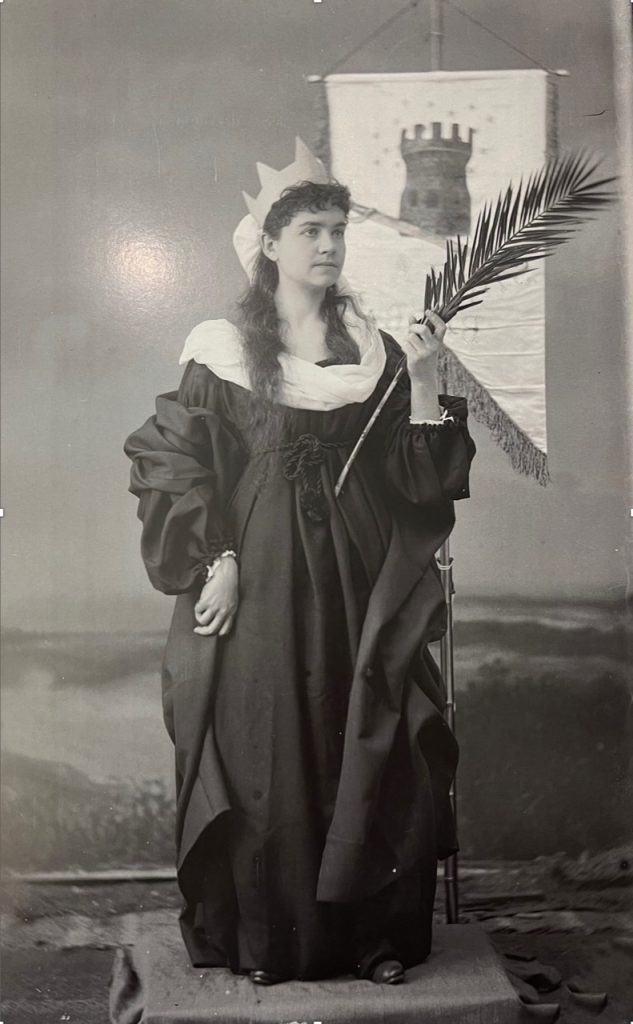
The earliest surviving images of St. Barbara are found in Byzantine frescoes. Images of her throughout the centuries are recognizable by her attributes. The most recognizable is the three-windowed tower. The others are a palm branch, a symbol of her martyrdom; lightning bolts; the chalice with the host for communion (she is the only female saint to be portrayed with it); the sword with which she was killed; and, like many saints, a book that represents the teachings of Christ.
Sainte-Barbe in Bretagne
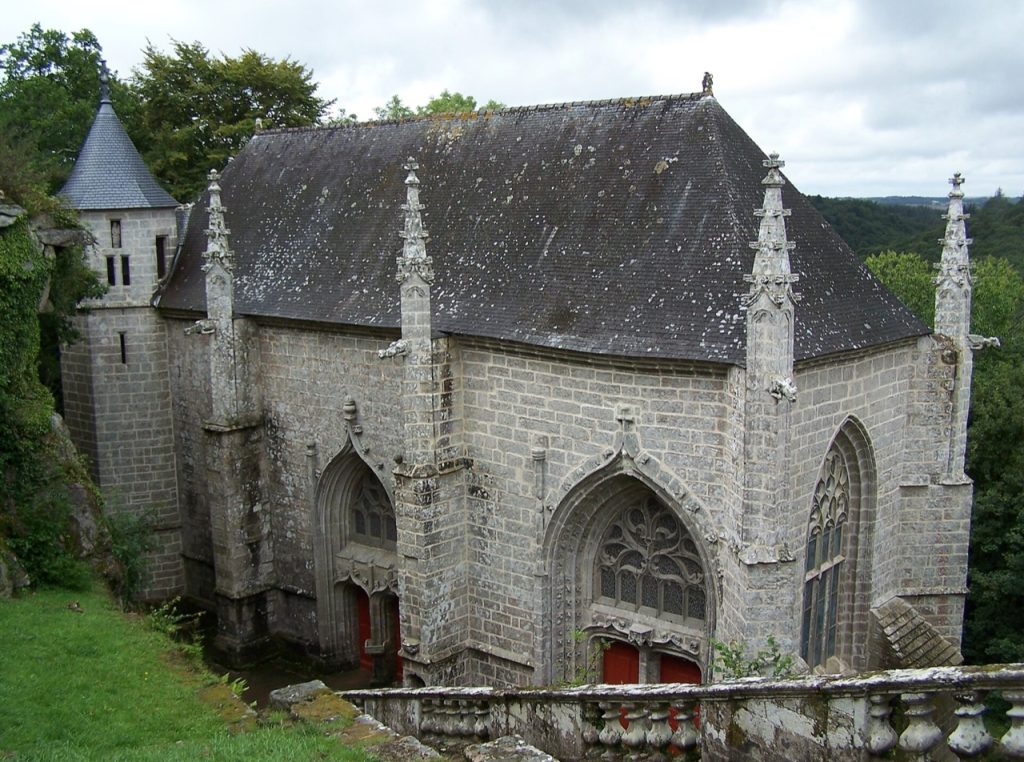
In Europe, Saint Barbara appears in thousands of locations. In Brittany, there is a lovely, mystical chapel dedicated to her in Le Faouët. The story goes that in the 15th century, Lord Jean de Toulbodou of Locmalo was out hunting along the river Ellè when a violent thunderstorm broke out. He was terrified that he would be struck by lightning or crushed by the boulders raining down on him from the escarpment above. He called upon St. Barbara to save him and promised to build a chapel to her if he survived. In 1489, he did so.
(author photo)
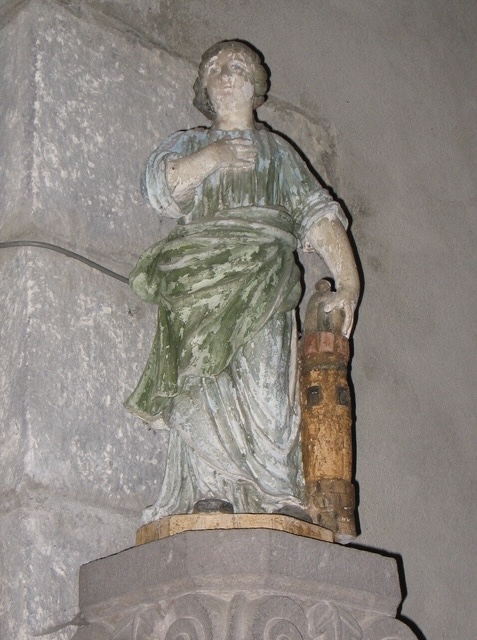
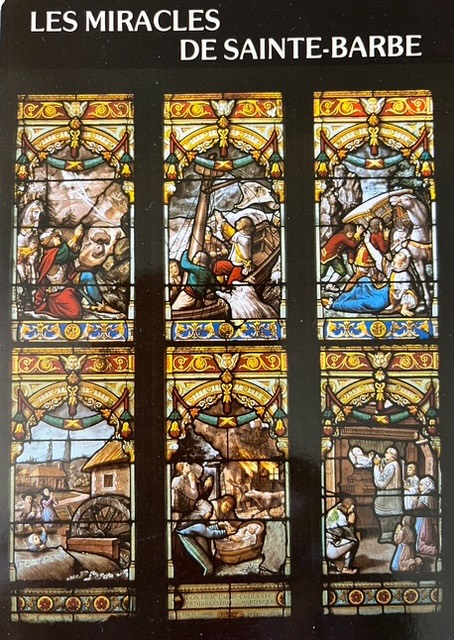
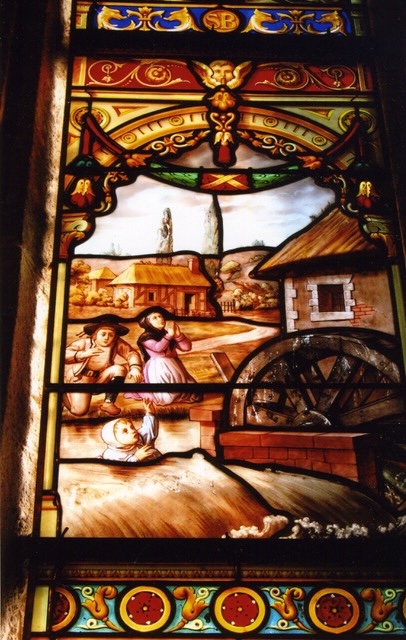
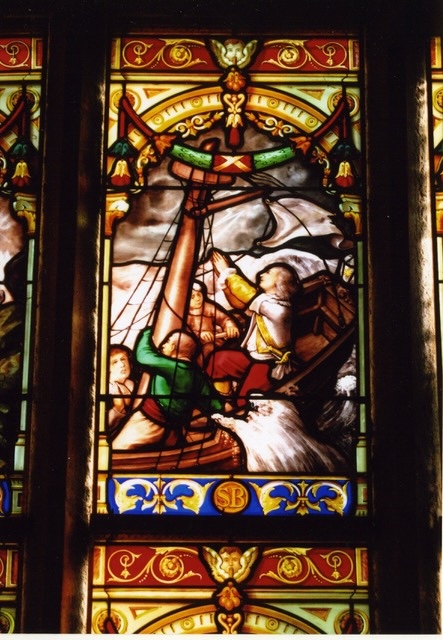
La Chapelle de Sainte-Barbe sits on a ledge of the cliff that had rained boulders down on Lord Toulbodou. Beautiful stained-glass windows tell his story and reveal the many situations for which the faithful call upon St. Barbara. In the chapel hang ancient model ships, for she is the patron saint of mariners, and Brittany considers itself a maritime nation. Attached to one corner of the chapel is a stone tower, showing Barbara in one of the three windows. The curious and the faithful come from afar each year to participate in one of the famous Breton pardons, which is held at the chapel.
Saint Barbara and Fiesta
This year, Old Spanish Days Fiesta celebrates the 100th year of participation in the personification of Saint Barbara in Fiesta. The Santa Barbara Historical Museum’s Fiesta exhibit for 2026 honors that tradition with an exhibition that opened on July 23. The very first personification of St. Barbara, however, was Delfina de la Guerra, who performed a tableau vivant of Palma Vecchio’s 1525 painting for the 1890 Trade Fair in Santa Barbara.
In 1926, the Reina del Mar Chapter of the Native Daughters of the Golden West, selected Kate Ord Nelson, a descendent of early California settlers to be the first Saint Barbara. The Museum’s exhibit includes a gallery of photographic images of these saintly masqueraders as well as icons, statues, Renaissance paintings, artwork, and ephemera related to Saint Barbara.
Sources: https://www.christianiconography.info/index.html; https://theraccolta.tumblr.com/post/104368194283/in-the-12th-century-the-relics-of-saint-barbara/amp; Saint Barbara: The Truth, Tales, Tidbits & Trivia of Santa Barbara’s Patron Saint by Erin Graffy de Garcia, Wikipedia and a plethora of random websites.
You might also be interested in...




You must be logged in to post a comment.