
Road Trips
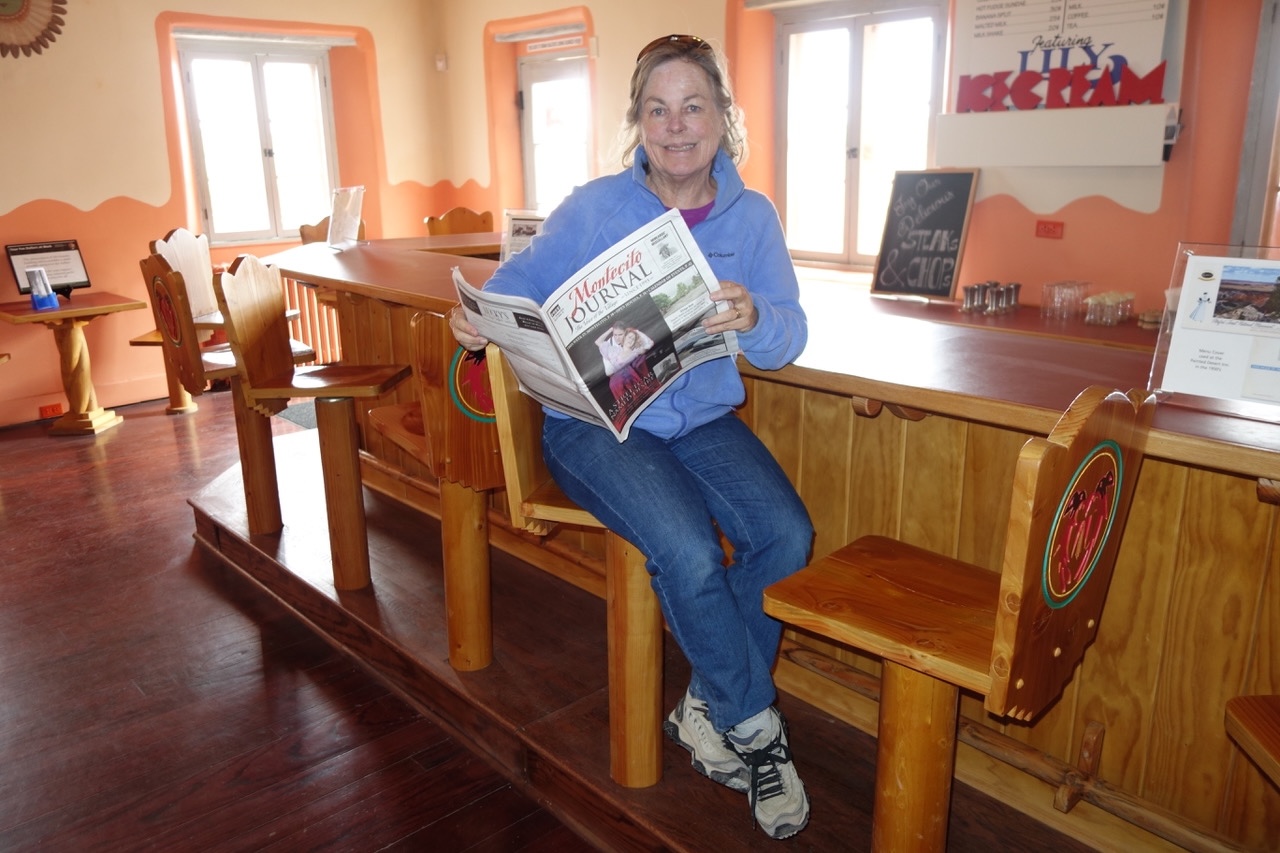
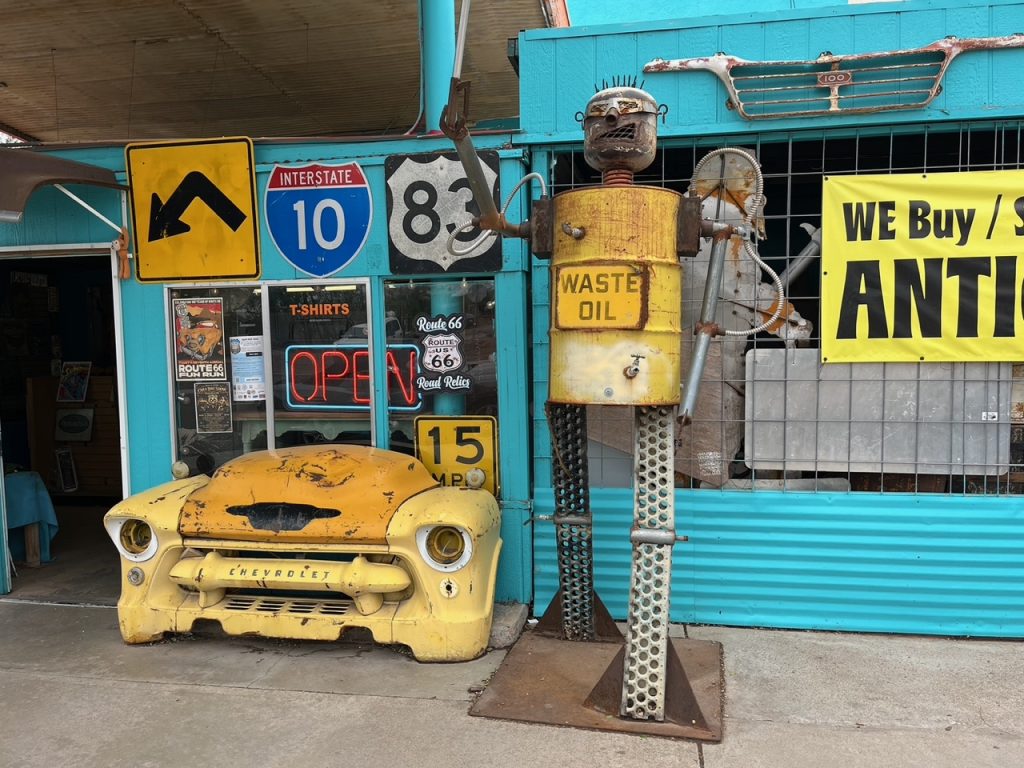
As every newspaper and magazine in the Country has reminded us, this year marks the 100th Anniversary of the “Mother Road,” Route 66. Also known as “The Main Street of America,” it traversed and connected the main streets of all the small towns between Chicago, Illinois, and Los Angeles, California.
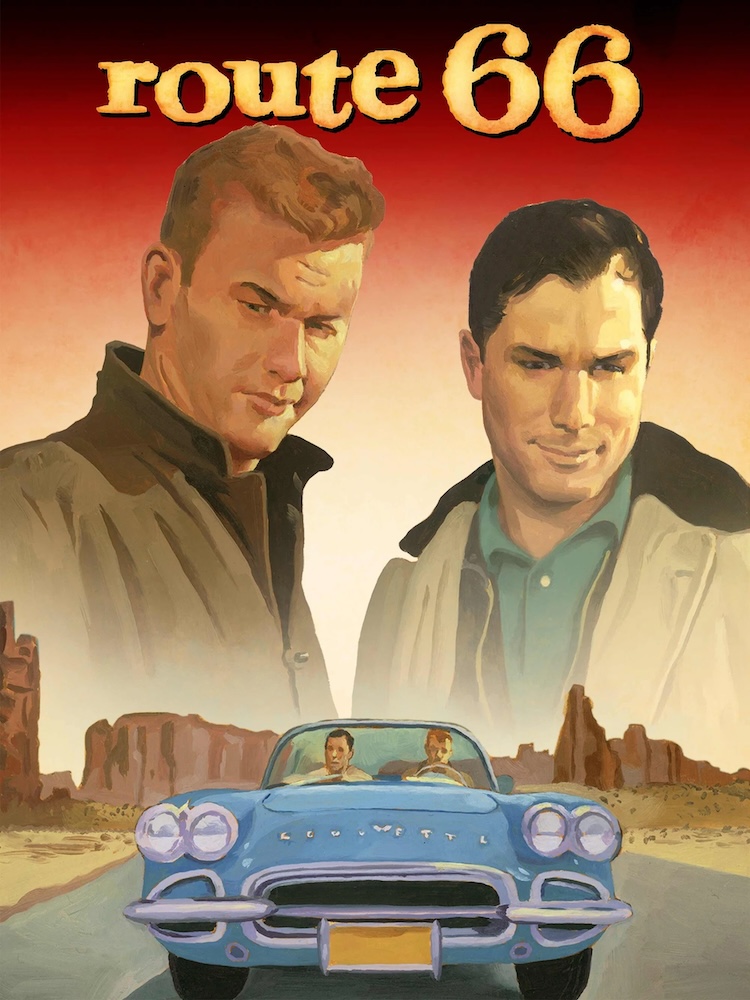
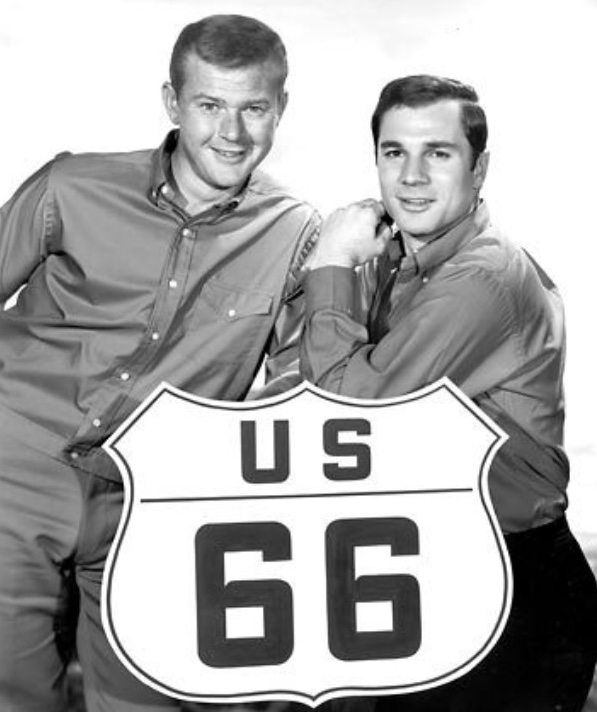
The famous T.V. show of the same name starred the fresh-faced boy Martin Milner (as Tod) and his racy convertible Corvette. Tod’s first footloose sidekick was George Maharis (as Buz) and later Glenn Corbett (as Vietnam vet Lincoln Case). The series, which only played from 1960 to 1964, (and rarely actually followed Route 66) had a tremendous impact on the romance of the American concept of a “Road Trip” and the historic allure of America’s Highway.
Popularized and glorified by the T.V. show, hitting the highway became every young man’s dream along with a desire for a convertible Corvette. How better to taste the adventures that the freedom of the road could bring? As the Nat King Cole Trio sang in1948 –
If you ever plan to motor west
Travel my way, take the highway that’s the best
Get Your Kicks on Route 66
(The song was written by Bobby Troup, but it was his wife who kicked in the name on their own road trip on The Route.)
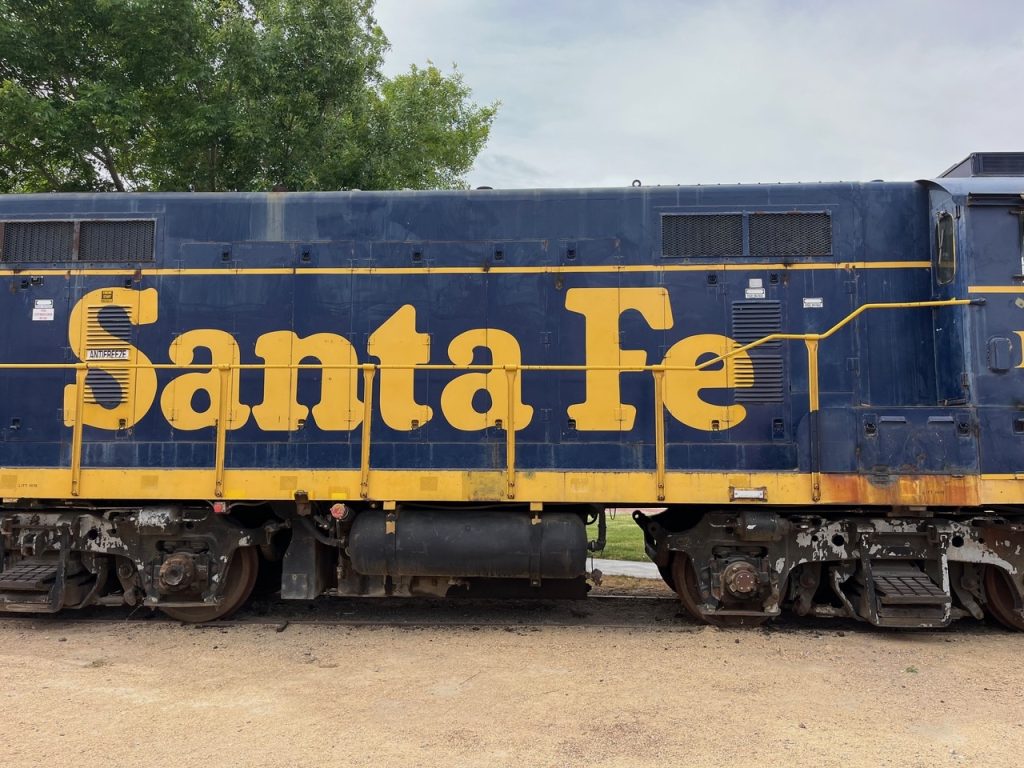
Today supplanted by U.S. Highway 40, the remains of Route 66 still weave their way across and along the Interstate. Back in 1926, it wove along the tracks of the Atchison, Topeka, and the Santa Fe Railroad, which connected Chicago to California in 1887, just 39 years before the road. (The building of the line, however, had begun in 1866 and reached the Colorado border in 1872.) That historic rail line, and the Harvey Houses planted along the tracks to accommodate passengers and tourists, inspired its own song as well as a movie.
Do you hear that whistle down the line?
I figure that it’s engine number
forty-nine,
She’s the only one that’ll sound that way.
On the Atchison, Topeka and the Santa Fe
Riding the Rails
As the Santa Fe Railroad inched ever westward, an English immigrant named Fred Harvey took over the trackside restaurants of the struggling railroad and began revolutionizing the service industry of America by providing top quality accommodations and food along the rail lines. He built beautiful hotels and restaurants in remote areas and staffed them with workers who lived in dormitories attached to the resort. He also promoted tourism of the American West by offering all the services needed for visitors. His hotels had newsstands and bookstores and several levels of dining, from elegant white linen table service to grab-and-go sandwiches.
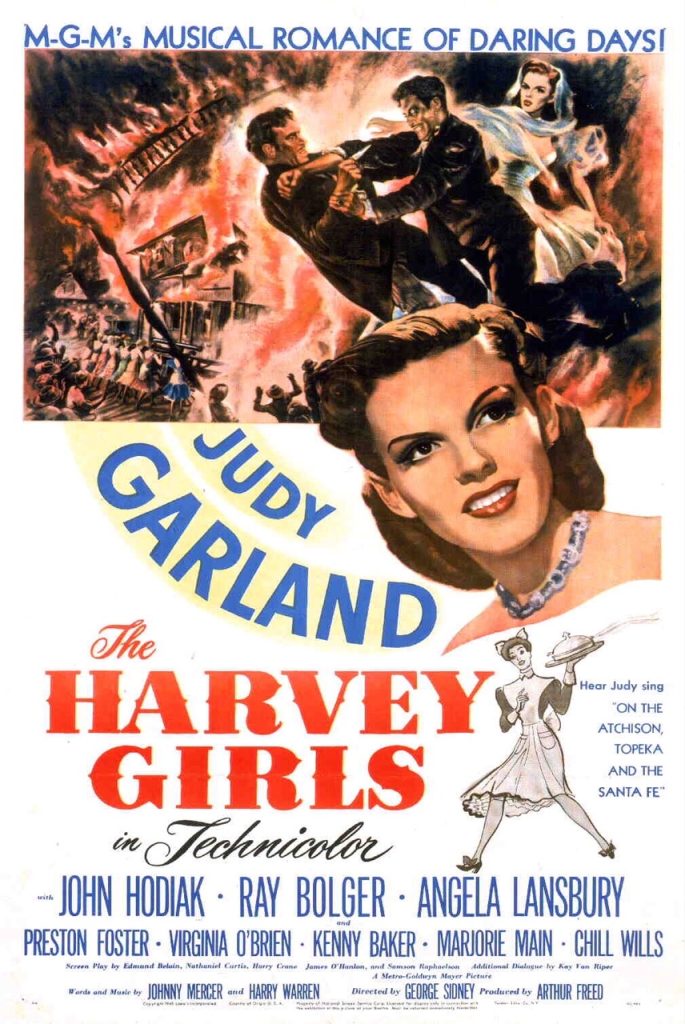
Young, unmarried women were recruited to live and work at the hotels. Harvey provided job training, good pay, lodging and job security. The girls had to be single, educated, of “good character,” and well spoken. Harvey ended up providing women with exciting opportunities to be independent and see some of the world. So entranced was America by the concept of the Harvey Girls, that Metro-Goldwyn-Mayer produced the musical, The Harvey Girls, starring Judy Garland in 1946.
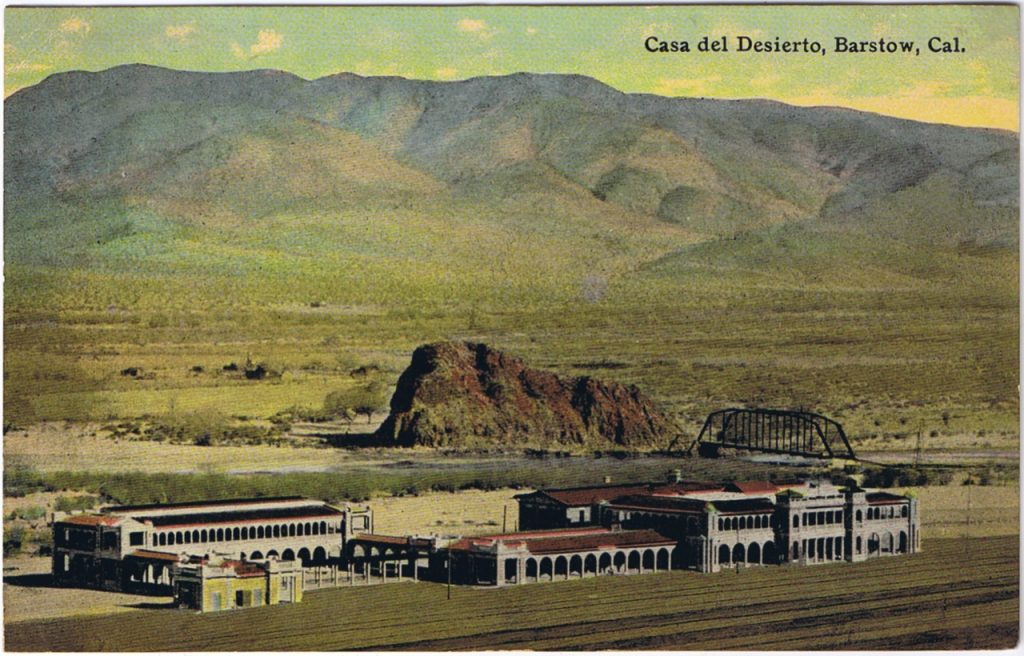
Two of Fred Harvey’s hotels, Casa del Desierto in Barstow and El Garces in Needles have a Santa Barbara connection, as does the train station at Grand Canyon National Park. The architect for all three of these structures was Francis Wilson, a Santa Barbara architect who also designed the Mission Revival style train station in Santa Barbara as well as several homes and estates.
Road Trip
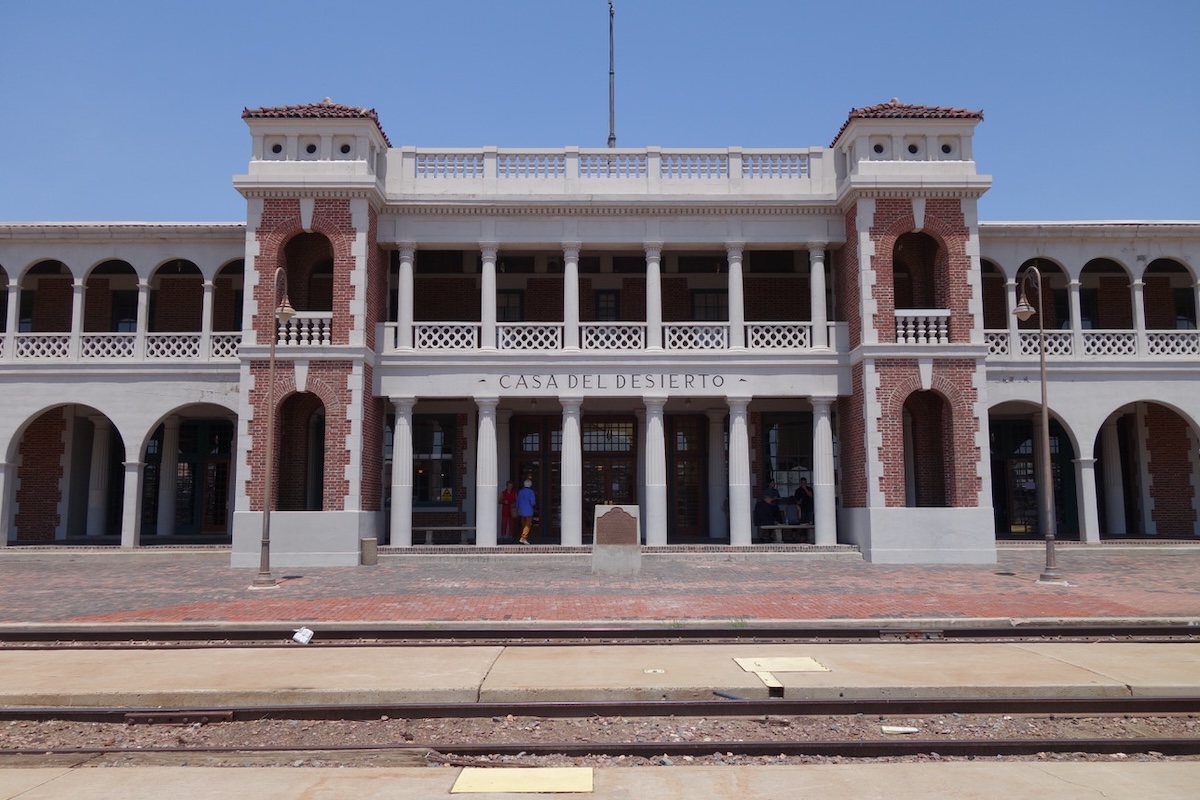
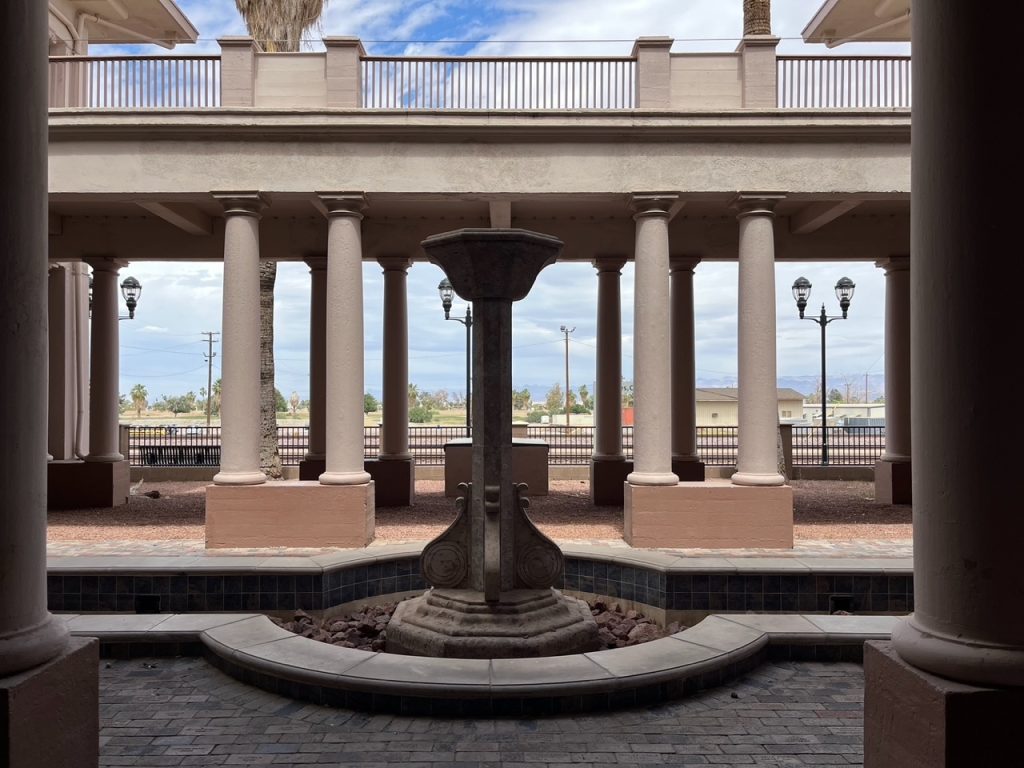
At the end of April, my husband and I hit the road headed for historic Harvey Houses and Route 66. We had driven several stretches of the highway in the past but wanted to travel the stretch from Kingman to Seligman, Arizona. Along the way, we found plenty of exuberant celebrations and desert dwellers humor.
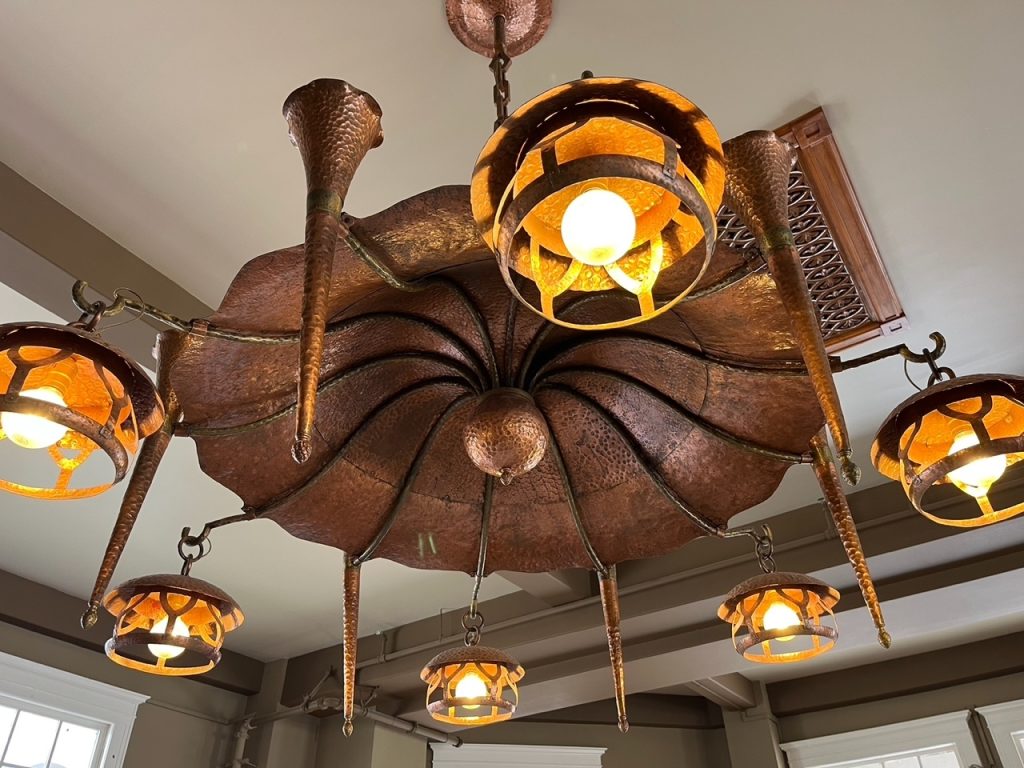
We started out at a favorite first stop, Casa del Desierto in Barstow with its sidelined exhibit of old rail cars and magnificent hotel. Since our last visit they had obtained at auction the original copper light fixtures, masterworks of artistry and so fitting to the architecture of the hotel. Highway 66 awaited us right by the station.
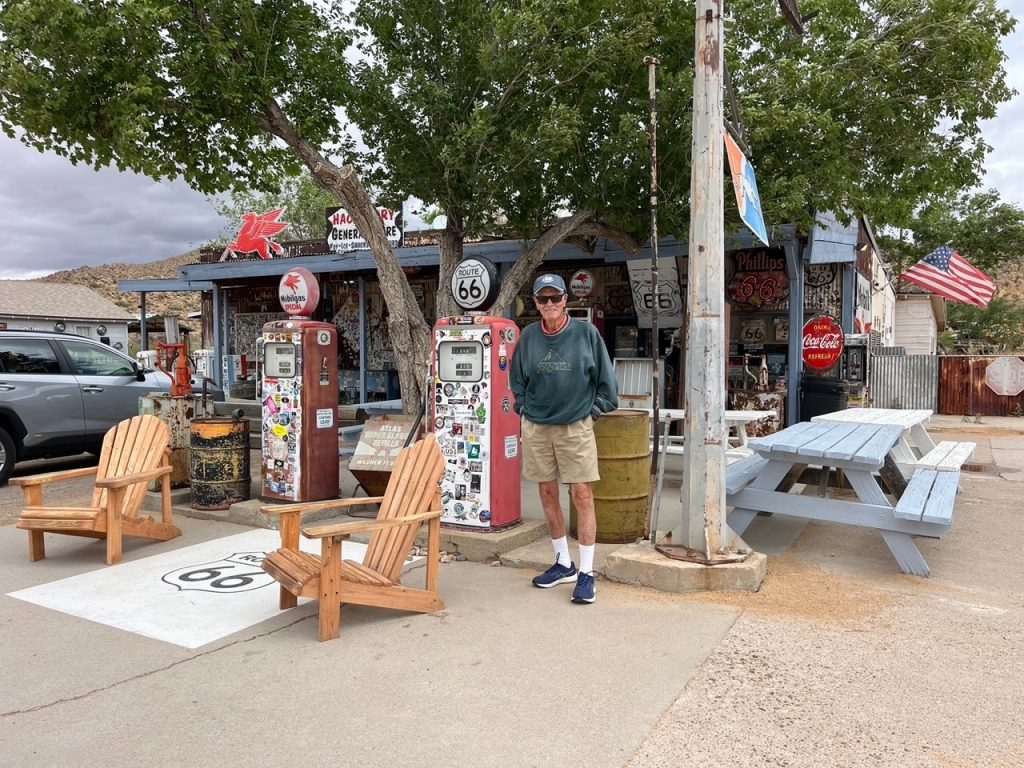
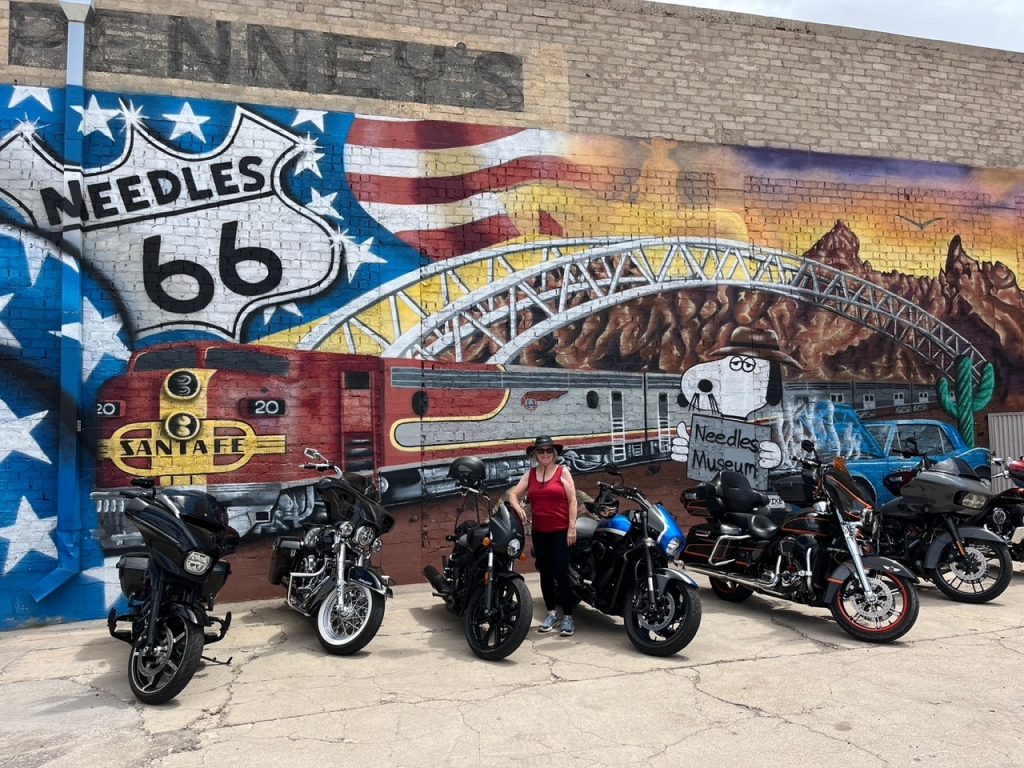
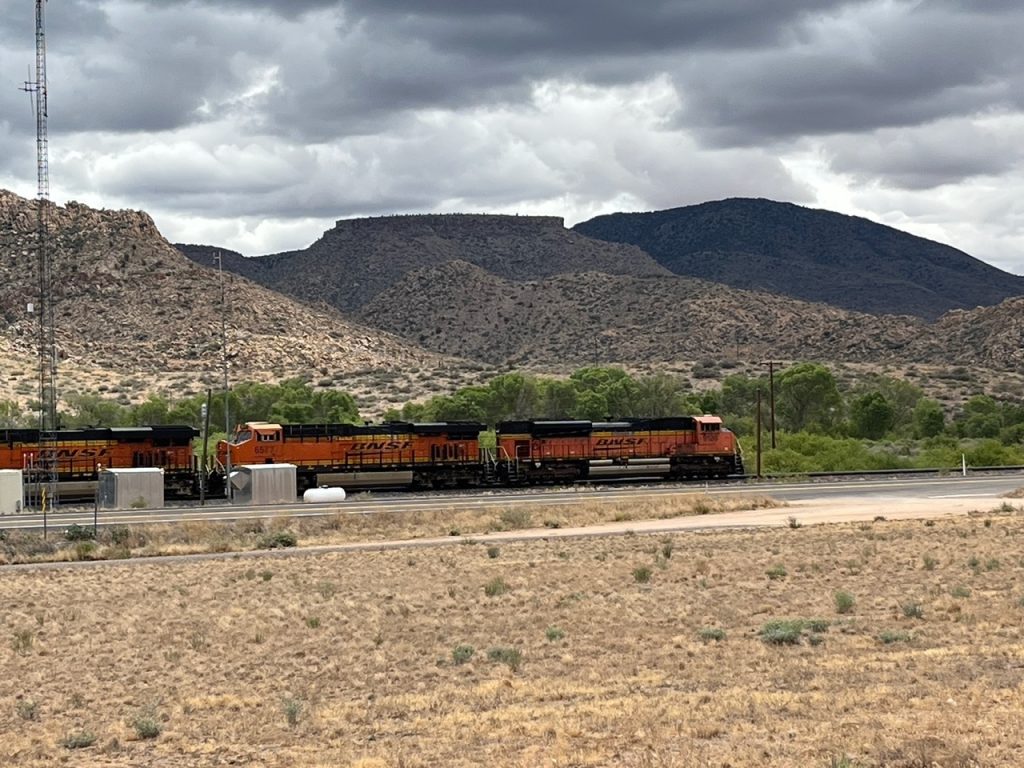
At Needles, we walked the grounds of El Garces, which the city has spent years preserving. Here, Route 66 celebrations were much in evidence with new murals and fresh paint on a few of the original relics and businesses. Today’s Santa Fe line, the BNSF (Burlington Northern Santa Fe) tracks cross the Colorado River near here as well.
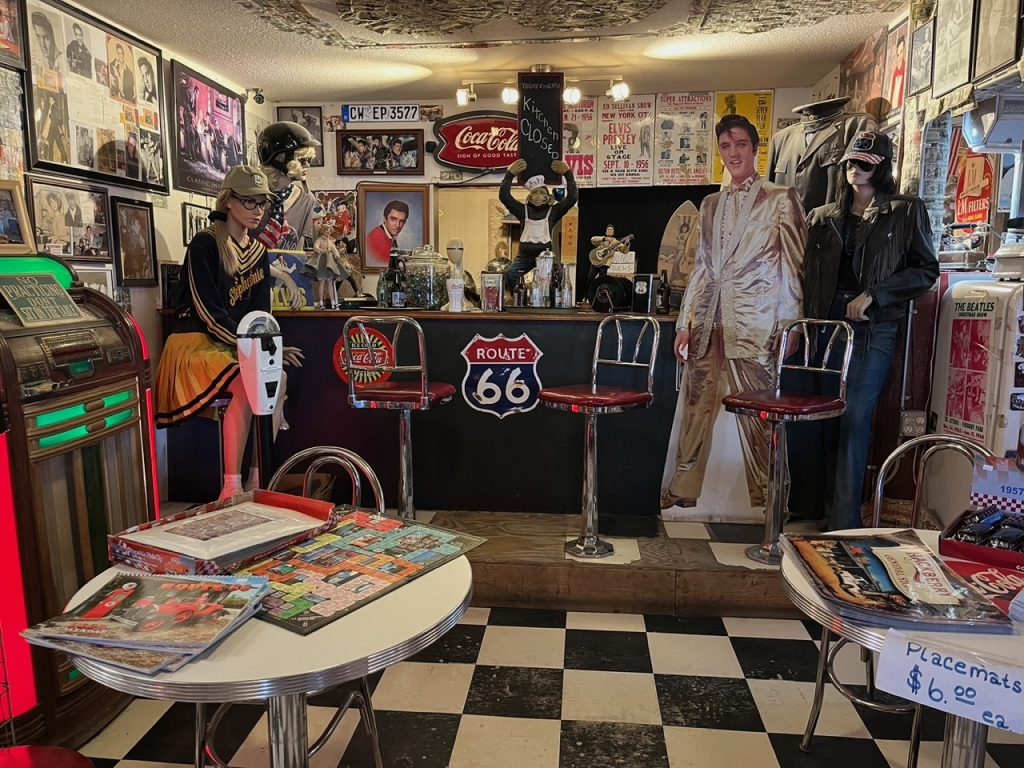
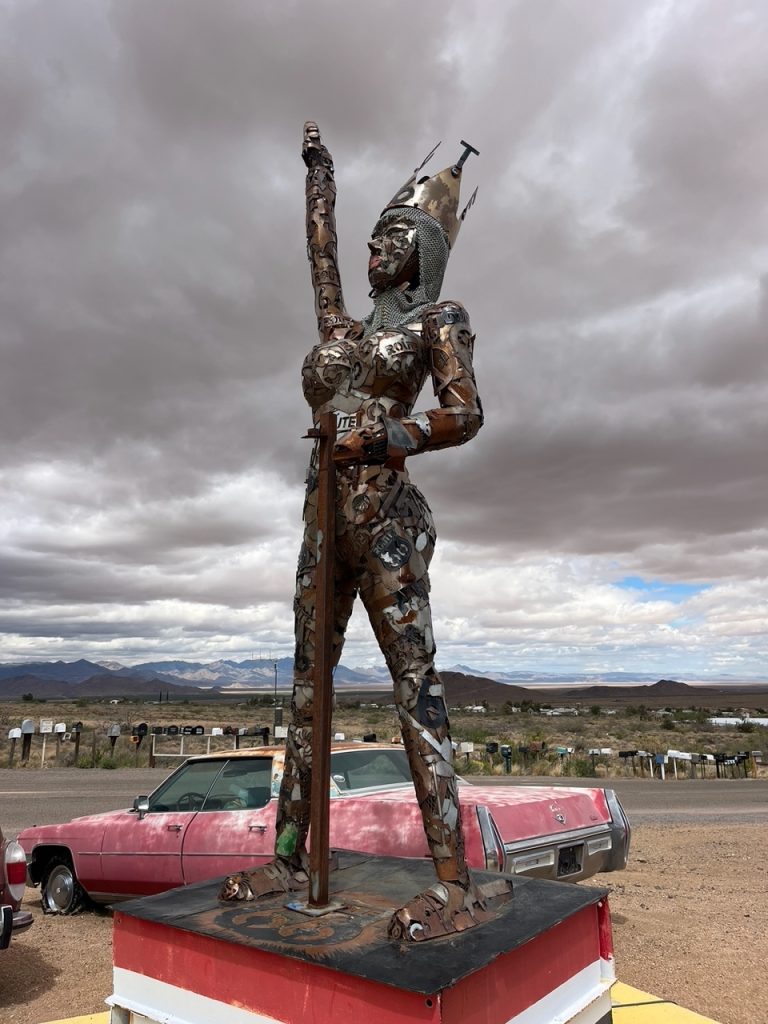
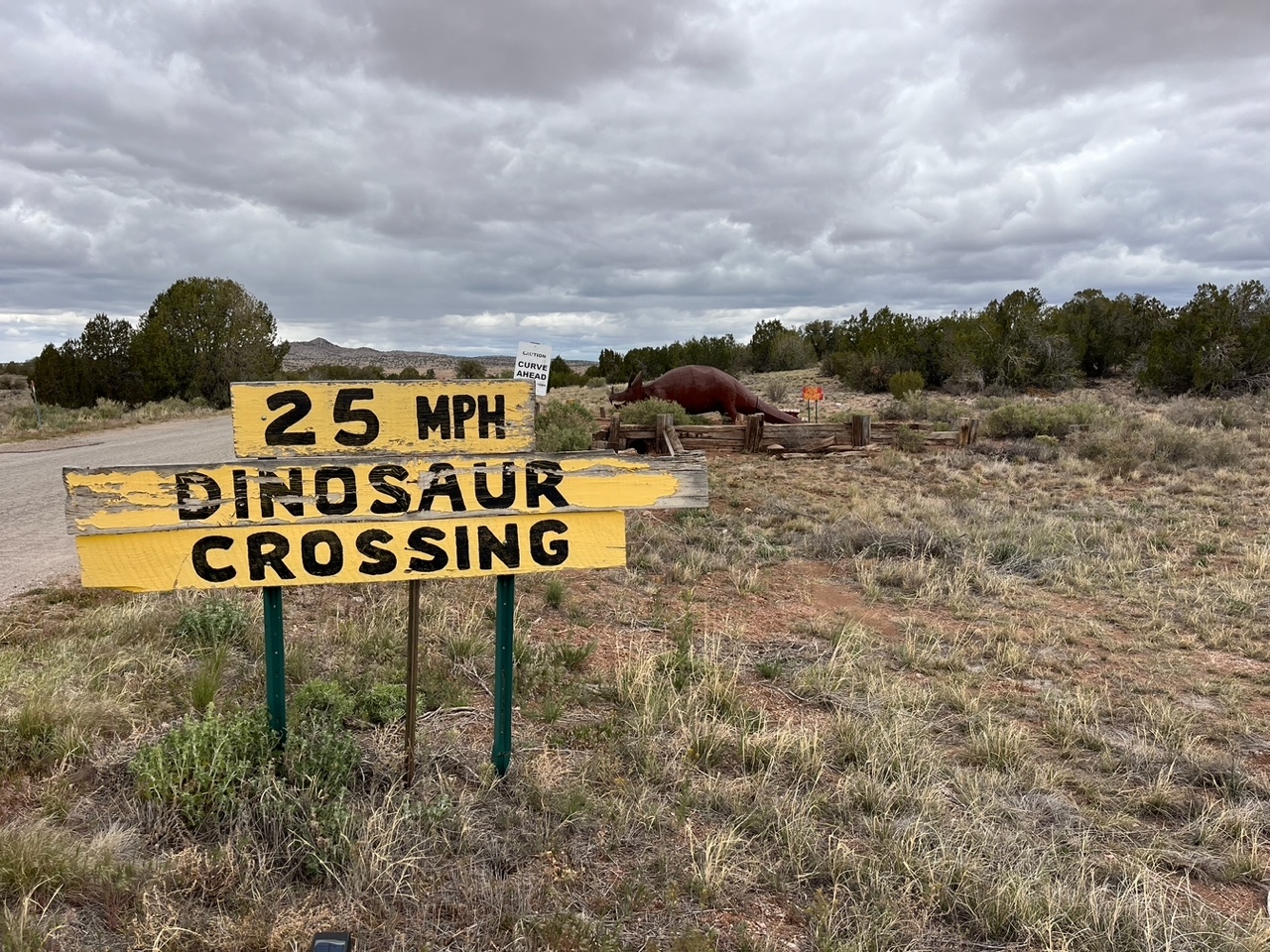
Then it was on to Kingman, where we turned north on Route 66 and headed for Antares with its Giganticus Headicus and a scrap metal sculpture of Joan of Arc. Next, we headed to the tiny town of Hackberry for an extensive collection of Route 66 souvenirs and the Elvis at the Soda Fountain display which was a mind-and-eye boggling cornucopia of memorabilia. The tiny towns of Valentine and Truxton were quiet and didn’t join the excessive jubilation. In Valentine, we stopped on the side of the road with its boarded up Indian School under ominous clouds as the Santa Fe train raced by. Valentine is mostly famous for its post office which does a rousing business around February 14.
Next up was Grand Canyon Caverns for lunch and bad puns. Everyone working at the restaurant seemed affected by the punster disease. The cook, meanwhile, was affected by the “86” disease. Several attempts to order various items from the menu ended up with the reply, “We’re out of … mayonnaise, bread, lettuce, salad dressing, hamburger, etc.” When my husband finally threw up his hands and said, I’ll just have the hot dog, the waiter asked, will that be Rottweiler or Poodle? (Groan)
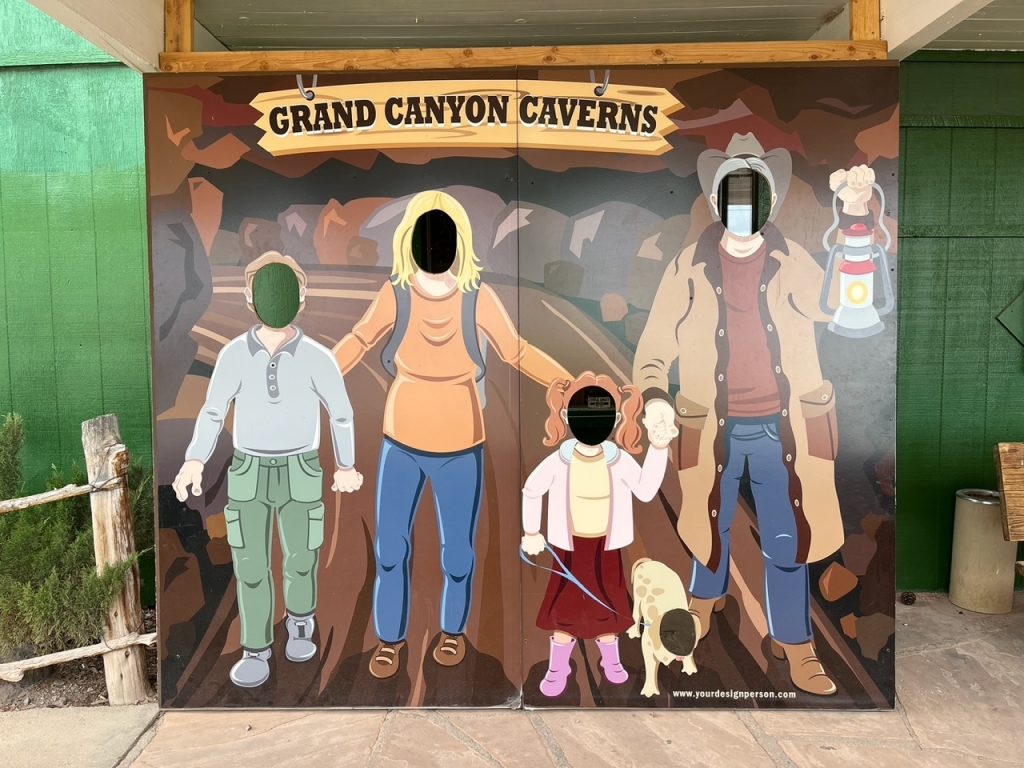
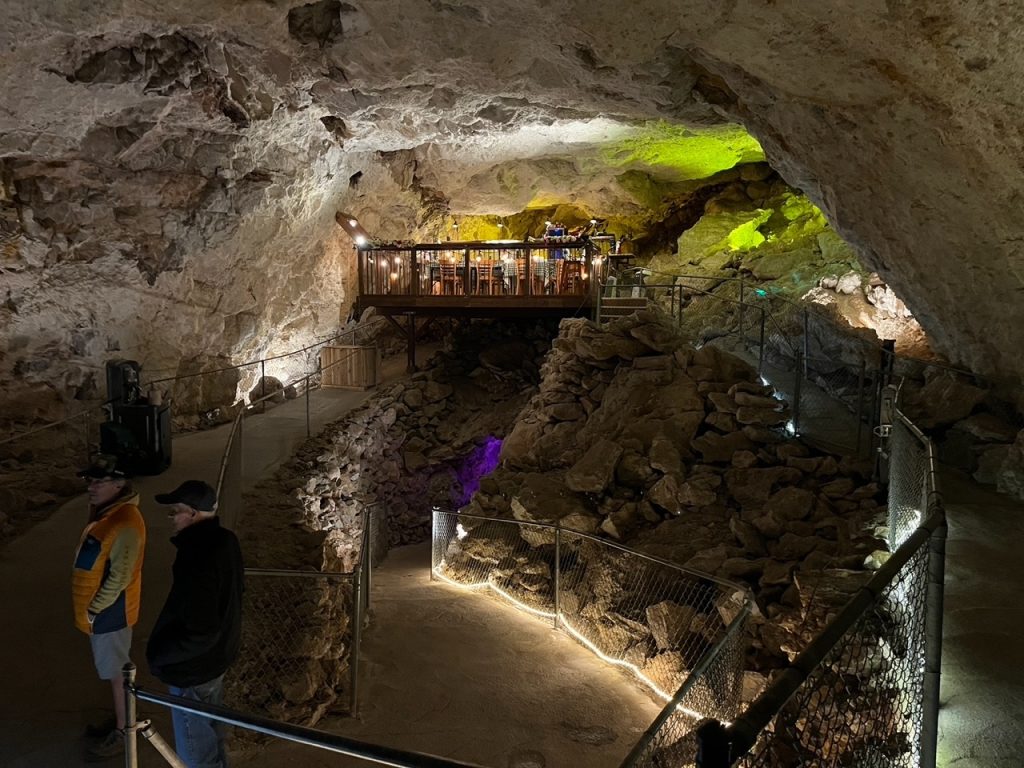
After what passed for lunch, we entered an elevator that took us 21 stories down to the caverns. The guide regaled us with puns as she explained the formations of the dry cavern. They used to have a motel room in the cavern and do have a dining area set up for special parties. (There was some deep thinking going on there.)
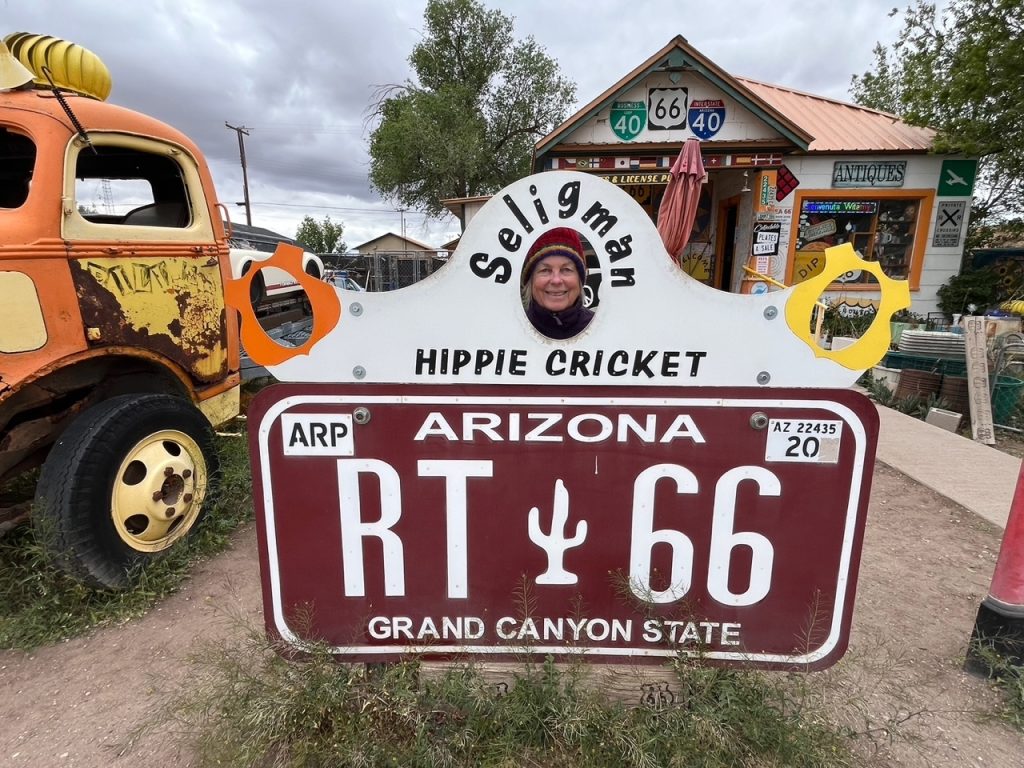
After escaping from the deep, it was on to Seligman. The approach to the town was lined with nostalgic Burma Shave signs. Seligman is the center for exuberant, unrepentant, and unabashed Route 66 kitsch. It was truly, but weirdly, magnificent. Despite temperatures in the low 40s, everyone was smiling and getting their kicks out of Route 66. Thus ended our trip as we returned to Highway 40.
You might also be interested in...




You must be logged in to post a comment.