
Milan’s Apericena Moment
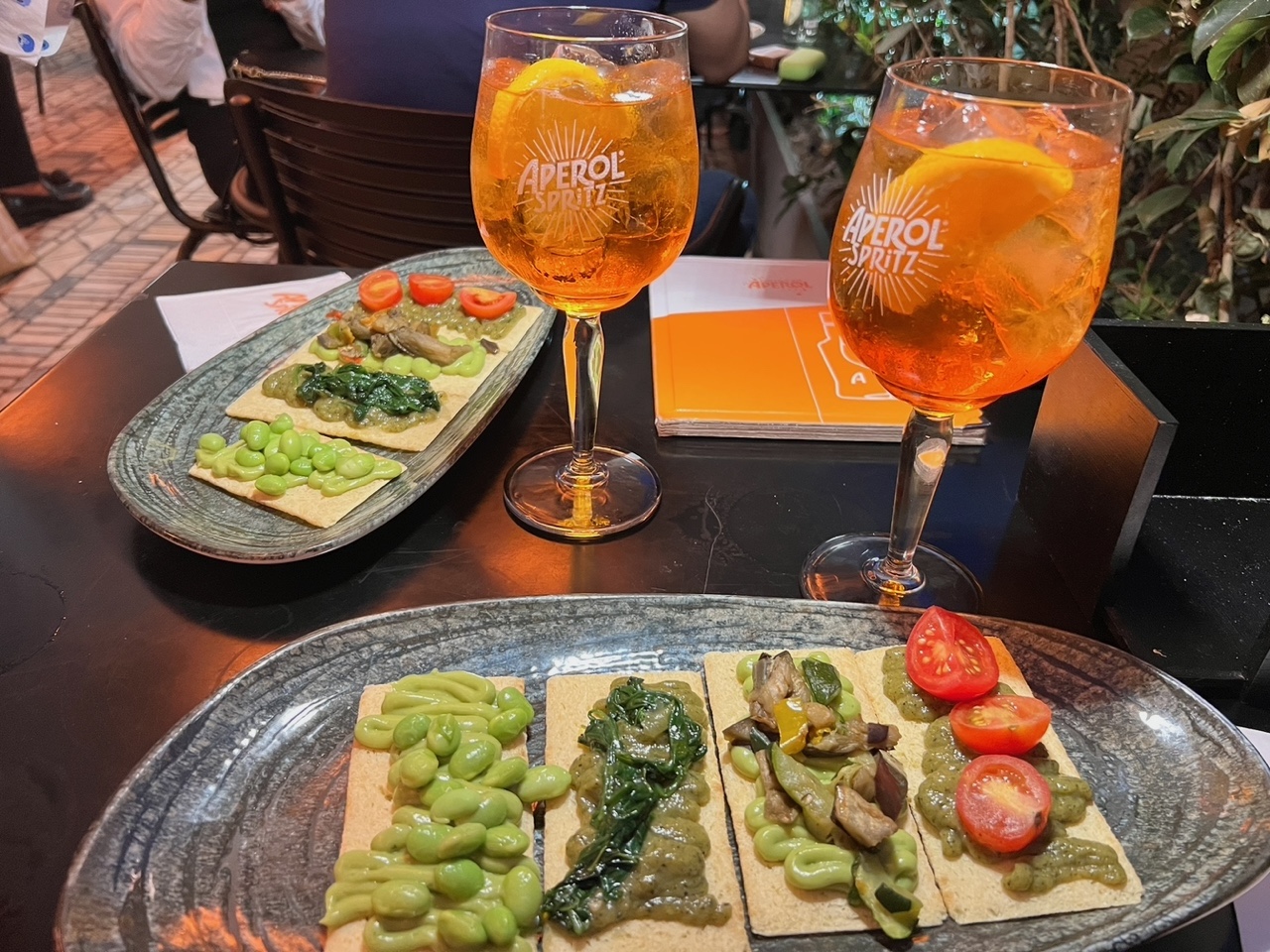
Earlier this year, my husband and I spent time in Milan doing one of my favorite things in the world, discovering a city by the way it eats and drinks.
I have always loved aperitivo in Italy. It is one of those simple pleasures that makes life feel instantly more civilized. A glass arrives, something small and savory appears beside it, and the day softens. But this time in Milan, I found myself thinking more deeply about something just beyond aperitivo, called apericena, that gloriously generous middle ground between a drink and dinner.
The moment I understood it more fully, I felt an immediate sense of recognition.
I have never been particularly devoted to the classic American idea of dinner, one large plate with a prescribed arrangement of protein, starch, and vegetables. I have always preferred nibbling. A few beautiful things on the table, a glass of wine, something warm, something salty, something indulgent, and the freedom to linger. Quite often, my husband and I find ourselves doing exactly that, both at home and while traveling. In Milan, it felt as though we had found a city that understood the instinct perfectly.
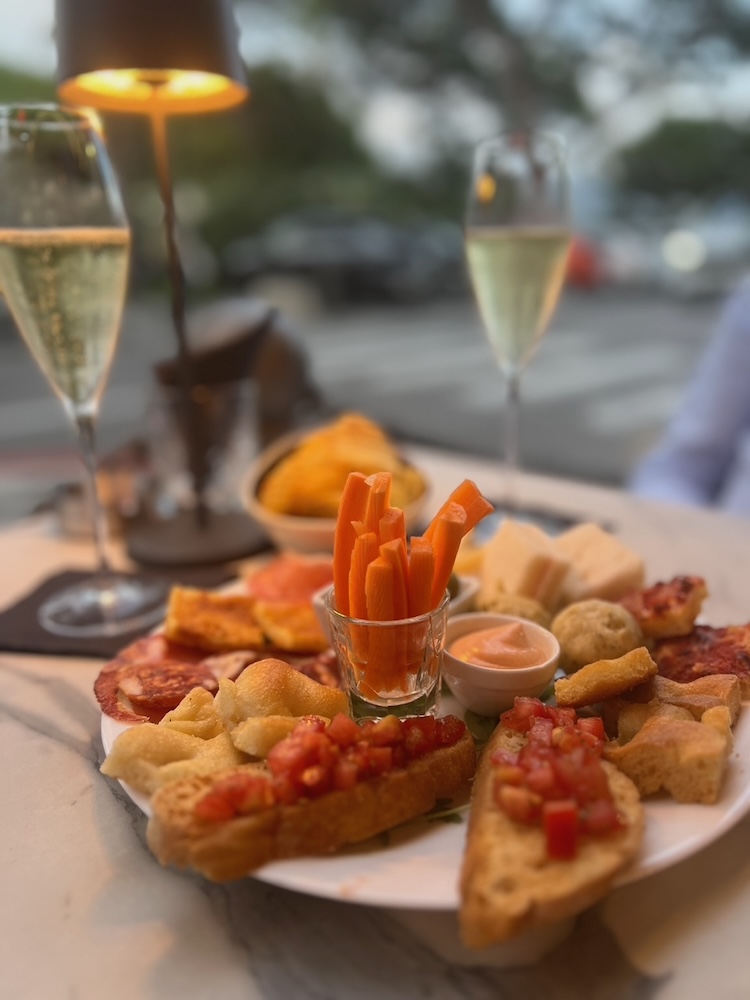
Apericena is, at heart, a social ritual. More substantial than aperitivo, but less formal than dinner, it invites people to settle into the early evening with intention. Usually enjoyed between about seven and nine, it might mean a spritz with a tagliere of cheeses and salumi, a Negroni with small plates, or a glass of wine with focaccia, pizzette, olives, and something deliciously local. It is not rushed. It is not overly structured. It is built for conversation. And that, I think, is part of its genius.
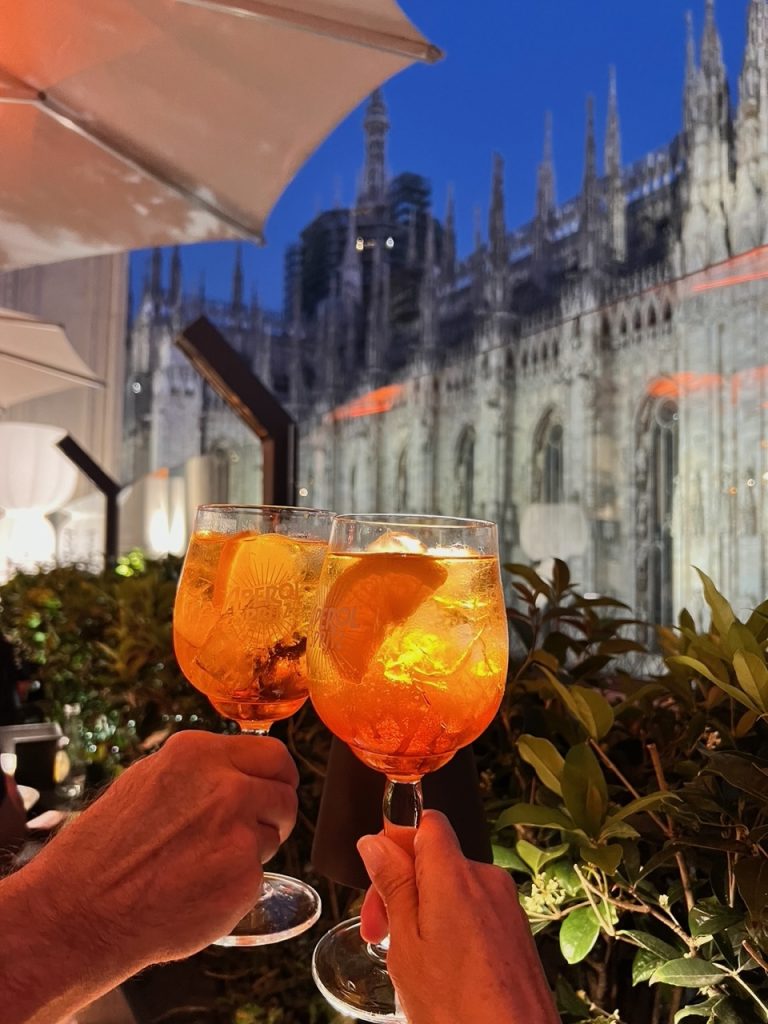
One of our favorite stops was Camparino in Galleria, just beside the Duomo, where Milan’s aperitivo culture still feels sensationally intact. The setting is historic and elegant, the sort of place where you feel the city’s style and confidence immediately. It is a lovely place to begin with a classic Campari cocktail and absorb the atmosphere of old Milan.
Then there is Bar Basso, which feels essential. Famous for its Negroni Sbagliato and beloved for its old school personality, it is one of those places that reminds you drinking culture can still have charm, character, and a sense of theater. It was one of the places that made me appreciate how apericena is not only about what is on the table, but about the world that gathers around it.
For something more contemporary, Dry Milano offers a different take, pairing excellent cocktails with gourmet pizza in a way that feels distinctly modern Milan. Moebius also stood out for its lively cosmopolitan energy and elevated small bites, while La Coloniale charmed me for an entirely different reason: it has that old-world wine bar soul that makes a simple glass and a beautifully composed board feel like more than enough.
What struck me most was not only where we went, but what apericena makes possible. It creates a natural third place, that increasingly important space that exists outside home and work, where people can gather regularly, comfortably, and without the pressure of making an entire event out of it. Americans are talking more and more about the disappearance of third places, and with good reason. We are craving spaces where connection can happen more naturally. Somewhere to go that is welcoming, sociable, and easy.
Milan, it seems to me, has long understood this. Apericena creates exactly that kind of space, one where the evening can unfold naturally rather than arrive fully programmed. You can stop for a drink and a few beautiful bites, or stay long enough for it to become dinner. You can meet a friend, bring your spouse, gather with colleagues, or simply enjoy the quiet pleasure of being among other people doing the same.
The American version of happy hour often feels more transactional. Drinks come first, food is extra, and the whole experience can feel designed to keep things moving. Apericena is more generous. It assumes that if people are given a lovely setting, something good to drink, and a few appealing plates to share, they may wish to stay, talk, and let the evening take its time.
That is a very European kind of wisdom, and one I would love to see embraced more fully here. Because apericena is not only charming, it is useful. It creates atmosphere in those in between hours, encourages hospitality without requiring excess, and offers couples, friends, and communities a ritual that feels elevated without becoming formal. At its best, it allows food and wine to do what they do best, not merely feed us, but bring us together.
Milan gave us many stylish memories on that trip, but apericena may be the one I most want to bring home. Not only because it is delicious, though it certainly is. Not only because it is chic, though Milan does chic exceptionally well. But because it answers something many people seem to be searching for right now; community.
You might also be interested in...




You must be logged in to post a comment.