
LCO and a Breakthrough in Supernova Collapse
Stardate 79659.4 Hold on to your ears, Spock!*
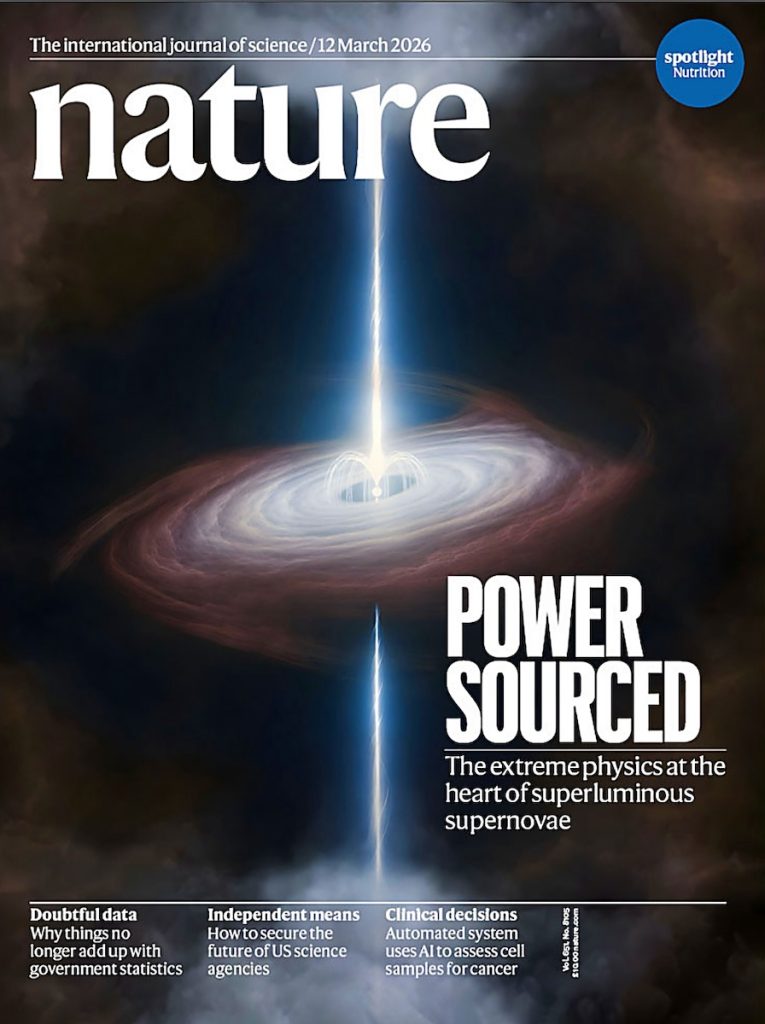
Las Cumbres Observatory (LCO) Astrophysicist Andy Howell, PhD, head of the supernova research group, and his fifth-year UCSB graduate student Joseph Farah are part of an international research team featured on the cover of Nature (Volume 651, Issue 8105, March 12, 2026) for their discovery of “chirp” activity in a superluminous supernova known as SN 2024afav.
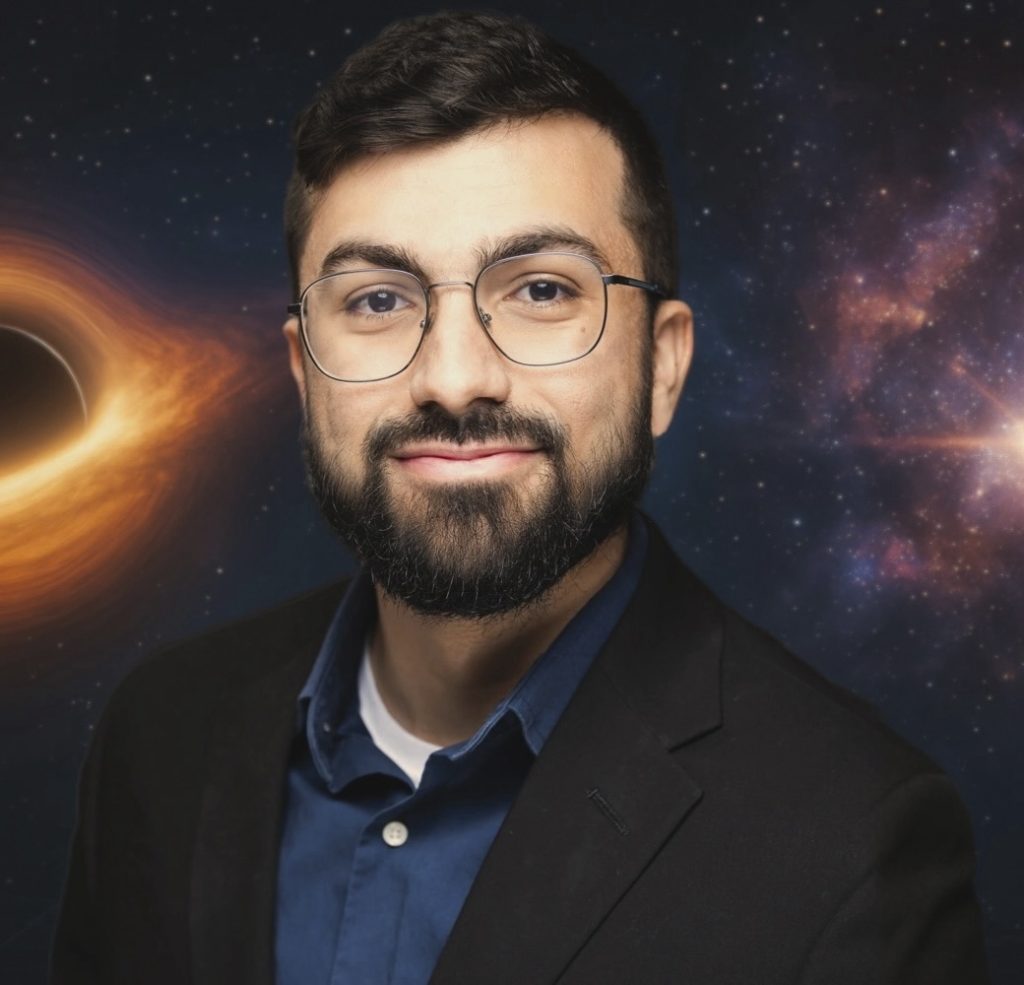
LCO reports that the team’s published paper is considered a breakthrough for two key reasons:
– First “chirp” observed in a supernova, identifying a new class of phenomena in exploding stars.
– Confirmation of the magnetar model, providing the first unambiguous evidence that highly magnetized neutron stars power superluminous supernovae.
According to Nature, “Superluminous supernovae are at least ten times brighter than their regular counterparts, but astronomers have remained uncertain about what powers them. In this issue, Joseph Farah and colleagues confirm that magnetars – highly magnetized neutron stars formed by a supernova – drive these explosions.” The study analyzed light emitted by a supernova more than a billion light-years from Earth and determined that a rapidly rotating magnetar at its center deposits massive energy into the ejecta, producing the superluminous glow. A disk of accreting matter surrounding the magnetar “wobbles” due to an effect predicted by Einstein’s theory of general relativity, causing fluctuations in brightness observed from Earth. Let’s dive in…
SN 2024afav, approximately one billion light-years away, has been monitored for 200 days since its discovery by ATLAS in December 2024. Observation parameters were adjusted in real time to capture subtle variations in brightness during the supernova’s evolution.
Farah explains, “This is a major victory for LCO. The uniquely pristine and high-cadence data allowed us to predict future bumps and dynamically adjust the campaign to test those predictions in real time. When they proved accurate, we knew we were observing something extraordinary. We tested several ideas, including Newtonian effects and magnetically driven precession, but only Lense-Thirring precession matched the timing perfectly. This is the first time general relativity has been required to describe the mechanics of a supernova. It’s the most exciting work I’ve ever been part of.”
Howell adds, “I was part of the discovery of superluminous supernovae nearly 20 years ago, and initially we didn’t understand them. The magnetar model explained the energy but not the variability. Now Joseph has found the missing link, connecting those variations to the magnetar model through general relativity. It’s incredibly elegant.”
Farah expects many more “chirping” supernovae to be discovered as the Vera C. Rubin Observatory in Chile comes online, generating vast amounts of data each night over its ten-year survey.
Nature is a British weekly international scientific journal first published in 1869, dedicated to publishing peer-reviewed scientific research.
*[In 2387, Spock piloted the Jellyfish equipped with red matter to create a black hole intended to stop a supernova that destroyed Romulus, resulting in an alternate timeline.]
You might also be interested in...




You must be logged in to post a comment.