
Santa Barbara on Two Wheels
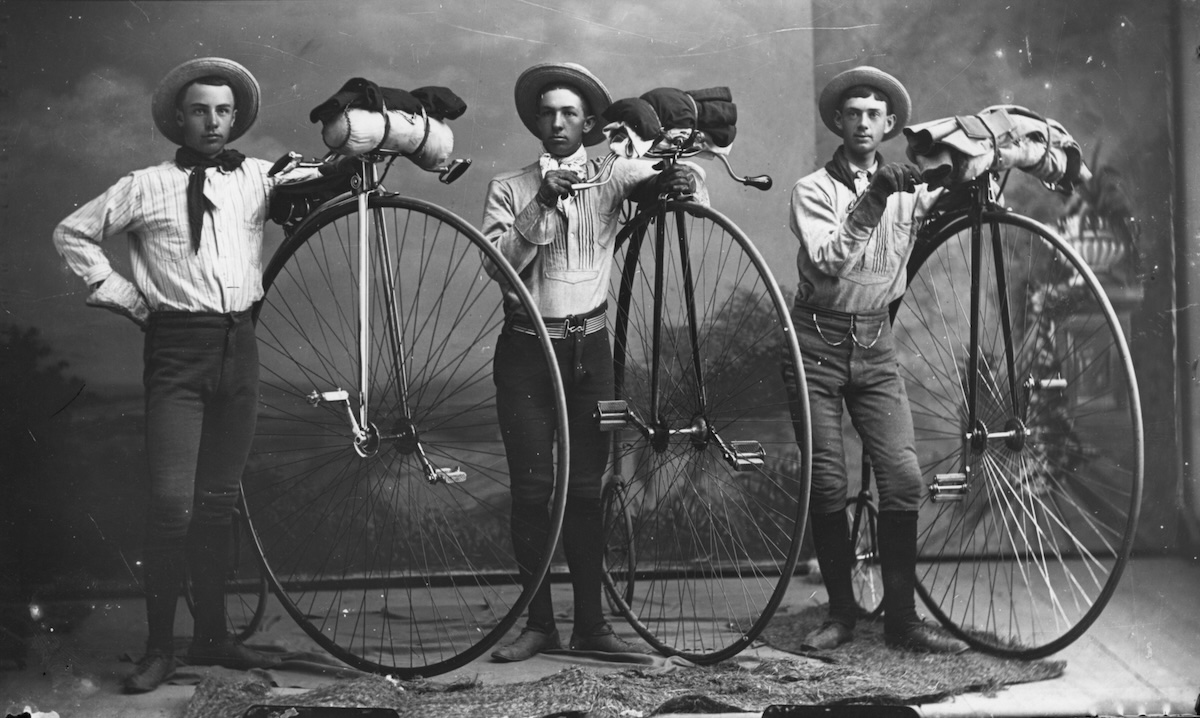
Looking neat upon the seats of a bicycle built for two, a duo of Italian wheelmen rolled into Santa Barbara on May 10, 1901. Carlo Reiter and Mino Galvini had left Florence, Italy, on July 5, 1899, after members of their biking club wagered 50,000 lire that they couldn’t ride 75,000 miles by Christmas Day 1902.
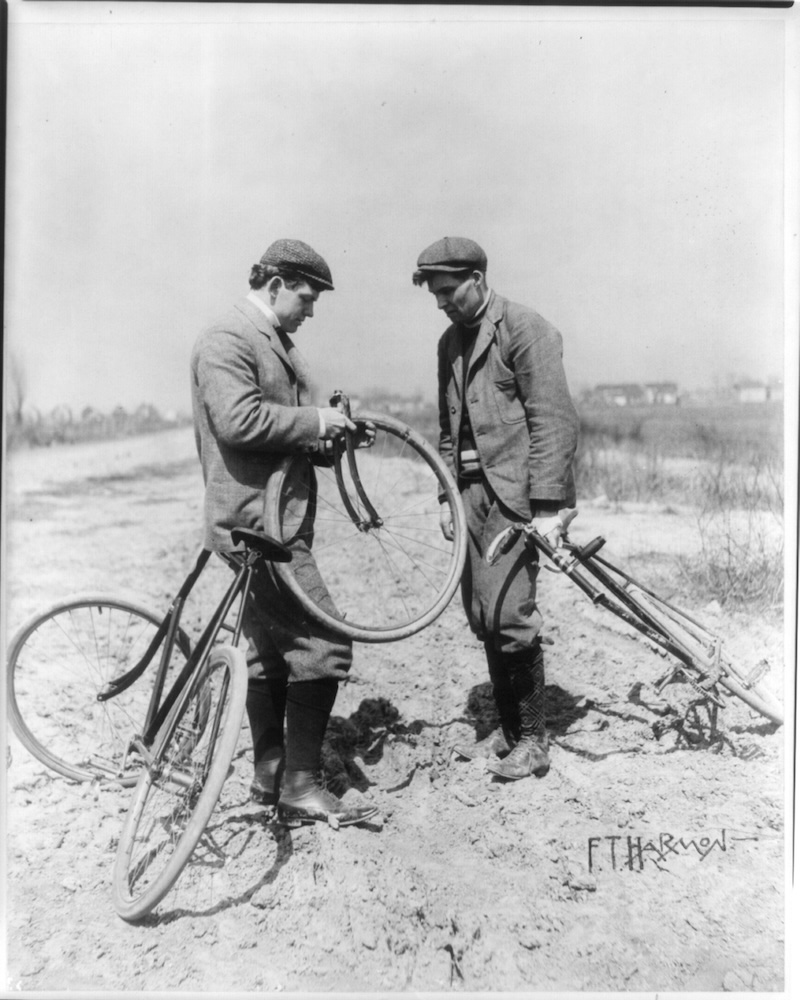
Though the two rode as representatives of the Florence Courier and Milan Sporting Life, they had to cover their expenses en route through lectures, wrestling and fencing exhibitions, and photography sales. They carried with them an album filled with autographs of all the mayors of the towns they had visited as well as the governors of the states.
The Italian globe trotters planned to write a book about their travels and live in affluence off the profits. The Morning Press could not refrain from remarking, “…Both men are splendid examples of manhood.”
They were certainly not the first tourists to pass through the town on bicycle. Wheelmen from Ventura and Carpinteria visited regularly. In 1891, Alex S. Gardiner of San Francisco, enthralled by California’s landscape, took 10 days to meander down to Santa Barbara. The Independent wrote that he arrived “with a well-tanned face and a splendid appetite.”
Although the automobile would become the preferred method of wheeled transportation by 1910, it was the bicycle that initiated the Good Roads Movement in the United States. In 1880, bicycle enthusiasts, riding clubs, and bicycle manufacturers met in Rhode Island to form the League of American Wheelmen. They became a national organization in 1891 and a major force for improved roads.
In 1892, an impassioned editorial in the Morning Press lobbied for better roads to bring out the true efficiency of the bicycle as a form of transportation. In 1897, the California legislature authorized the creation of bicycle lanes and paths, so the Wheelmen of Santa Barbara circulated a petition to create a bicycle path leading from Santa Barbara to Carpinteria. (While it took over 100 years, it is now accomplished!)
By 1901, however, the roads were not much improved, so one enterprising San Francisco wheelman decided to avoid them altogether. He modified his bicycle wheels to ride one rail, adding an outrigger-style flange for support from the other. He first rode south along the Central Valley line, covering 500 miles in two-and-a-half days. Then, taking advantage of the recently completed Coast Line, he cruised through Santa Barbara in April.
The Bicycle Craze
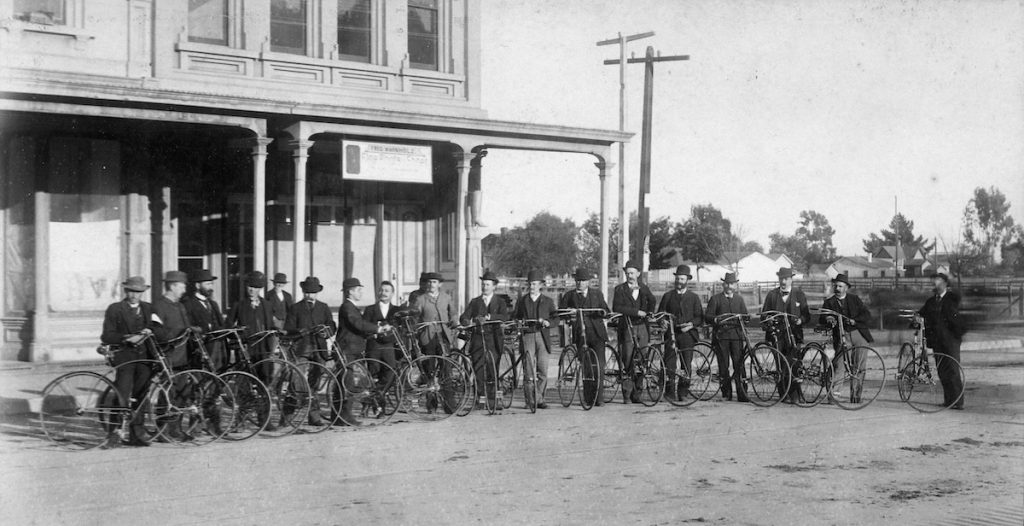
The bicycle had taken Santa Barbara by storm by the 1880s, and by 1885 the Morning Press reported, “Bicycle riding has become more than a fad or popular pastime; it is a craze. Everybody rides – grandmothers, children, businessmen, ministers, and society women.” Stables became concerned when their businesses declined, and one wag said that local horses had tears in their eyes when Dixie Thompson, renowned host of the Arlington Hotel and avid equestrian, tried out a high wheeler.
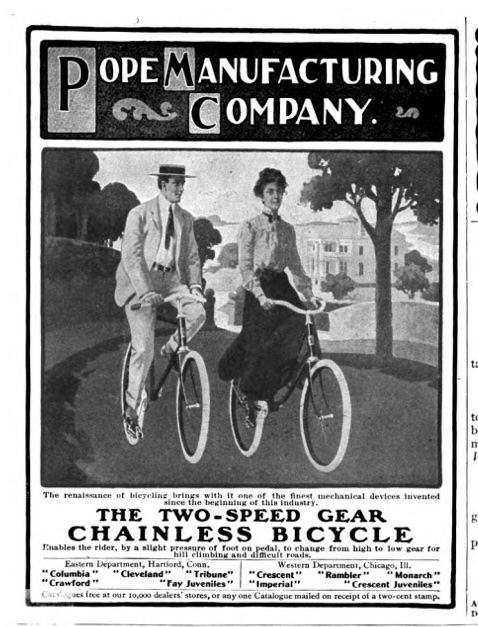
The switch from high wheelers to safety bicycles with equally sized wheels, pneumatic tires, and chain or shaft drives, as well as the use of mass production techniques that brought the price down, had a tremendous impact on the popularity of the bicycle. The Pope Manufacturing Company, maker of Colombia bicycles, sold 200,000 bicycles in 1889 and one million in 1899.
The bicycle’s popularity led to a plethora of bicycle-related inventions. In the third quarter of 1896 alone, the U.S. Patent Office received applications for over 1,000 of these devices. While the majority dealt with the mechanics of the bike – tires, brakes, chains, etc. – others dealt with the convenience of the rider. There were 14 applications for devices to secure women’s dresses, seven for bells, two devices for carrying pipes and matches, two for “toilette companions,” and one bicycling gourmand pitched a contrivance for carrying luncheons.
In Santa Barbara, a Professor Morse was experimenting with inflating tires with various gases, but most destroyed the rubber in a few days. When he tried hydrogen it reduced the weight by eight pounds. He claimed that with aluminum frames and a mixture of oxygen and hydrogen gas, a bicycle could weigh under 10 pounds.
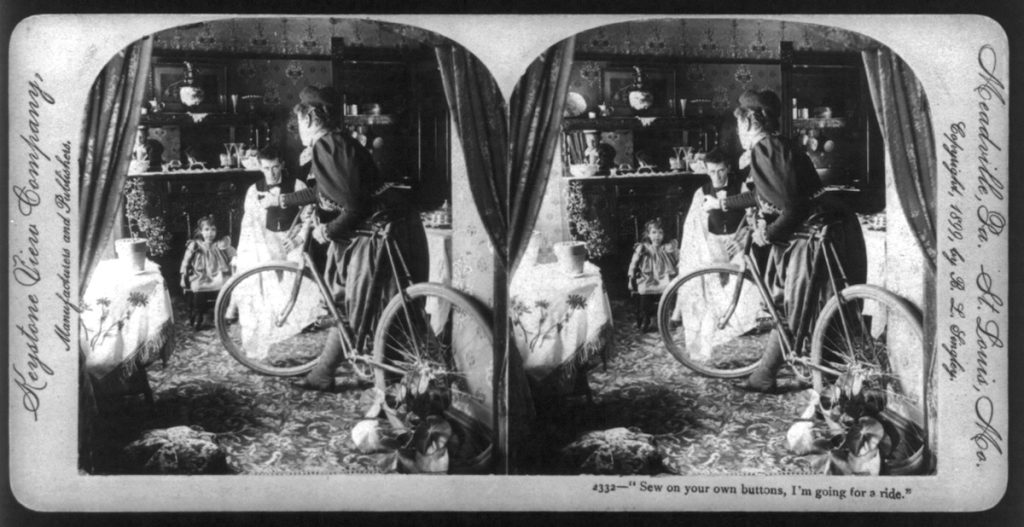
Once the center bar was dropped, the bicycle became suitable for women. Susan B. Anthony, pioneer suffragette and feminist, called it the “freedom machine” and said, “…it has done more to emancipate women that anything else in the world.” The bicycle craze also aided the movement for “rational dress” for women.
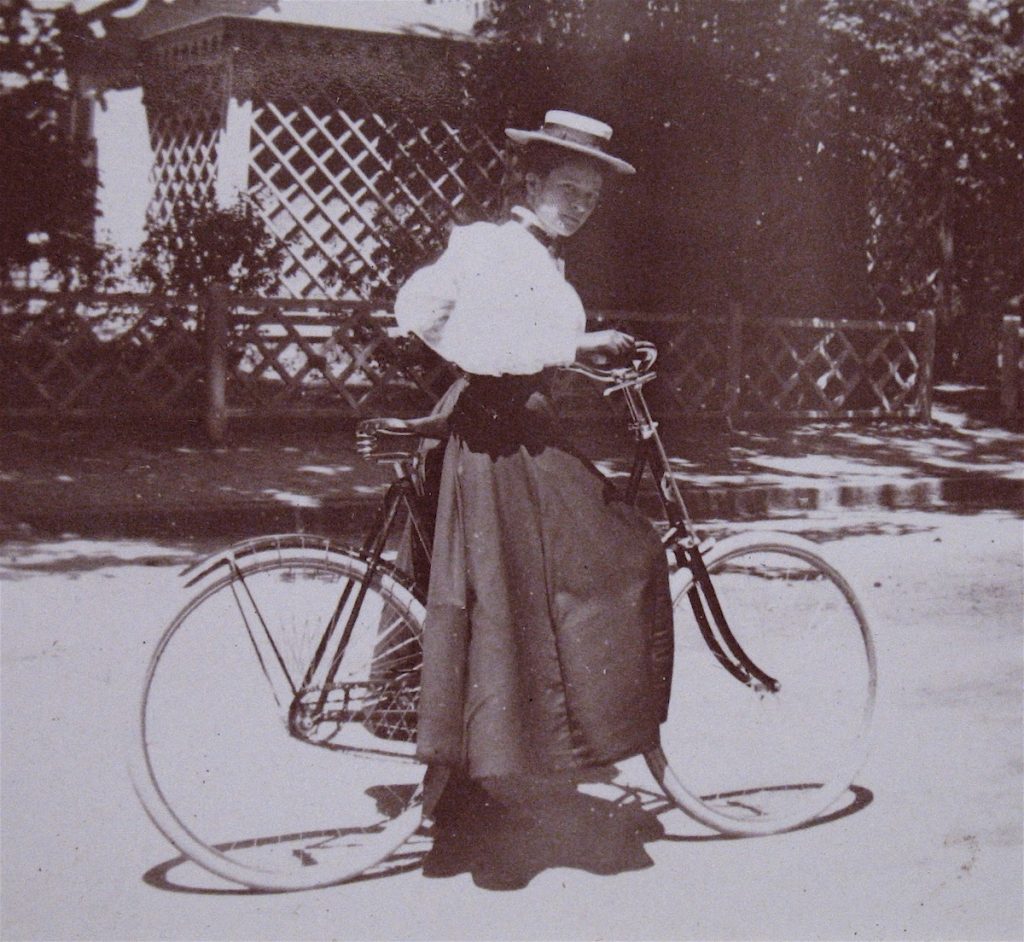
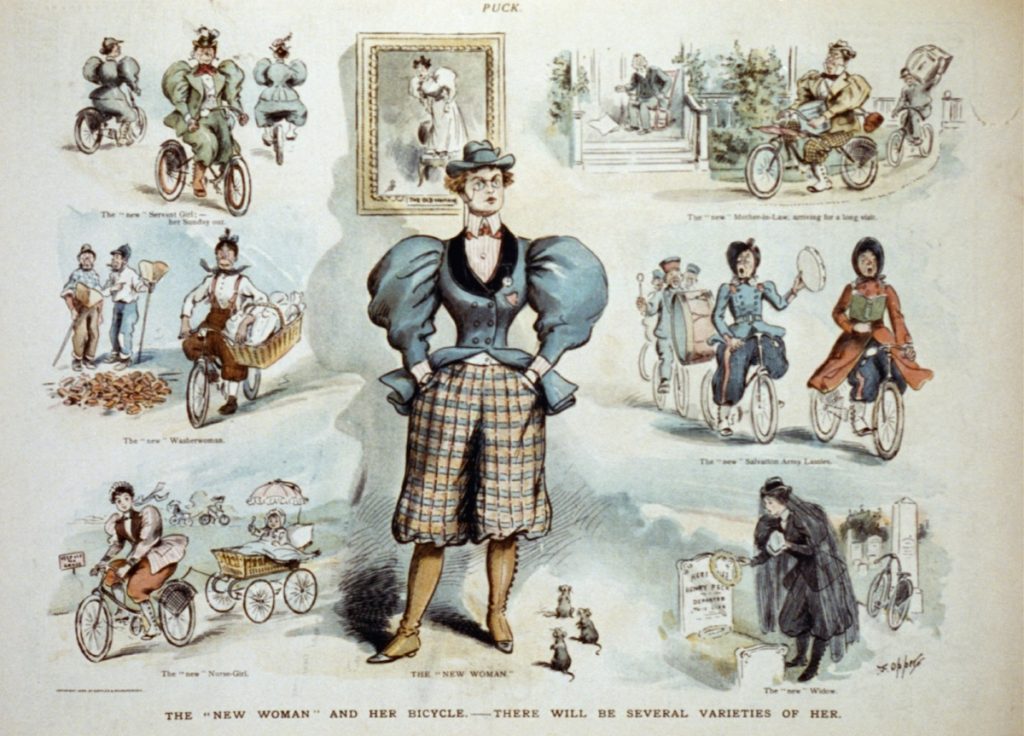
In the 1896 “Local Outing,” the newsletter of Henry S. Short’s Bicycle Supply House and Repair Shop, Charles Dudley Warren (1829-1900) claimed it was “a landmark year for the progress of women and consequently the evolution of society.” Warren, an American essayist, novelist, and editor of Harper’s Magazine, believed bicycling led to an outdoor life that would broaden a woman’s life view, provide physical and mental health, and make her more cheerful and better prepared for her “duties of the day.” (You know, like washing, ironing, fetching her husband’s slippers. – Ah, Charles, and you started out so promising!)
Bicycles even invaded the nation’s political life. Urged by the Republican National Committee, the Santa Barbara wheelmen held an illuminated parade to support William McKinley’s 1896 bid for the presidency. The Morning Press reported, “There was a brilliant display of Japanese lanterns, red and blue lights, and the wheelmen went through many pretty maneuvers while going up and down State Street.” The music of bicycle bells was supplemented by a chorus of tin horns.
Go Fast, Young Man
Put two men on two bicycles and there will be a race. By 1896, Santa Barbara wheelmen had their own bicycle racetrack. That year, the Floral Festival included amateur and professional races. Even Santa Barbara’s Chinese population got in on the act. The Independent reported, “The mile Chinese race was an interesting one and four of our local Celestials took part. The contestants are well-known riders of the wheel and … appeared in regulation racing costume and humped themselves like professionals. Jim Fong was the winner with Yee Yeh second and Sam Wah third. Best time was 5:21.”
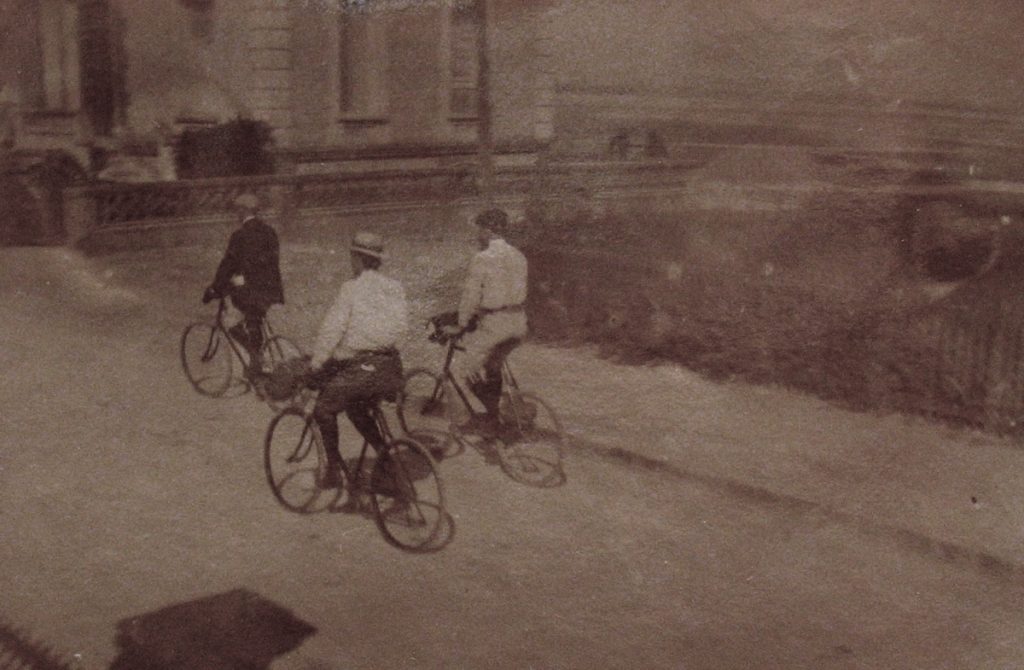
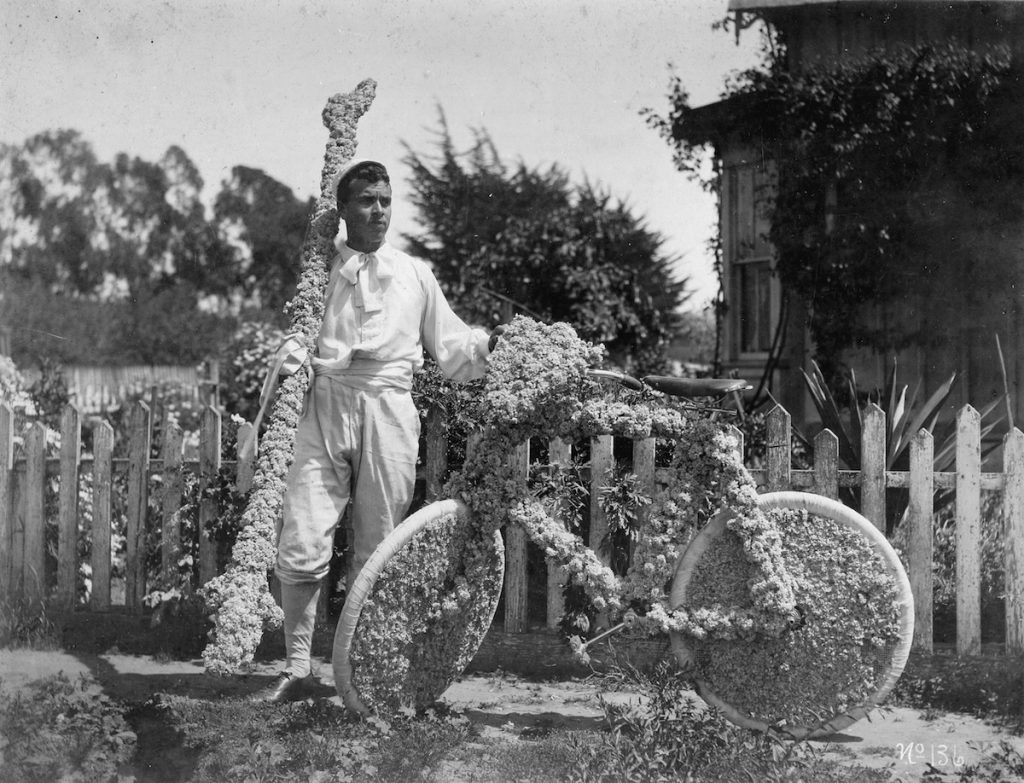
In August 1894, Harry Mitchell had set the record for “rapid bicycling” over mountain roads in the Central Coast. He rode to Ventura, enjoyed a repast of meat and potatoes, raced a horse and rider to Nordhoff (Ojai), left them in the dust, and returned to Santa Barbara in four hours and 45 minutes. His $50 Waverley and he were none the worse for wear.
Unfortunately, the safety bicycle wasn’t all that safe, and accidents – small and large – warranted press coverage. In 1909, Florence Baxter Eaton was seriously injured on State Street when she was knocked unconscious by a delivery boy on a bike. The wind had been blowing sand in his eyes and he did not see her. On the other hand, runaway horses trampled several bicyclists over the years. Carl Wood was run over by a runaway vegetable horse and cart in 1909 and knocked unconscious.
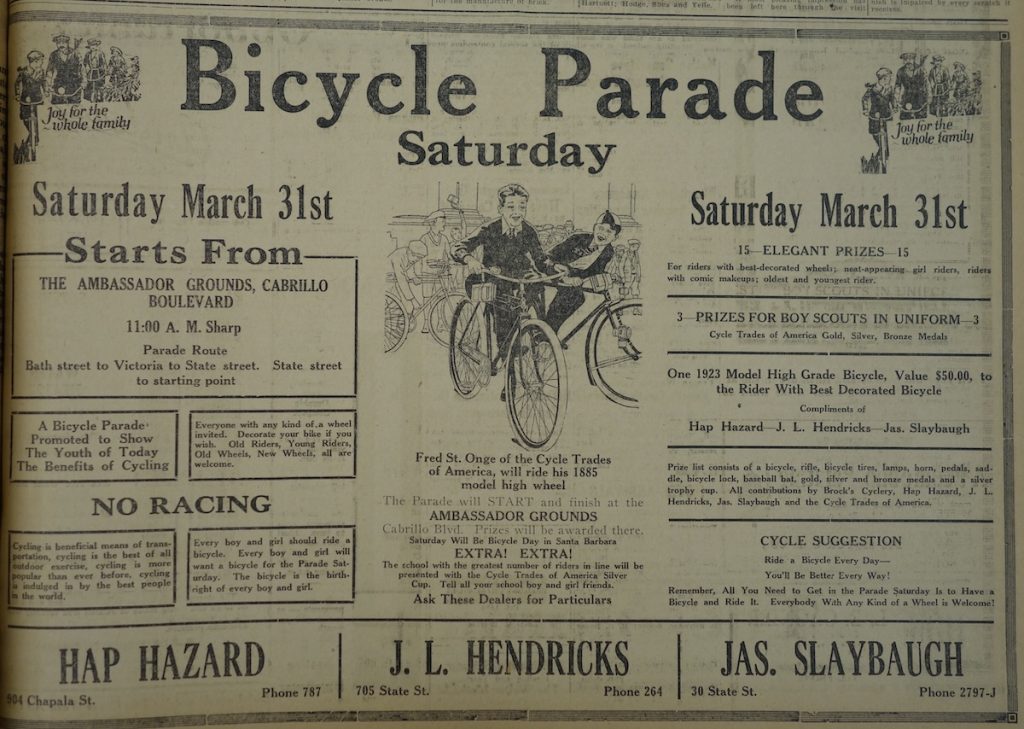
Santa Barbara had tried to tackle the safety problem in 1894 with various ordinances. Bicyclists were prohibited from riding in Plaza del Mar “because of the habit of reckless younger riders to speed about without regard to the rights of pedestrians and sightseers.” Wheelmen were required to have bells, and it was suggested by one city council member that the type of bell be specified in order to prevent recalcitrant bicyclists from “carrying cow bells as a burlesque of the ordinance.” By way of compensation, the council raised the speed limit from seven miles per hour to ten. Nevertheless, the wheelmen complained bitterly about the ordinance saying bells startled the
pedestrians who jumped into the way of the bike. Many claimed they’d rather sell their wheels than obey such an absurd law.
While pedestrians usually ended up on the losing side of a bike encounter, the June 1896 Morning Press reported on one woman whom bicyclists just didn’t run into. The reporter wrote, “One man did it and wasn’t able to sit down for several days. He was going at a pretty fair gait along Chapala Street and ran into the above-mentioned woman. She did not wait to send a complaint to the council but just grabbed the young man by the nape of the neck, laid him across her knee and bore down heavy. As he crawled away with his wheel, she said, ‘I let you off pretty easy this time, young fellow, but if you ever run into me again, you’ll wish bicycles were never invented!’” Hmmm.
Note: This story was first published in 2007 and later included in my now out of print book, The Way It Was: Santa Barbara Comes of Age. (Sources: Contemporary news articles; http://caviews.com/EarlyCalPhoto.html; and various online histories of the bicycle)
You might also be interested in...




You must be logged in to post a comment.