
Then and Now on East Valley Road
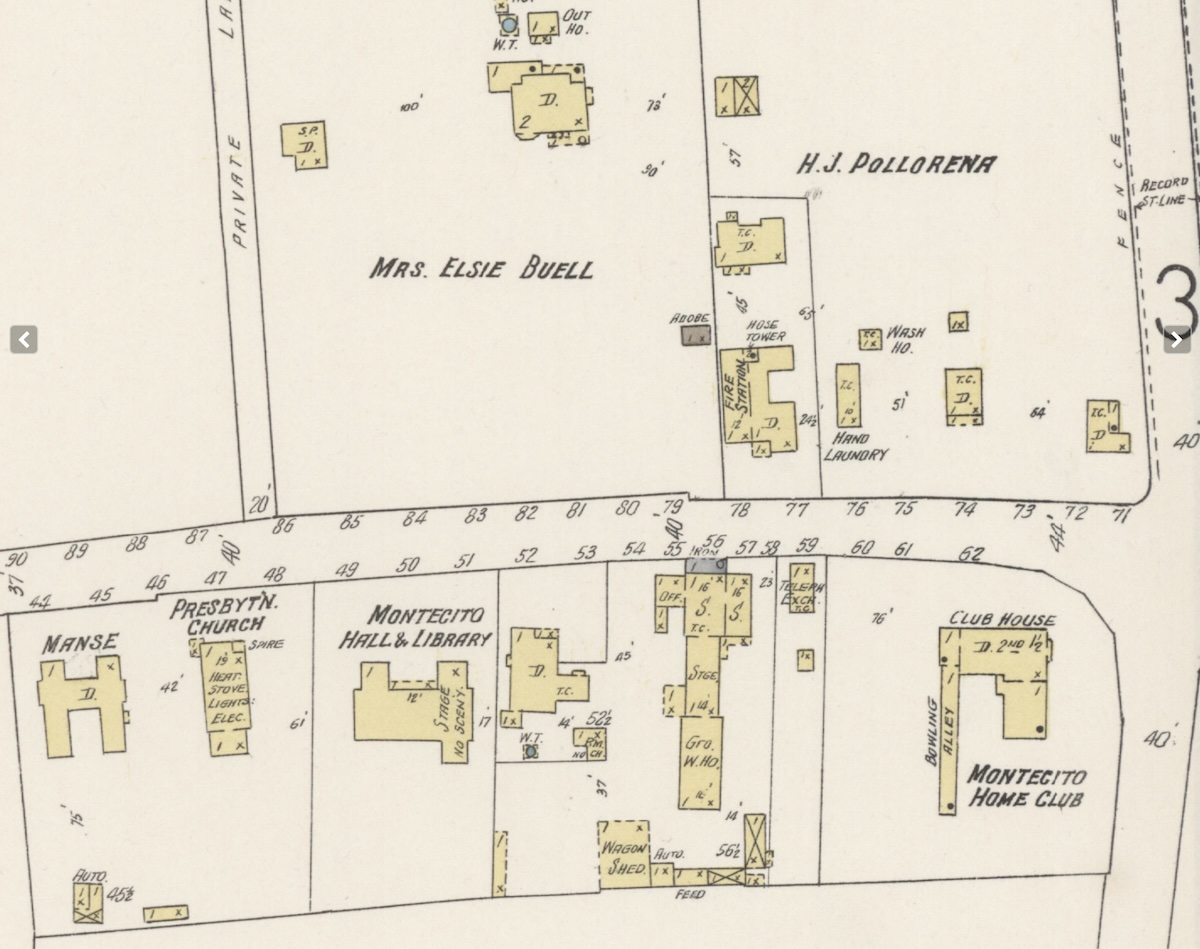
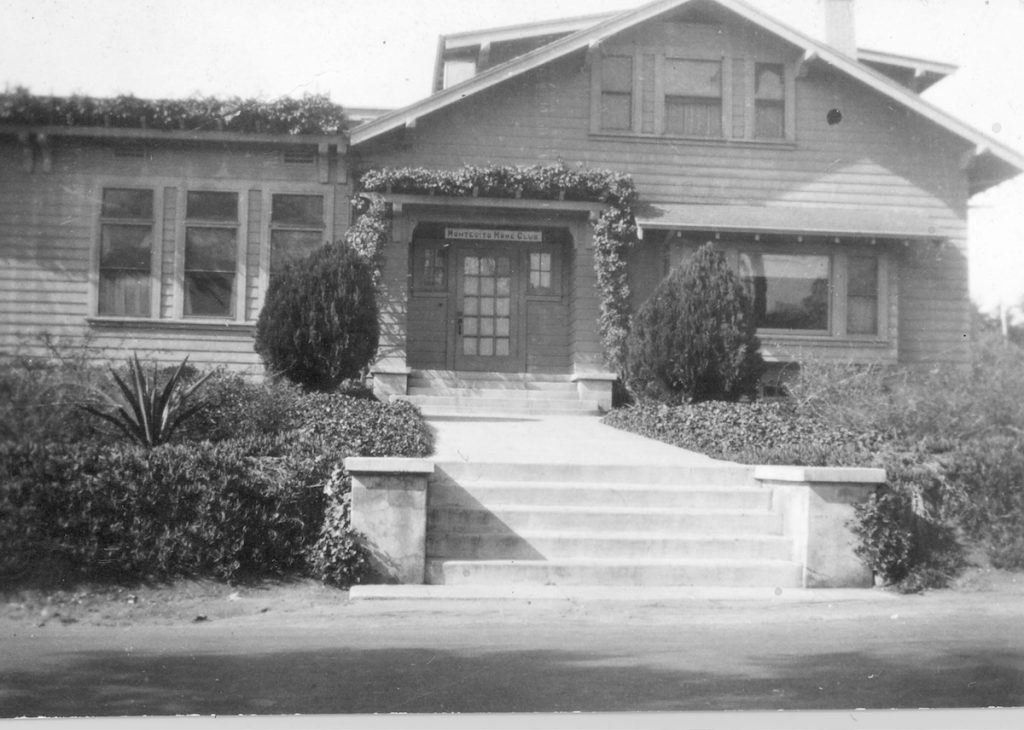
Once upon a time, a lovely clapboard cottage graced the southwest corner of San Ysidro and East Valley roads. Built in 1914, it was the home of the Montecito Home Club, which was founded in 1908 in an old adobe building across the street. The purpose of the club was to provide a center for amusement, culture, recreation, and practical education for the children of Montecito. Mrs. Laura Moore (later Knight) had funded the purchase of land and construction of the newer, larger clubhouse.
Cold Spring School, Montecito Union School, and Ortega School regularly sent groups of students to the Home Club for training in Sloyd. (Sloyd was a Finnish system of handicraft-based education intended to build character, moral behavior, intelligence and industriousness.) Once a month a well-baby clinic was held there as well, and a pediatrician and nurse gave free immunizations and examinations.
By 1949, the club was also in charge of many community activities that were held in Manning Park where they had a woodworking shop, toy repair shop, print shop, and photographic darkroom, in addition to a meeting room for Scouts. The club also provided recreational facilities such as a bowling lane, tennis courts, ping pong tables, a volleyball court, badminton court and a horseshoe court.
In 1956/57, the Home Club deeded the property to the YMCA which had taken over operation of its activities. In 1983, thanks to a host of civic-minded philanthropists, the Montecito YMCA constructed a new facility across the street from Montecito Union School.
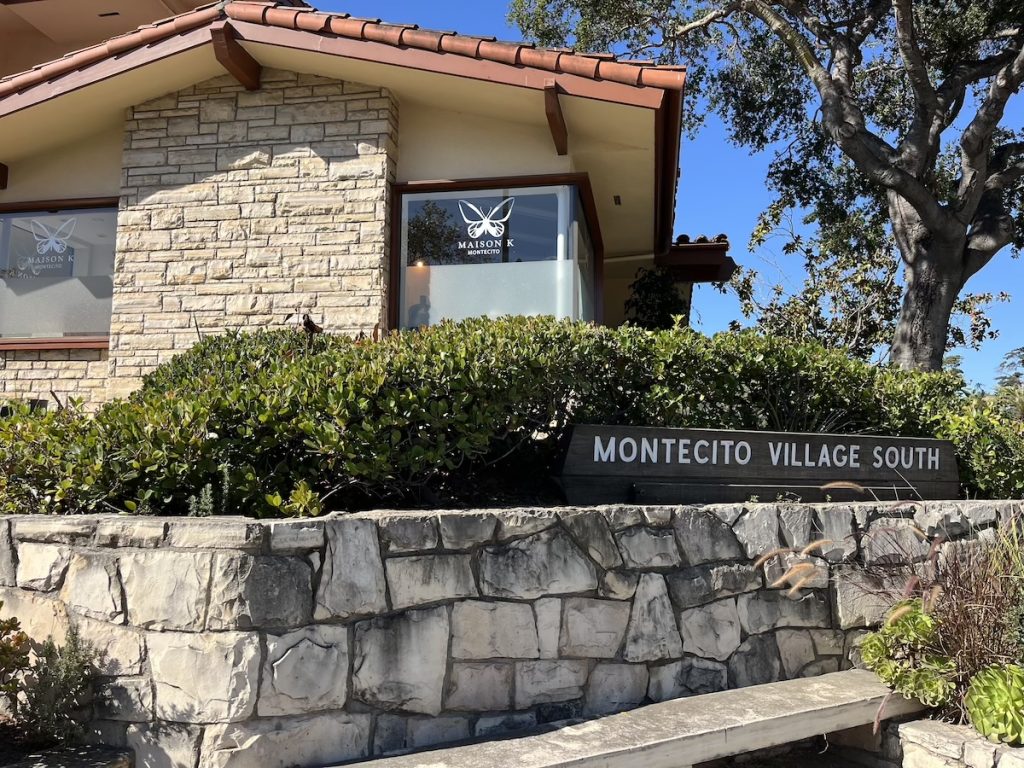
Today, the corner on which the Home Club stood is part of the shopping center named Montecito Village South, which was built in 1965 by Charles A. Borgatello, whose brother co-founded the family-owned Marborg Company.
Before Montecito Village South
The shopping center replaced not just the former Montecito Home Club, but also the telephone exchange, the old Montecito Store, a gas station and a dwelling.
The first Montecito Store on this site was a grocery belonging to the Buell family and was run by Percy Buell, a member of the pioneer Buell family whose main dwelling and properties were across the street. In 1920, Buell sold to William T. Colville, Sr., who had worked as a chauffeur for Mrs. Laura Moore (later Knight), who had funded the construction of the Montecito Home Club. A fire two years later devoured the store and the Coleville home next door, but his former employer came to the rescue with a loan that allowed him to rebuild. It being the 1920s, he built in the popular Spanish Revival style.
His store included a meat market and restaurant/soda fountain and a gas station next door. Coleville became famous for his advertising campaign which was developed when a geographic survey of Montecito declared his store to be standing on the geographic center of Montecito. From then on, he advertised “The Montecito Store, the Heart of Montecito.”
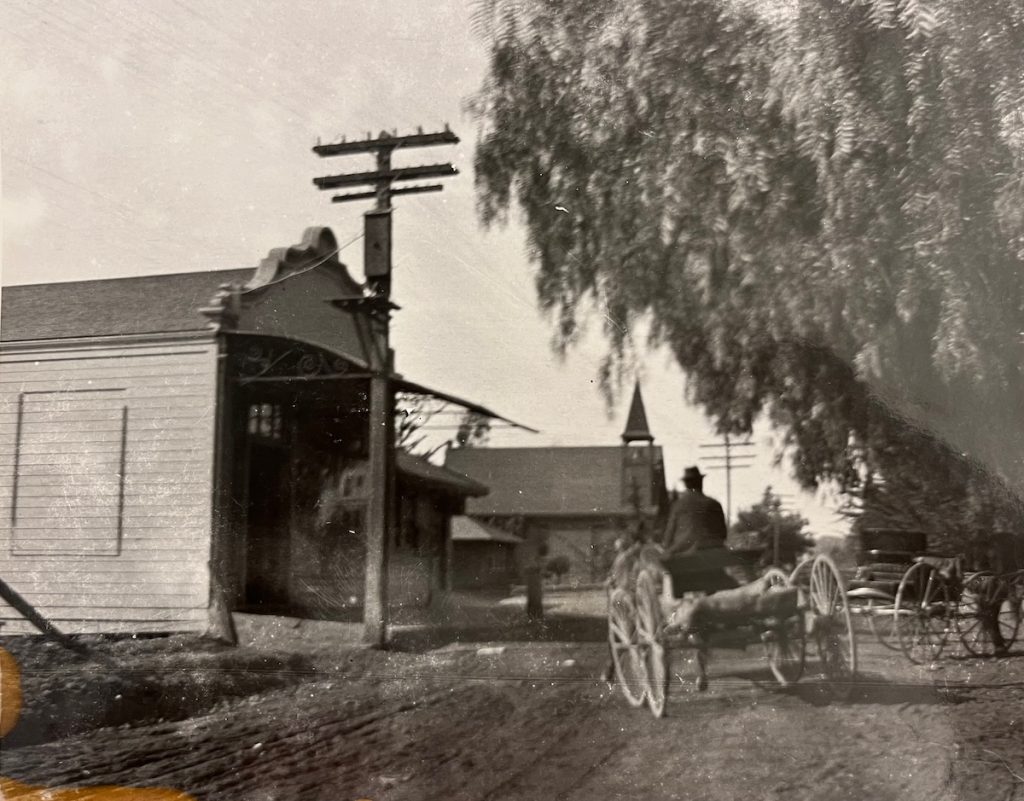
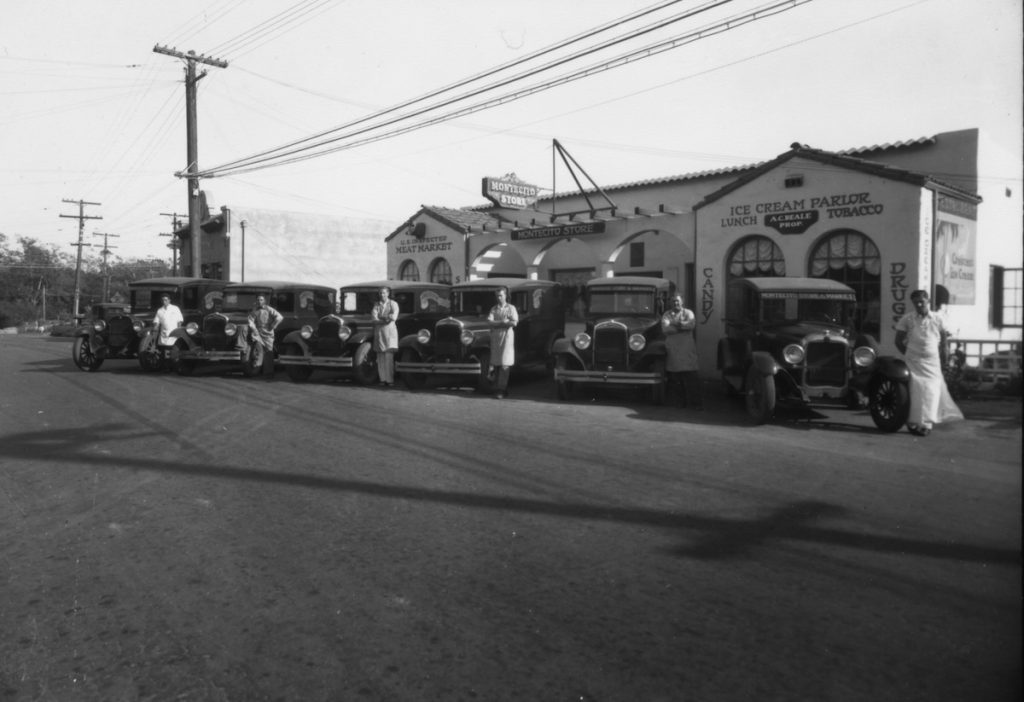
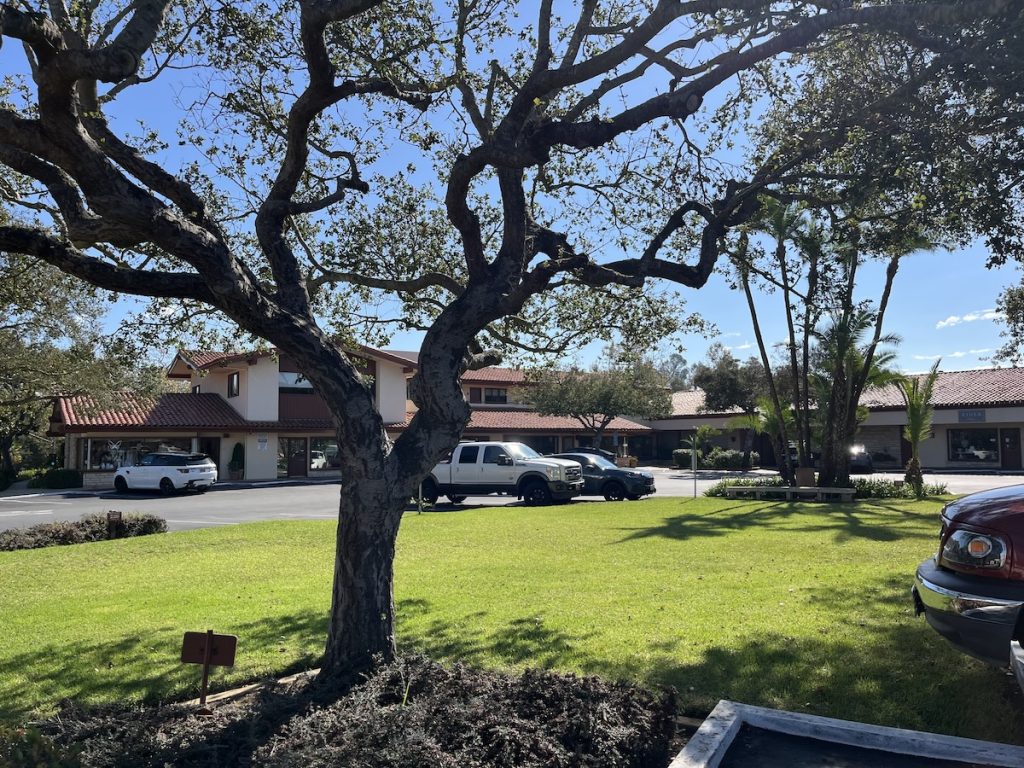
The store was genuinely welcoming to all who entered its doors, old or young, rich or poor. Many old time Montecitans retained fond memories of childhood days spent at the soda fountain or working for the Colevilles. Those were halcyon days when kids would sit on a stone wall of Casa del Herrera and wait for a car to come into view. They would then see who was first to identify its make and model. When they tired of waiting for cars, they would stroll down to the Montecito Store for a penny candy.
Coleville closed his store in 1960. The proliferation of supermarkets with their lower prices and self-service shelves proved too much for small personal grocery stores throughout the nation. “Basketerias,” it seemed, were here to stay, though since Covid, many stores now offer personal shopping.
Montecito Hall

By 1885, with a population augmented by American farmers and wintering Eastern residents, Montecitans decided they needed a community hall to augment the two dance halls in Spanish Town and Miramonte Hall on Romero Hill (hence, today’s Miramonte Road). In January of that year, an ice cream festival and fair held at the Big Grapevine in Spanish Town kicked off the first of many benefits for the Montecito Hall building fund. It was followed in February by a basket social given at the Montecito Union School house which raised 25 dollars for the fund. Next came a parlor concert given by local talent at Captain Absalom Anderson’s estate house and attended by people from both Santa Barbara and Montecito. It raised $47.50 for the cause. (Captain Anderson, by-the-way, was the famous riverboat pilot and owner of the Mary Powell, the fastest steamboat on the Hudson.)
It wasn’t until 1889 that the hall was complete, although the fundraisers continued because there was a debt to pay off. The hall doubled as a theater and many amateur plays were staged there. Dances were also popular as well as lectures, and Montecito Hall became the polling place for the community. This hall probably stood on the north side of East Valley Road on the Pollorena or Buell property.
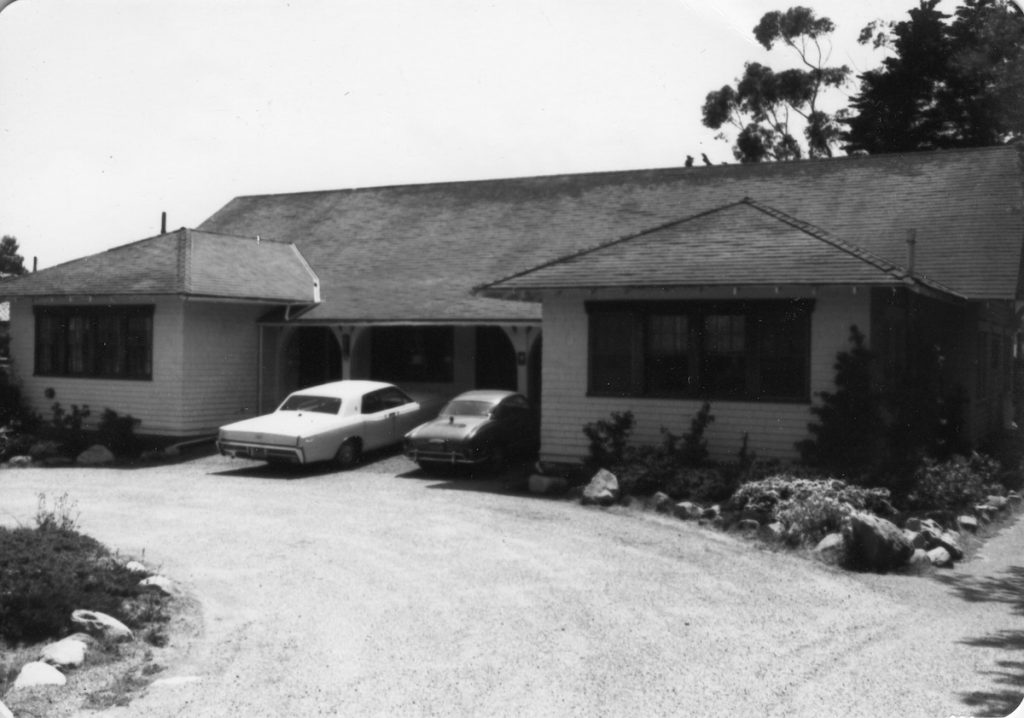
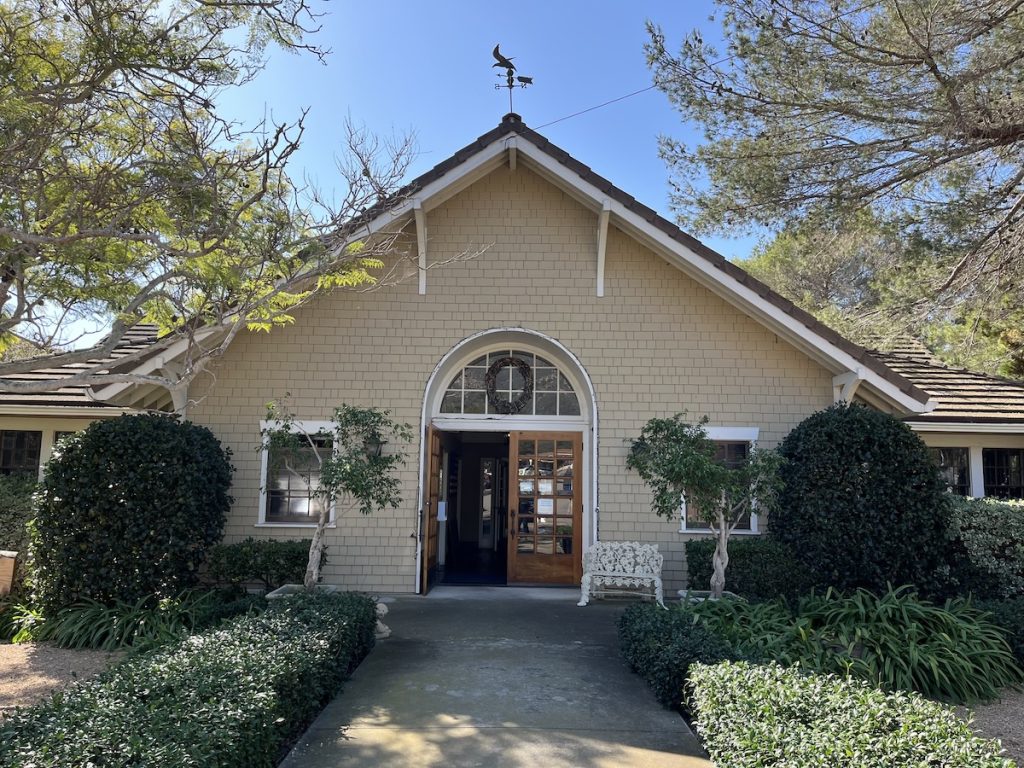
Apparently, this additional hall wasn’t sufficient, because in 1896, the Montecito Hall and Library Association incorporated with the goal of building a new Montecito Hall across the street. Construction began in 1900. The new hall reflected the then current vogue for shingled Craftsman cottage architecture. It housed an auditorium and a stage with a proscenium arch, a library room, and an exhibit room for the Horticultural Society, as well as a kitchen and dining room. The roof was supported by exposed wooden trusses stained a rich dark brown, as were the wainscoting and other wooden details.

For years, Montecito Home Club dances were held there, as well as movie nights and amateur theater productions. The previous Montecito Hall across the street, however, remained the polling place for the community.
Over the years, Montecito Hall hosted many entertainments to support the operating expenses, and leased their rooms for comedic acts, magic shows, spelling bees, club meetings, square dances, variety shows, and suffragist speakers and lectures.
By 1979, many Montecitans were thinking that the now outdated Montecito Hall should be razed and a new one constructed in its place. Ultimately, however, it was decided to refurbish and renovate the old hall and establish a branch to the Santa Barbara Library system. Today, the building houses the Montecito Library, a meeting room, and the Montecito Association Office and History Committee. The history archive has been carefully curated over the years beginning with Catherine (Kit) McMahon, who was followed by Maria Churchill, and then Maria Herold. Currently, Trish Davis has charge of the history resources in the room, which is open on a reservation basis.
The Presbyterian Church

In 1870, the Presbyterians of Montecito began meeting every other Sunday at the Montecito School house. In 1888, they built their first church and manse along East Valley Road. It was a wood frame Carpenter Gothic style church with a wooden bell tower.
This building served the community well for over 40 years, but by 1930, it had outlived its usefulness. It was decided to raze the wooden structure and build anew in the Spanish revival style. Completed in 1932, the aging structure was remodeled in 1990 to better serve the Presbyterian community of Montecito.


Sources: “The Great MUS-YMCA Land Swap” by Steven Crandell in Montecito Journal; contemporary news articles; David Myrick’s Montecito and Santa Barbara; “The Upper Village of Montecito,” by Bob Hazard, MJ, 8 Feb. 2018; interviews with Mo Masson and Patti Ottoboni; resources of the Montecito Association History Committee; El Montecito Presbyterian website
You might also be interested in...




You must be logged in to post a comment.