
John Alexander Jameson, Guardian of Montecito
Two roads and a lake are named for him, but few remember John Alexander Jameson or the details behind his tremendous efforts to benefit and protect his adopted hometown of Montecito.

Born in Chicago, Illinois, in 1868, where his father, John Alexander Jameson Sr., served as a judge of the Superior Court, Jameson Jr. followed in his father’s footsteps and studied law. He graduated from Northwestern University Law School in 1893 and practiced law until shortly after WWI. In 1902, he married 26-year-old Janet Strong of Chicago and the stage was set for visits to Santa Barbara for Janet and her family had been seasonal visitors since the 1880s.
Jameson took time off from his law practice to serve during the Spanish American War as an officer in the U.S. Navy and again during WWI where he was an assistant to the commandant of the 9th, 10th, and 11th Naval Districts at the Great Lakes Training Station in Illinois.
Having escaped the scourge of the Flu Pandemic of 1918, Jameson and Janet moved to Montecito in 1919 where they rented a home, Ganada, on Schoolhouse Road until their George Washington Smith-designed home, El Miraval, on Park Lane was complete. When Lockwood de Forest finished the design for the landscaping and Jameson opened a law office in the Howard Canfield building on State Street, they were ready to become involved in their new community.
Jameson became treasurer of the Community Chest, served on the board of the Community Arts Association, became a director of the County National Bank, treasurer of the board of directors of the Santa Barbara Girls’ School, a director of the Lobero Theatre Company, and president of the University Club. Janet became chairwoman of the music branch of the Community Arts Association, served on the board of Neighborhood House, and was an active member of the Santa Barbara Woman’s Club and the Little Town Club.
Water
Jameson’s first and foremost concern, however, was the lack of an adequate water supply in Montecito. The situation was a testy and litigious one. The various private water companies which relied on vertical and horizontal well water were often at loggerheads with each other and with private owners for their share of the scarce effluent from the mountains. In earlier times, dry years saw many Easterners closing their estates during the summers as there simply wasn’t enough water to sustain them.
As the population of Montecito struggled to grow, it became apparent that something needed to be done. A committee organized in February 1921 put forth a special November election to allow for the incorporation of the Montecito County Water District. After a nearly unanimous vote by the population, a board was elected in January 1922 that was composed of the men most involved in creating the district. This board came to include Francis T. Underhill, John Boyd, Robert S. Hyde, Percy O. Buell, and John A. Jameson. In May, this board appointed Carl Wyant as district engineer and engaged F. C. Finkel, an engineer who had extensive experience in this type of work, as a consultant.
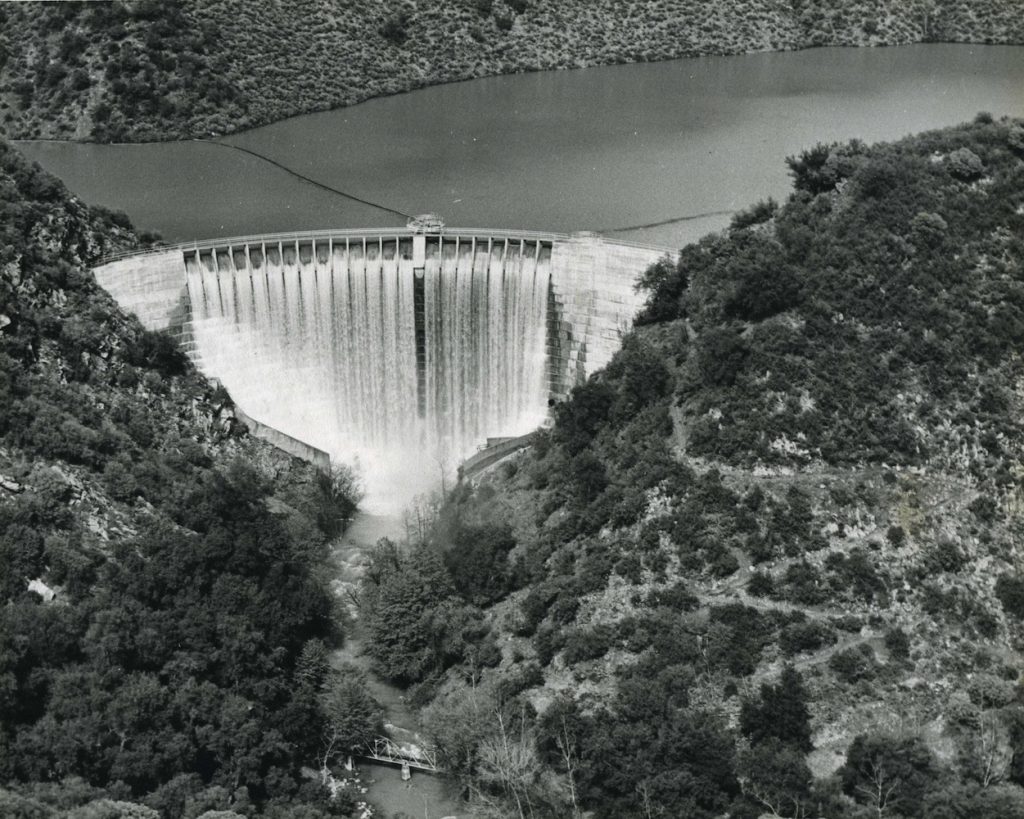
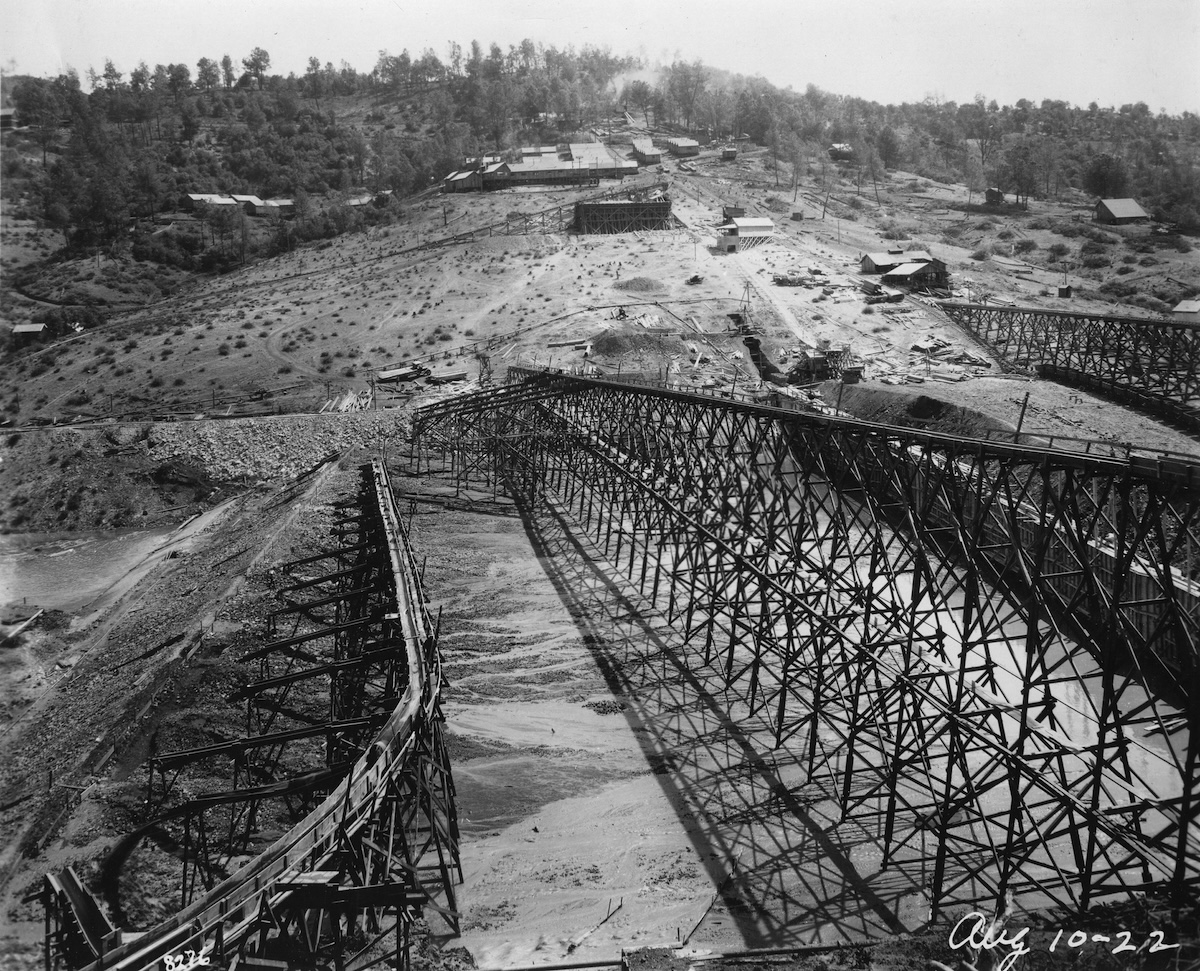
After investigating various options, it was decided that Montecito must follow the lead of Santa Barbara and bore a tunnel through the mountain to the Santa Ynez River where a dam would be built. The horizontal well created by drilling the tunnel would supply additional water until such time as the connection to the Juncal Dam was made. A bond election for $850,000 in March 1923, was carried by a vote of 300 to 29, and by July work began on drilling the Toro Tunnel, laying out a distributing system of pipes and reservoirs, and laying a pipe to Sheffield Reservoir in order to deliver surplus water purchased from the City of Santa Barbara.
By this time Harold Josiah (Harry) Doulton of the Miramar Hotel had joined the board and served as president. The Toro Canyon tunnel was completed in 1928, the same year that Harry died, and it was renamed the Doulton Tunnel in his honor. John Jameson became president of the Board, and the lake behind the dam, which was completed in 1930, is named for him.
Protection
Jameson, along with many of his contemporaries, was very protective of Montecito’s charms and ambiance. They felt, however, that they were under attack from unscrupulous investors who would purchase property adjacent to a beautiful estate and announce their intention to use it for some noisome and unappealing activity unless, of course, they were bought out at inflated prices. That and other issues motivated the organization of the Montecito Community Association on September 6, 1926.
Jameson was one of the five directors who created the Montecito Protective Covenant which posed rules regarding zoning, the location of business centers, setbacks, architectural review, and maintenance of streets, parks and playgrounds. Adherence to these rules was voluntary, however, and not everyone wanted to be bound by these strict regulations. Nevertheless, out of these efforts grew today’s Montecito Association.
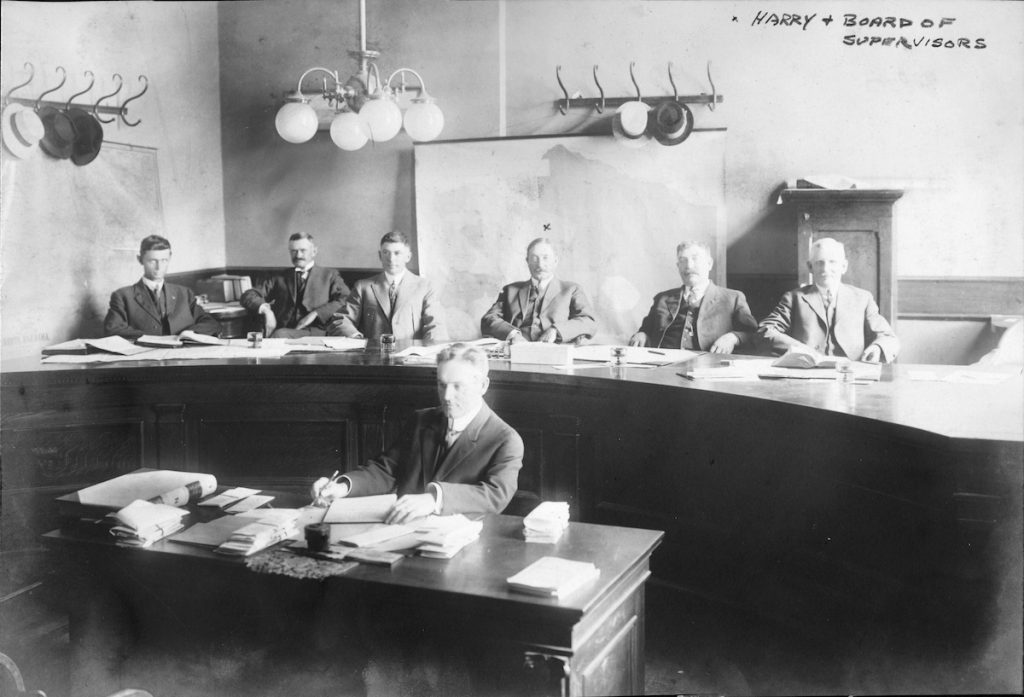
Meanwhile, recognizing that the force of law was needed to protect Montecito, Jameson led the effort to collect signatures requesting that the Santa Barbara County Board of Supervisors create a County Planning Commission. The Commission was established on November 21, 1927, and Jameson along with Dwight Murphy became charter members.
They recognized that they needed a qualified professional as the Director of Planning, and Jameson was instrumental in the hiring of L. Deming Tilton. Initially, the citizens of Montecito contributed half of his $7,200 a year salary, claiming they wanted to attract the best-qualified person for the job.
That first year, the Commission members directed Tilton to create ordinances that would “protect property values and attractiveness in Montecito districts.” Basically, a modification of the unsuccessful Montecito Covenant, the ordinance enacted in 1929 limited lot size based on the water supply’s ability to accommodate the population. It was designed to “prevent overcrowding, increased and hazardous traffic, air quality deterioration, water and sewer problems, and the destruction of Montecito’s impressive stand of native vegetation.” It was also designed to stop the blackmail and threats of unethical real estate investors.
Besides the lot size restrictions, business was limited to three areas: along East Valley Road at Montecito Village, along the Coast Highway at Coast Village, and at the intersection of Toro Canyon Road and the Highway. For the rest, Montecito was to be residential.
Montecito Parkway
As time went on, the dusty County Road through Montecito became the paved Highway 101, and auto traffic spilling down or chugging up Ortega Hill and along Coast Village increased a
hundred-fold. By 1928, the highway through Montecito consisted of three lanes (the center one for passing) and it still couldn’t keep up with the traffic. Trucks roared past roadside businesses, imperiling locals and tourists alike, and the State wanted more lanes to accommodate more traffic.
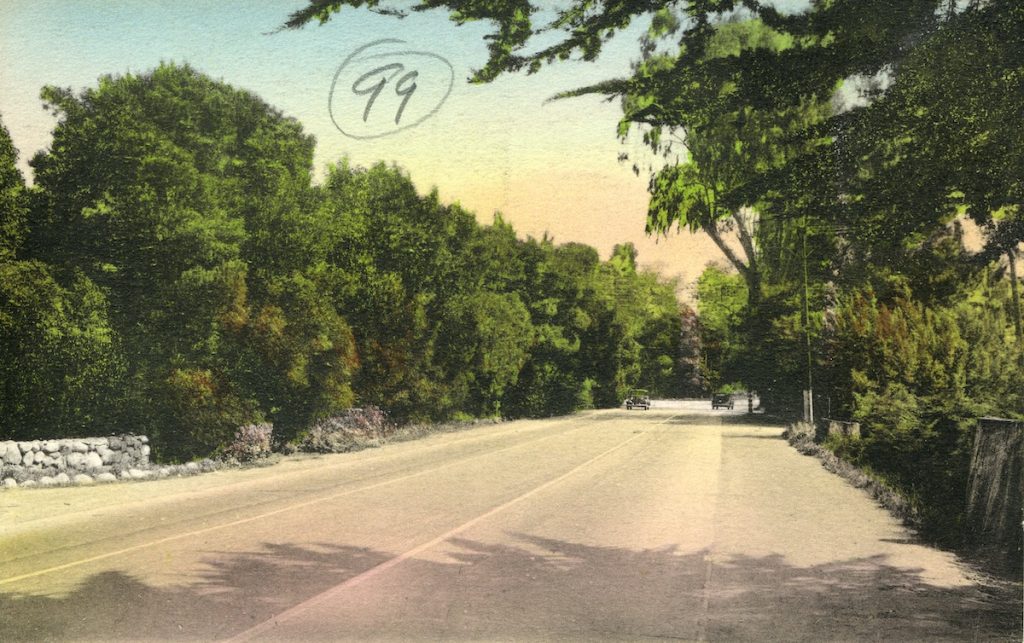
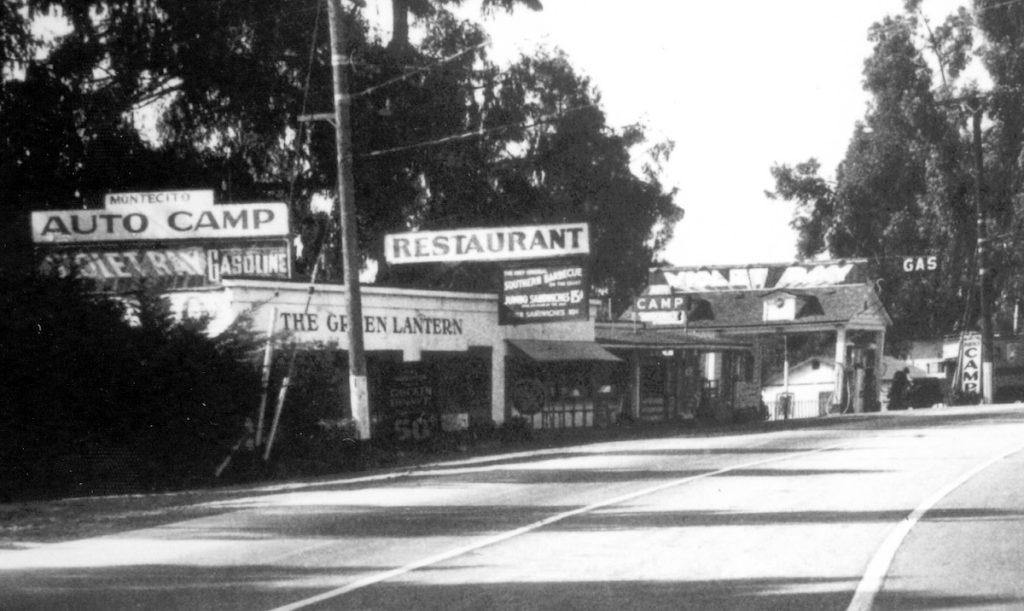
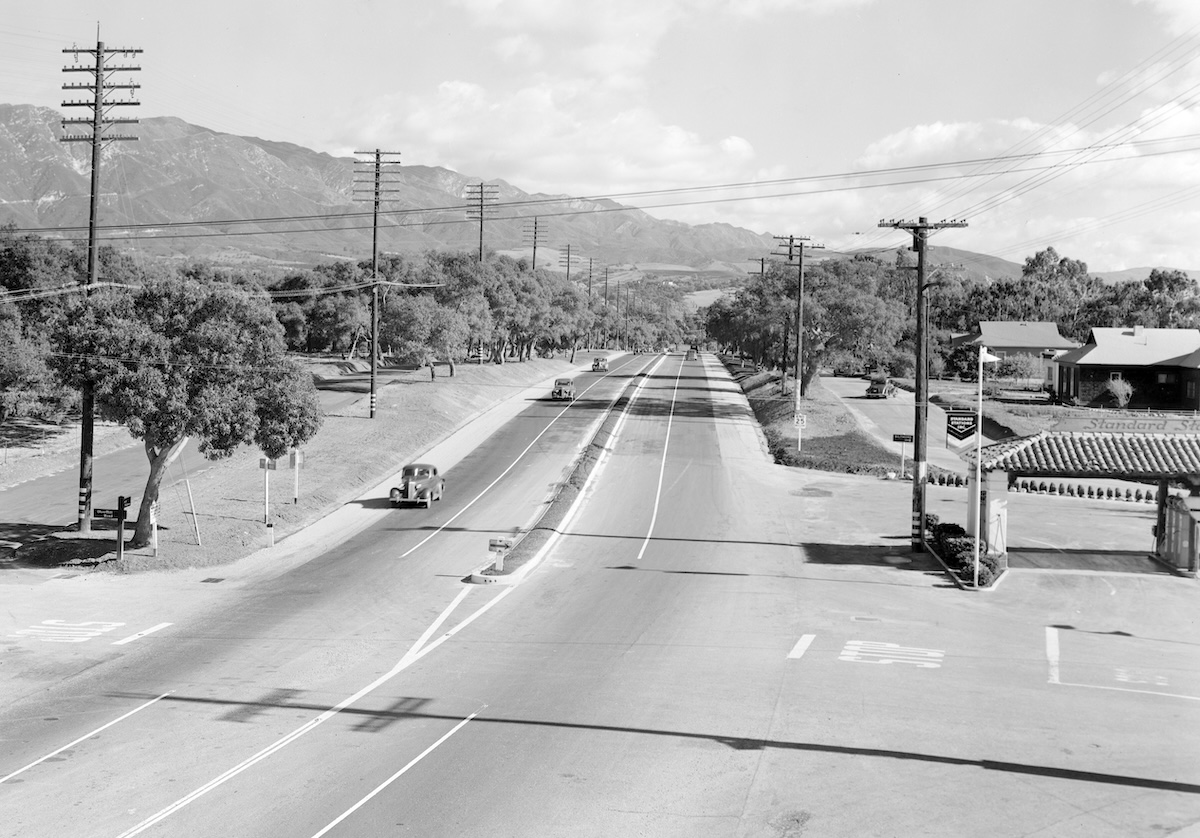
Tilton advanced the concerns of Jameson and many Montecitans when he said that the approaches to the city had become shabbier and shabbier each year. In his report to the County Planning Commission, he wrote, “Montecito rebels at the prospect of this once-delightful, tree-bordered old carriage road becoming a barren, fume-filled canyon of blatant signs, malodorous restaurants, flimsy auto camps and tourist hotels.”
The answer, Jameson and the Commission believed, was to create a triple roadway; one for through traffic and two on each side for local businesses. The highway was to become a parkway with planting strips on each side and in the median. The report said that the parkway was to be designed “to insulate private property from the noise, fumes, glare, and hazards of highway traffic” by creating a screen of attractively landscaped vegetation. Both frontage roads were to be bordered with vegetation as well.
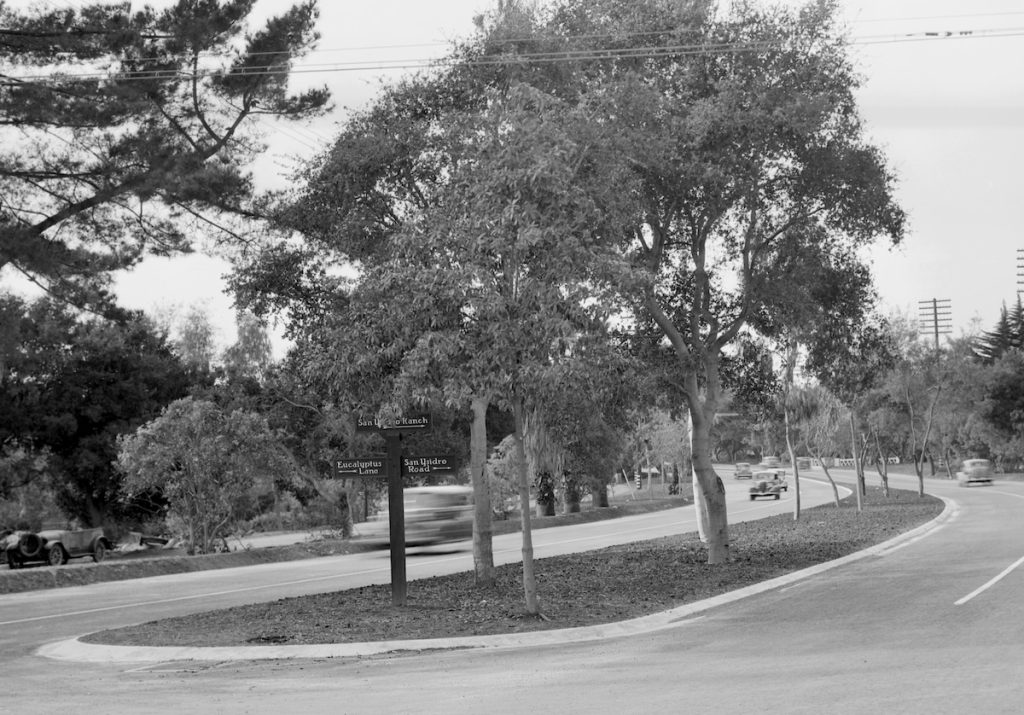
The plan was approved December 30, 1930, and Jameson spent the next several years leading the crusade to raise monies and secure the property rights for the project. The first phase, extending from Olive Mill Road to San Ysidro Road, was completed two months after Jameson died. Plans to extend the parkway to Sheffield Drive were not completed until 1948 and lasted only six years before it was modified for a freeway that included off-ramps and on-ramps.
The roads paralleling the highway were named North and South Jameson to honor the man who worked tirelessly to protect, enhance, and beautify Montecito.
Today
This article was originally published in 2012. Today, the State of California, through several new codes and laws, has taken away the authority of the County and local communities to create guidelines and rules for their own development and growth. AB 1893 – aka “Builder’s Remedy” – has been used to allow massive, unrestricted development that increases the density and taxes the aging infrastructure of Santa Barbara County communities; all under the guise of creating affordable housing. Once again, the communities of Montecito, Santa Barbara, Goleta and elsewhere are vulnerable to the actions of unscrupulous developers and investors.
Sources: Phillips History of Santa Barbara County; O’Neill’s History of Santa Barbara County; David Myrick’s Montecito and Santa Barbara; Obits; City Directories; U.S. Census; First Annual Report of the Board of Directors of Montecito County Water District, 1 November 1924; “Santa Barbara County Planning Commission” by Eric P. Hvolbøll, Noticias Spring 1985; Minutes of the Santa Barbara County Planning Commission–various–1927-1938. Many thanks to Lois Werner and Tom Mosby, Montecito Water District, and Diane Voll, CalTrans Librarian-Archivist.
You might also be interested in...




You must be logged in to post a comment.