
Ludmilla Pilat Welch: Journey to Santa Barbara
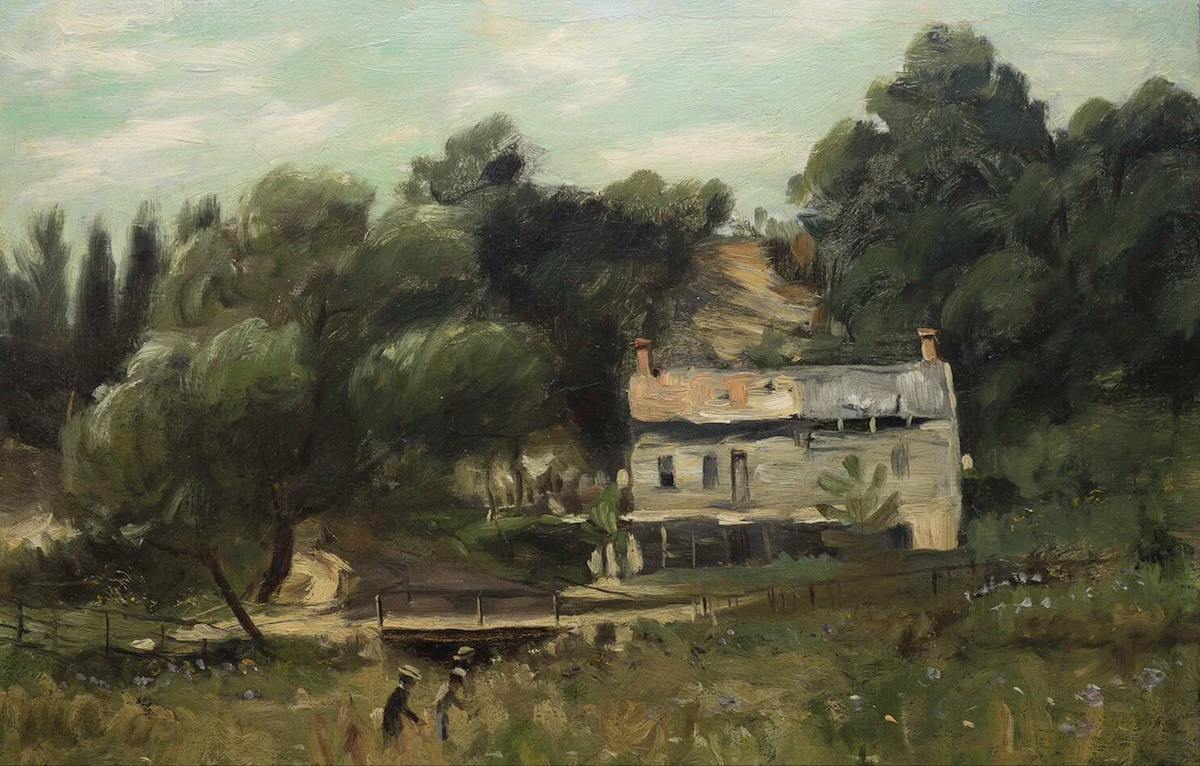
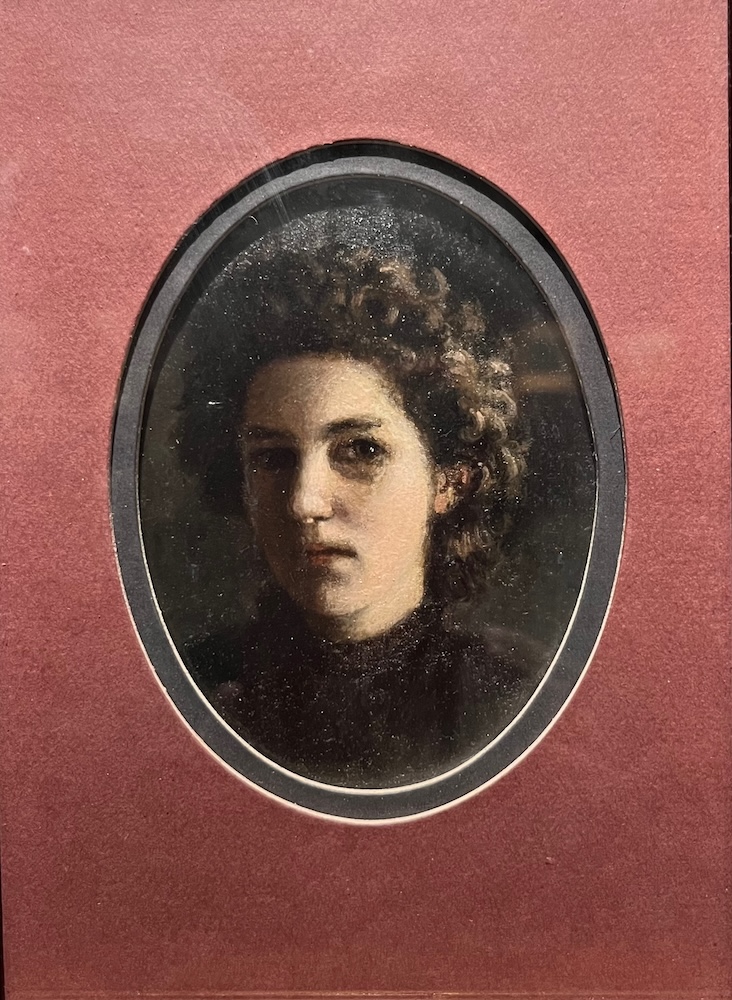
Ludmilla Pilat Welch married her artist husband, Thaddeus Welch, in Ossining, New York, in 1883 when she was 16 and he was 39. Thad’s adventure-filled journey to become an artist had eventually led him to study in Munich and Paris for six years before returning to the United States in 1881. He settled for a time in New York where he tramped the countryside painting Hudson River scenes and met the Pilat family. His and Ludmilla’s relationship developed, and he became her art teacher, painting en plein air. The Jug Tavern, painted by Ludmilla in 1883, is still revered in Ossining today.
After their marriage, Thad travelled extensively to earn a living and establish his reputation as an artist. Ludmilla, it is believed, stayed at home with her family. In January 1892, Ludmilla’s father died. Soon thereafter, Ludmilla and Thad began preparing to move to California.
Many years later, in a letter to reporter T.J. Pilkington of the San Anselmo Herald, Ludmilla told their story. They had come to Mill Valley to live in the summer of 1894 and stayed there until May or June of 1896, living in a house in the winter and camping in the summer. The first winter they rented an unfurnished cottage for four dollars a month which was all they could afford.
Steep Ravine
While living in Mill Valley, Ludmilla and Thad discovered their ideal homesite while taking a moonlight walk to Bolinas. The fog had come in thickly and they had lost the trail. After wandering about for a while, they sheltered near a rock to wait for daylight. When it was light enough to see, they found themselves where the trail pitched down into Steep Ravine.
Intrigued, they explored Steep Ravine carefully and fell under the charm of the place. They decided to create a home there. In May, they began to build. The lumber came up on a schooner from San Francisco to Bolinas, was off loaded into the sea, hauled to the top of the ravine, and slid down to where the house was to be built. Ludmilla tells it best:
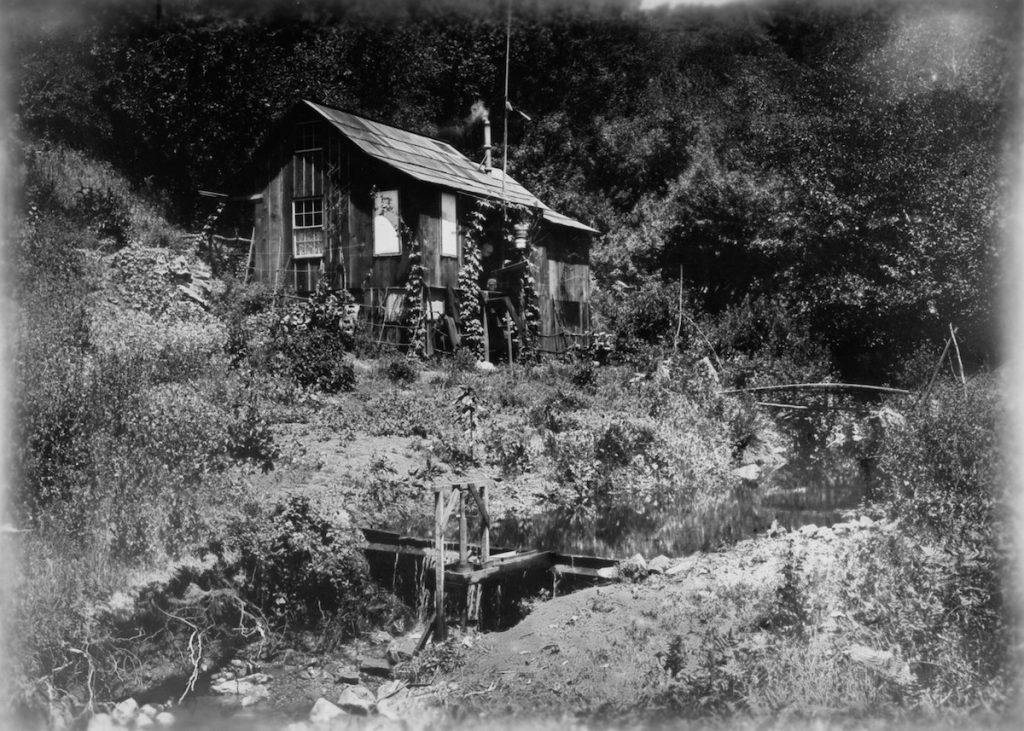
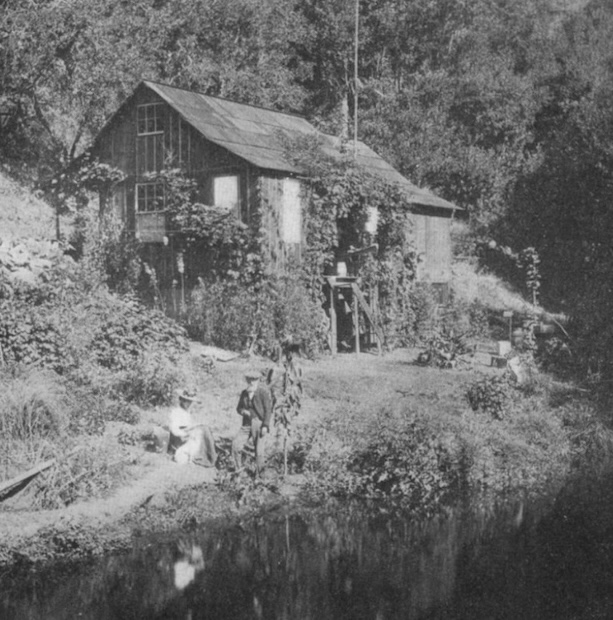
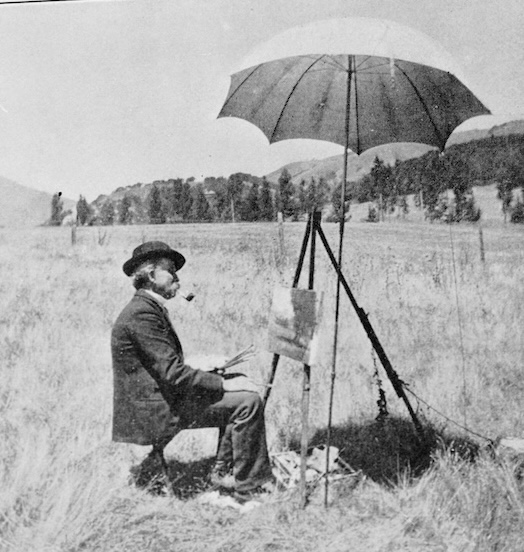
Mr. Welch had no one to help him but me, but I soon became proficient in the use of saw and hammer and helped shingle the roof. I remember what a job it was to get the heavy timbers up for the second story (the two bedrooms were upstairs) because the lumber came up as a deck load and was soaked with sea water. When the lumber dried there were cracks all over so there was plenty of ventilation without opening the doors or windows. In fact, it was a couple of years before we felt that we could afford windows, so we tacked muslin over the openings. When we finally got windows, our cat tried to walk through because he had never seen glass.
Mr. Welch was very inventive, and he could do almost anything in the house; a hinged door, a sort of double action, so that the cats and dogs could go in and out as they like; a way to get the water out of the creek by simply standing on the back porch and turning a crank, etc. etc. We had sweet peas and hop vines and geraniums and nasturtiums; we always had plenty of color. Once a hop vine came through a knot hole and twined all around the pictures and even bloomed in the house… We were very happy living in those beautiful surroundings, even if we did have to walk 4 ½ miles to post a letter and were 15 miles by road to the nearest railroad and were living principally on mussels and mushrooms and oranges or other fruit that washed up in the bay.
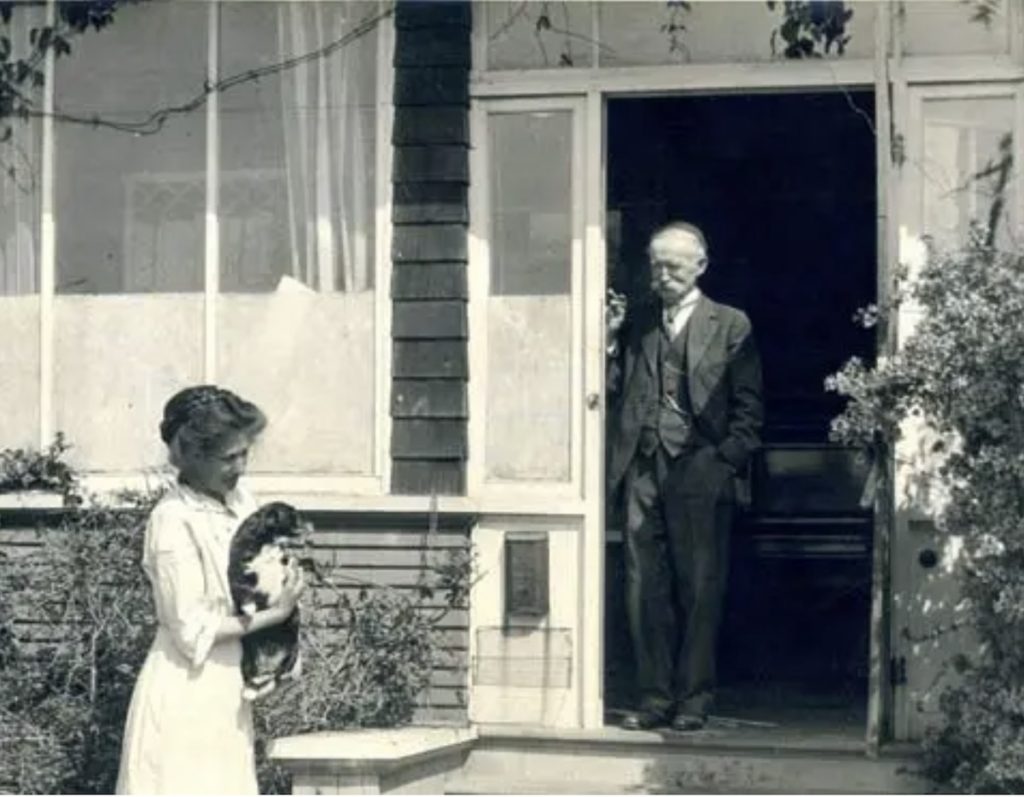
Our walls were covered with the sketches as we made them and occasionally someone would come along and buy one and we were happy to see that blank space.
When we wanted a hot bath we walked down to the beach, following the creek and bathed in the sulphur spring. This could only be done at low tide – otherwise it was under water. The two cats and two dogs followed wherever we went, even for miles, so it was quite a procession when we went sketching. At that time Mr. Welch sold pictures for five or ten dollars that afterward were sold for $250 or $300.
Ludmilla and Thad lived at Steep Ravine for five years, but the climate was hard on Thaddeus, so they decided to move to San Geronimo. By this time, Thad’s work had become well known, and he had a studio in San Francisco. The couple became known for painting together side by side in the countryside, and Ludmilla’s talent was being noticed as well.
Santa Barbara
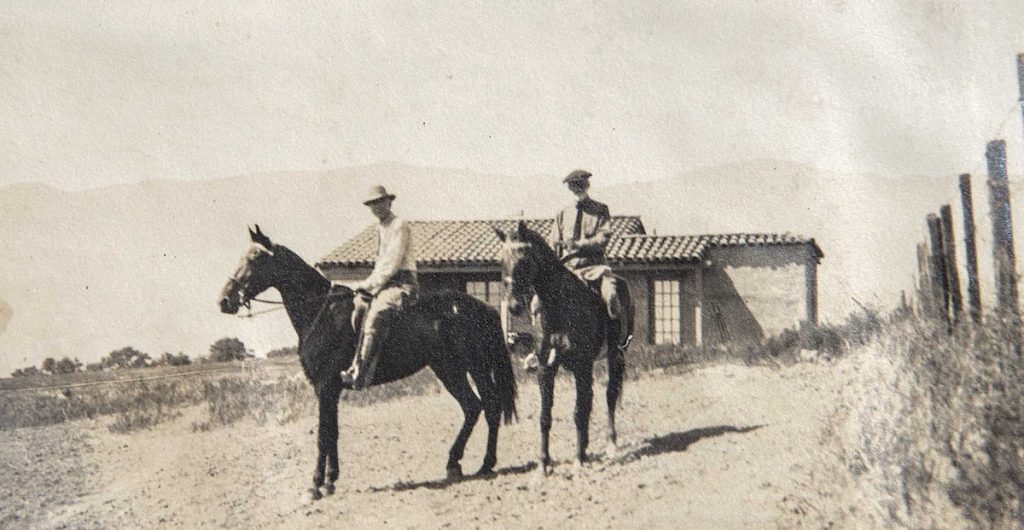
San Geronimo was even colder and wetter than Steep Ravine, and by 1905 Thad’s bouts with asthma and bronchitis had become chronic and debilitating. In August (tellingly known as Foggust in Marin) Thad came down to Santa Barbara with his artist friend J.M. Sharp to investigate moving to its salubrious clime.
In February 1906, he purchased property at 411 Sola Street and a new chapter in his and Ludmilla’s life began. The art colony of Santa Barbara welcomed them with open arms. The Morning Press reported, “Few Santa Barbara people know that Thaddeus Welch, the noted painter of Marin County, owns a home here; fewer still are aware that in his wife, Mr. Welch has a rival who is making him look well to his laurels.”
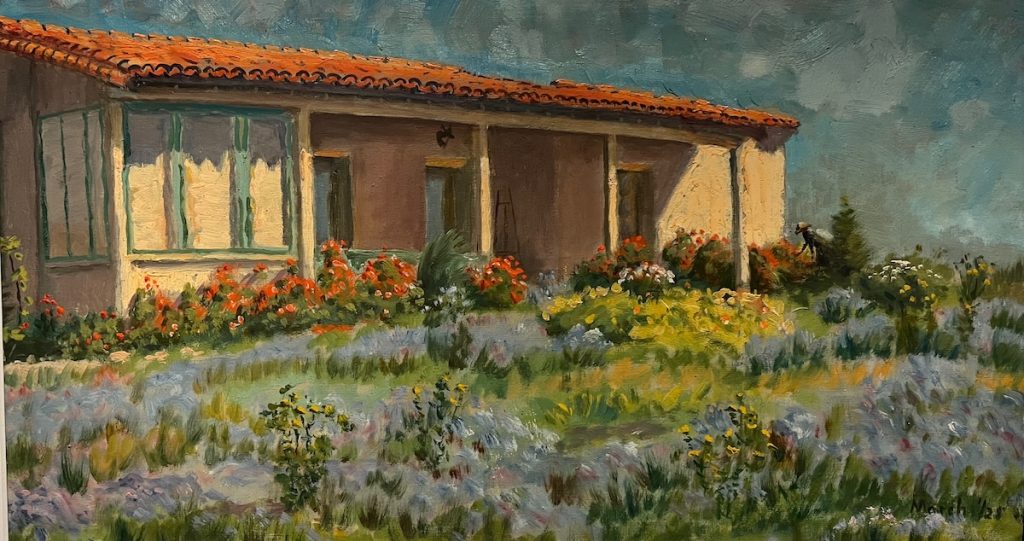
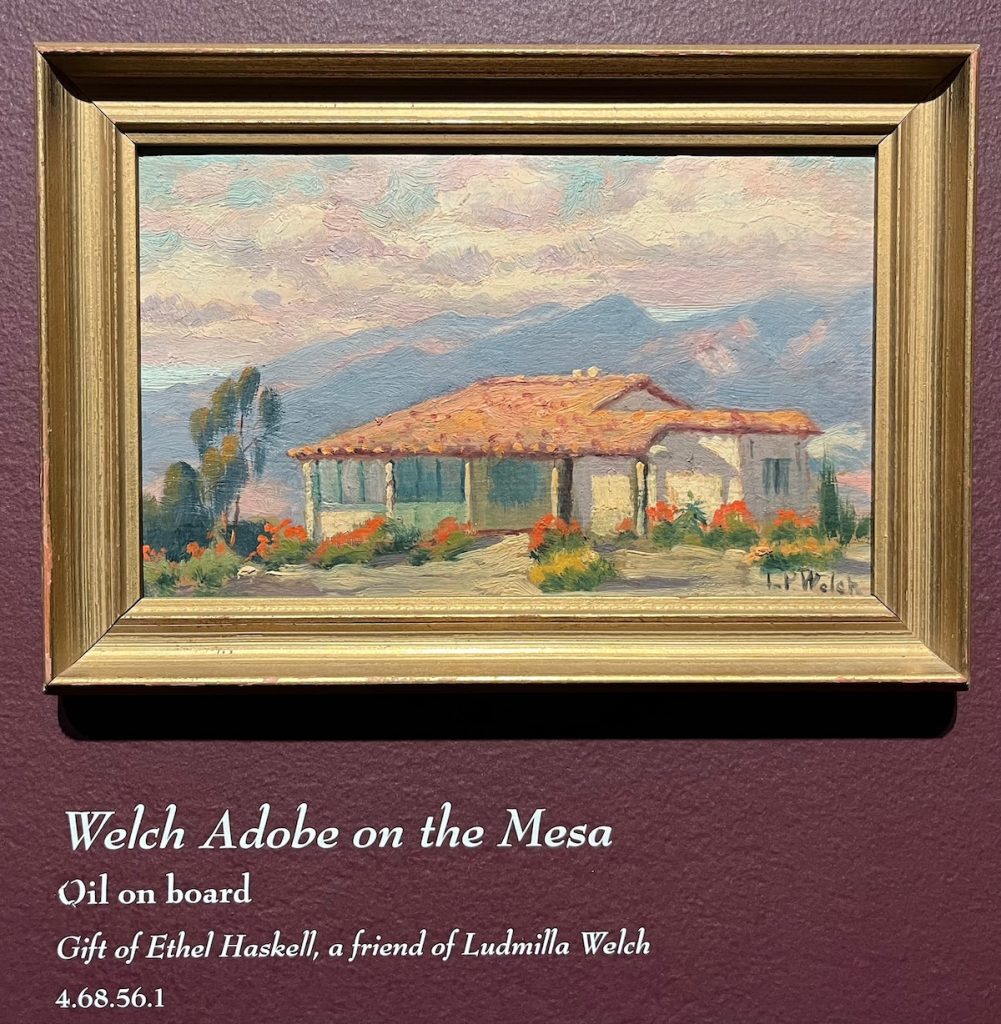
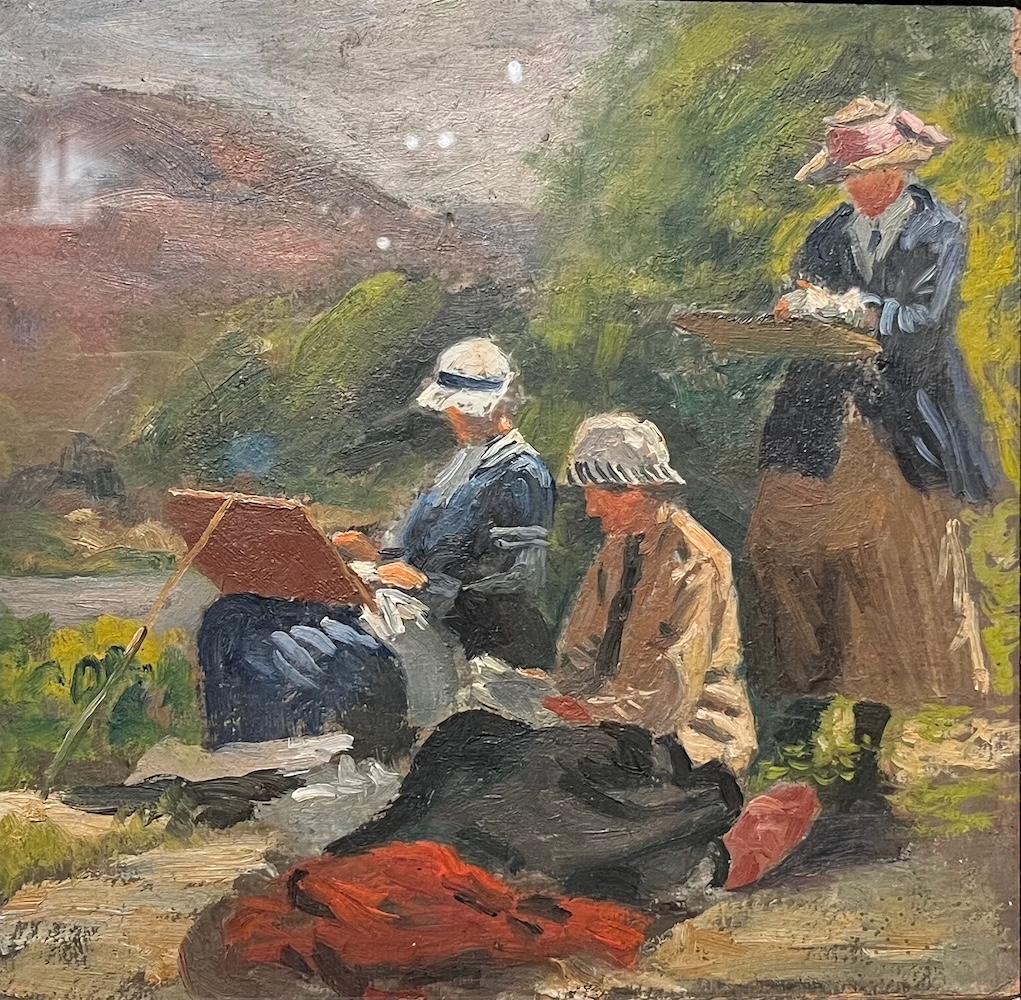
By 1907 Ludmilla had joined the Art Study Club, which had been founded in 1899. The club, composed entirely of women, met once a month to study, discuss and create art, often en plein air.
The Art Study Club made a project of painting the adobes, and Ludmilla joined in enthusiastically. Writing in 1945, News-Press Society Editor Lilli Paulding wrote of Ludmilla, “For the love of it, she tramped about the town and country and painted in oils those adobes that had weathered the storms and were still in use as dwellings and others that were in ruins, mere shells of their former usefulness.”
For the Art Study Club’s 1907 annual exhibition, the reviewer wrote, “Conspicuous in the collection were the oil studies of a new and very gifted club member. The subjects were mostly local landscapes and were painted in a big way, showing great natural talent and magnificent technique. A picture which attracted such attention was a bit of Monterey coast showing the sand dunes in the foreground. The simplicity of the subject required the utmost skill on the part of the artist to attain the desired effect, which was strikingly realist.”The artist, of course, was Ludmilla.
For the next several years, glowing comments about Ludmilla’s work were often in the local newspapers. In 1919 a rotating exhibit of Ludmilla’s life’s work was held at 1210 State Street. Six paintings a week were shown. The paintings included Mission Ridge Before the Gringo Came, Rincon Mountain (painted from and showing Montecito Park in the old days), The Dixie Thompson Ranch, Sunset in the Mountains (a painting of the Sexton place), The Hills That Fremont Knew (San Marcos Pass after the dawn has just broken), Santa Barbara Channel and The Oaks. There was hardly an inch of Santa Barbara’s countryside that hadn’t been illuminated by her brush.
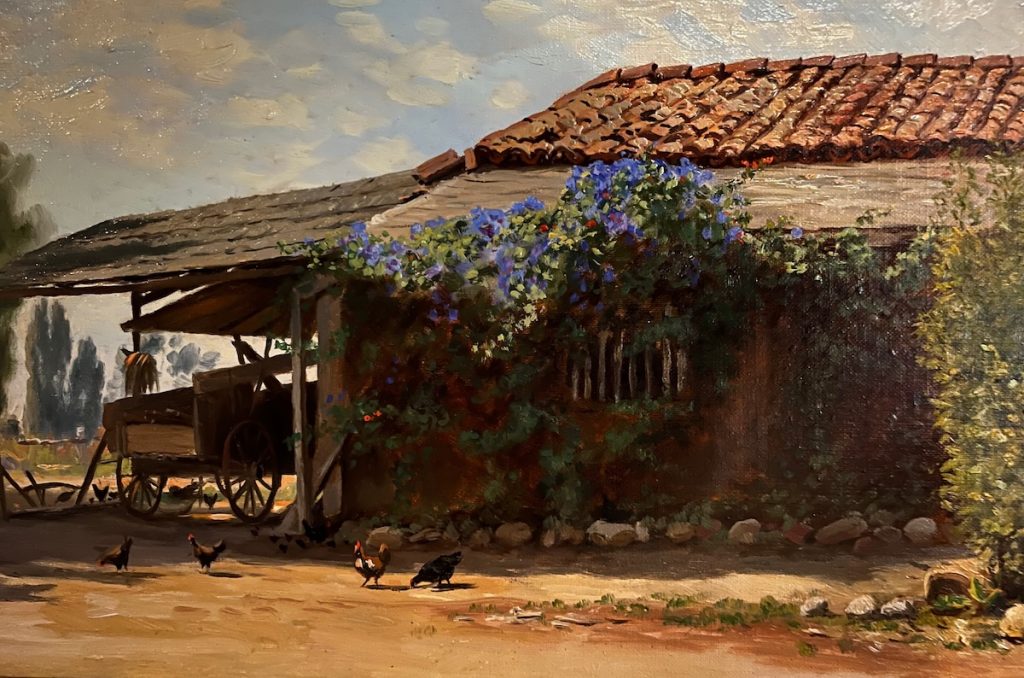
At the end of that year, Thaddeus Welch died, and Ludmilla continued living at 411 E. Sola. By 1920, her sister Anna Pilat Knight had come to live with her. This being the time of a great cultural renaissance in Santa Barbara, Arthur Farwell had come to town to establish a Community Chorus and instigate the formation of the Santa Barbara School of the Arts. Both Anna and Ludmilla joined the chorus.
In 1922, the Santa Barbara School of the Arts held a tea to honor the painters whose work had been exhibited in the gallery at the school. Ludmilla’s work was among the paintings by Mary Corning Winslow Black, Ed Borein, Carl Oscar Bord, Dudley S. Carpenter, Lockwood DeForest, Fernand Lungren, Thomas Moran, Martha Wheeler Baxter, Alexander Harmer, DeWitt Parshall, and Lilia Tuckerman.
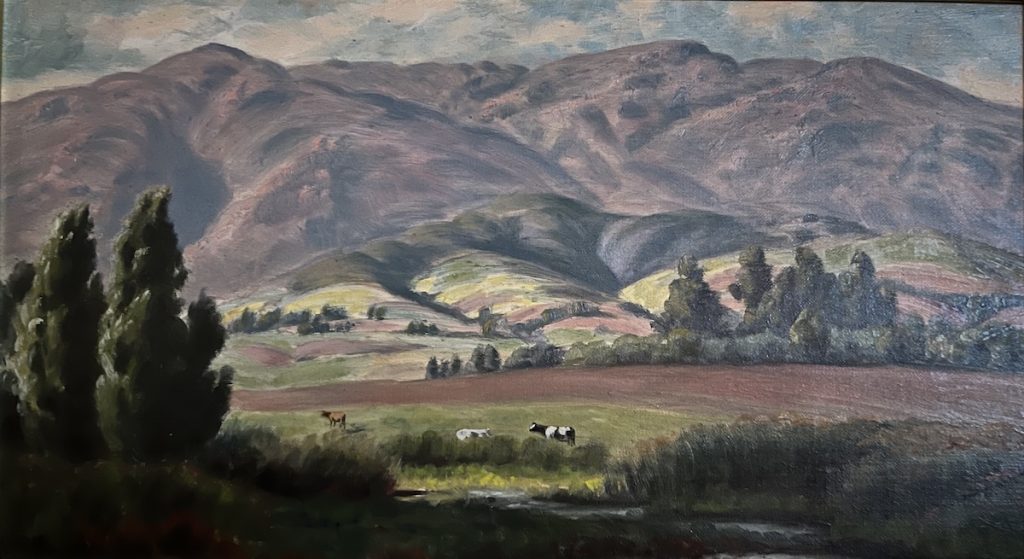
That same year, Anna and Ludmilla began building their own adobe home on the top hill of the Utopian community called Fellowship Colony, which they had joined two years previously. They did all the work themselves – with the exception of a male carpenter to handle the heavy timbers, and laborers to make the adobe bricks. Almost every day they walked from their home on East Sola to their place on the Mesa and back again when their day’s work was done.
In 1925 Ludmilla Pilat Welch suffered an asthma attack and died on a train while traveling to her hometown of Ossining, New York. Her homes and property were inherited by her sister Anna and remained in the possession of Pilat descendents for many years. She lived her life with verve and heart and turned privation into adventure. The sixteen-year-old schoolgirl had grown into a unique and impressive woman.
Sources: Contemporary newspaper articles; California Art Research, Volume 3, pages 42-72. Originally a Works Progress Administration book from 1937. Now online at https://digitalassets.lib.berkeley.edu/cara/ucb/text/Cara_Volume_03.pdf#58; Ossining Historical Museum resources; various art galleries monographs on Thad.
The Santa Barbara Historical Museum exhibit that features the work of the artist Ludmilla Pilat Welch has been extended to the beginning of March.
You might also be interested in...




You must be logged in to post a comment.