
Uncanny Valley: Tom & Christine Frisina and the Dawn of the Video Game

In 1970, future Montecitans Tom and Christine Frisina were headed back to the States. Both in their twenties, the young marrieds had spent two years in Chuo-Rinkan,Japan –Tom working in Naval Intelligence with a top-secret cryptographic clearance, Christina finding a career with a Tokyo agency as a top model. Their respective endeavors in Japan may speak to the couple’s general and lifelong unease with the predictable. Following Tom’s discharge from the Navy, civilian life loomed. What happened next would fill a book.
On Saturday, Nov. 15, from 3-4 pm at Tecolote Books in Montecito’s Upper Village, Christine will present her jaw-dropping and colorfully designed memoir, LOST in Silicon Valley – The Dawn of Robots, AI, and Video Games.
Silicon Valley? Yes.
In 1970 – unbeknownst to the young couple – a robot was in the Frisina’s future. The vaguely humanoid ‘bot would serve as both talisman and Trojan Horse, ushering the Frisinas into a futurist coterie of disruptors just beginning to assemble the new digital revolution – an approaching tsunami whose scale and landscape-rinsing force was not entirely imaginable. Or as Christine says: “You go ‘seat of the pants’ a lot of the time. It’s one wild ride.”
Tom would become one of the founding drivers of the video game epoch whose unbottling would unleash a globe-circling genie. Unlike most liberated genies, this one would never be coaxed back into the bottle. Did the young, ambitious couple have any inkling of the transformation they were about to lead? No, they did not.
Understandably.
Sinatra. Peggy Lee. Earth Wind & Fire.
Tom’s earlier aspirations had been more analog.His father, David Frisina, was storied concertmaster of the LA Philharmonic, and a later habitué of Sinatra and Beach Boys recording sessions (among many others). At the time he assumed the LA Phil’s concertmaster role at the tender age of 28, David Frisina was the youngest concertmaster in the United States. Post-LA Philharmonic, Frisina senior would establish a nonpareil recording session career, contributing to 277 movie soundtracks, 440 albums (Sinatra, Ella Fitzgerald, Earth, Wind & Fire, Peggy Lee, The Beach Boys…) and 300 television shows. David Frisina would also spend 24 years with the Academy Awards Orchestra.
As can happen, his dad’s recognized status as a musician would shadow young Tom Frisina, who both revered his father’s accomplishments and was haunted by them.
“I did get a little weary, Jeff, of hearing – ‘oh, you’re Tom Frisina! Is your father David Frisina? You must know a lot about music!’” Tom sighs through a mild grin. “I decided to try to live up to the name the best that I could. I took up the trombone and I became a successful singer.”
Tom would sing for a time with the Roger Wagner Chorale – a staple of radio, concert hall, television and movie soundtracks. Then the rubber met the road. “I began studying conducting with Mehli Mehta; father of (globally renowned conductor and LA Phil’s music director) Zubin Mehta.” Note that one of Tom’s classmates in the program was future conducting superman Michael Tilson Thomas. This should possibly have been seen as a harbinger.
Tom Frisina’s unique skill set would indeed one day fuel a controlled cultural explosion that would literally change the world. That skill set was not orchestral conducting, however. At the moment of truth, his teacher solemnly gave Tom the news.
“By then it was like family,” Tom says. This likely softened the frank benediction his instructor offered at graduation when Tom collected his diploma.
“Tom,” Mr. Mehta said. “I love you and your parents. But this is not a good idea.”
To Infinity and Beyond
So it was that – years later – when Tom and Christine returned to California following Tom’s discharge from the Navy, his skills sought a nurturing environment whose offices and strategic posture might allow him to rise of his own accord. A job in Studio City fell through, but the prospective employer recommended Tom seek an interview with Irving Stern, VP of Marketing at J.B. Lansing Sound; an outfit known more familiarly to audiophiles as JBL.
Over the next eight years Tom would become Nat’l Sales Manager and VP of JBL before moving on to Infinity (whose stereo speakers this writer regards as sonically transcendent). From ‘79 to ‘82 Tom served as VP of Infinity Sales and Marketing. These years working in the JBL and Infinity trenches would make Tom a consumer electronics maestro with a heavyweight reputation.
Tom and Christine’s dear friends Larry and Susy Calof left the San Fernando Valley for Silicon Valley (so christened by author Don Hoefler in an Electronic News article series in 1971). The two couples kept in touch, and some two years later Larry recommended Tom and Christine move north as well. Tom conveys the silicon-based nature of Larry’s message.

“Larry said ‘You and Chris need to move to Northern California and start a robot company,’” Tom recalls. “And I said…okay!” The Frisinas’ move north to Los Gatos was history-making, given the vanguard tech they would be working on. On the other hand, Christine Frisina was slowly driving around the new hometown with a Thomas Guide in her lap.
“That was my life,” Christine says. “I’d never been up there in Silicon Valley. So I just had a Thomas Guide. Later on, Nolan developed a company called Etak, which was the first car navigation system.” Yeah, this is a story about that period of almost florid American innovation.
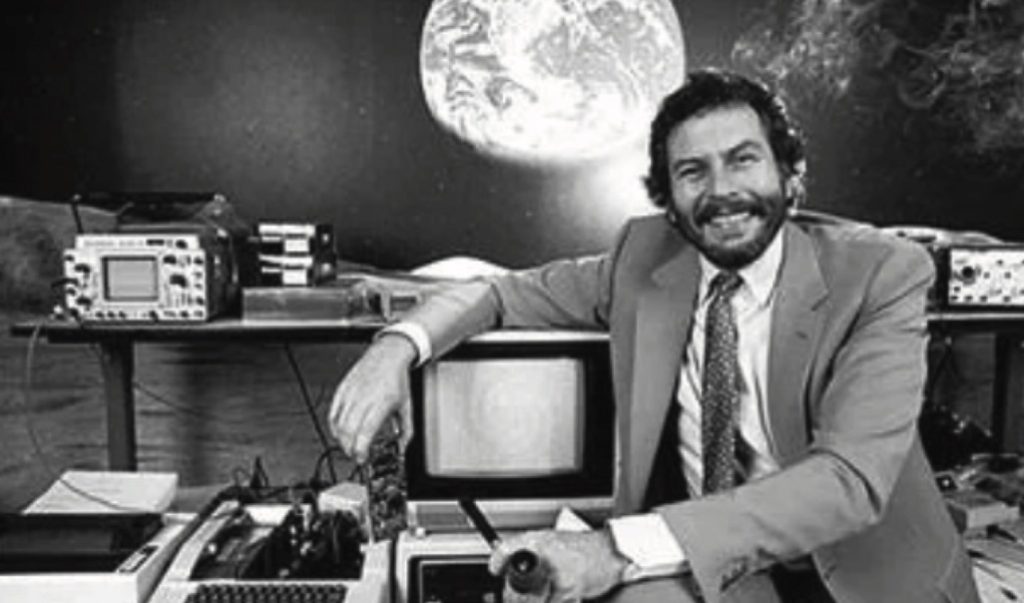
In the hothouse climate of a burgeoning new tech space, a guy in Sunnyvale named Nolan Bushnell had started up a business incubator. Gathered tech visionaries’ most promising concepts would be encouraged by Bushnell with sustenance funding and hardware. The ideas with legs would later make the venture capital rounds. Bushnell called his outfit Catalyst Technologies. For context, in those early days Nolan Bushnell would oversee the watershed launch of a fridge-sized, coin-operated arcade game called Pong – common primordial ancestor of every video game that would follow. Bushnell would later come out with the groundbreaking Atari home video console, and (in a separate business vertical) a parental chamber of horrors called Chuck E. Cheese. At this juncture, though, Bushnell was all about the ‘bot.
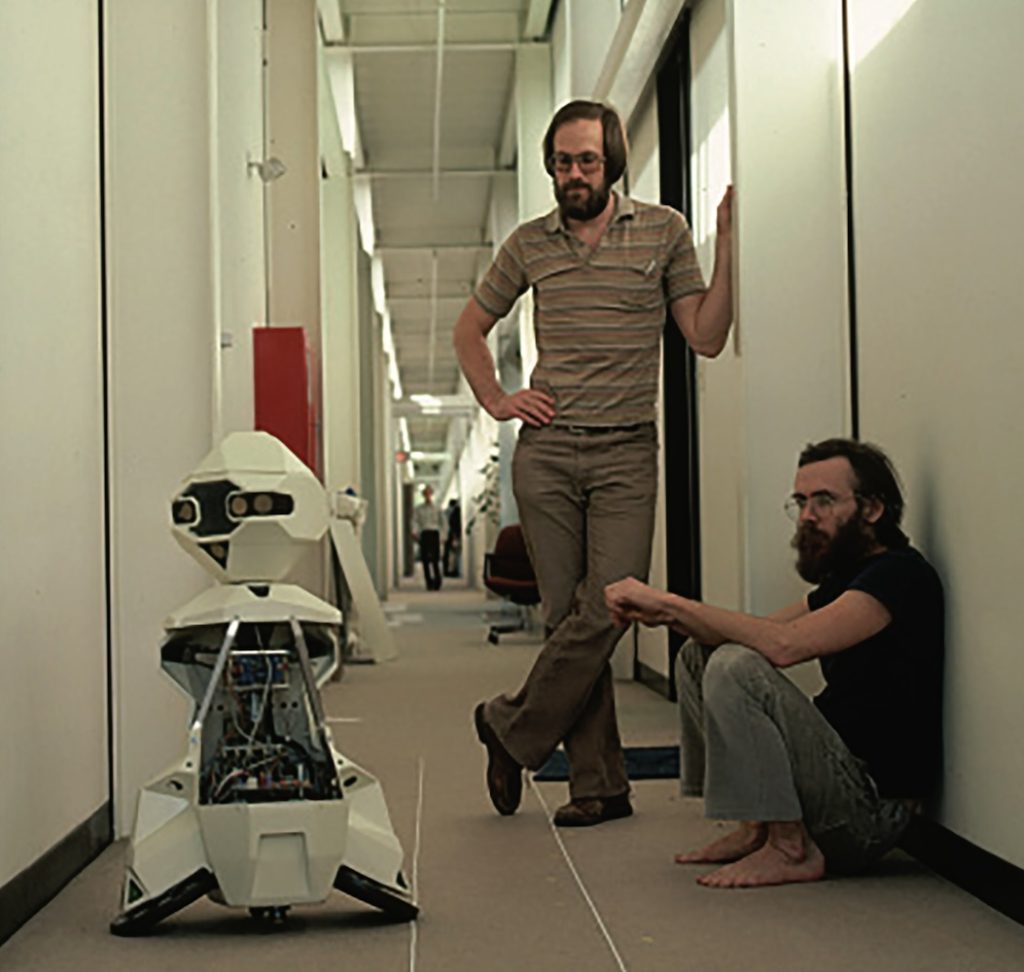
“The third Star Wars film had just come out,” Tom says. “The world was going nuts over R2D2 and C3PO. It became clear to me that Nolan wanted to build an R2D2 for the home.” Bushnell’s domesticated ‘bot was called the Androbot. To summarize the project’s challenges, we can say Mr. Bushnell was a charismatic and prolific idea man whose fulsome pronouncements were the bane of his engineers’ professional existence.

Tom gave it his all. “I did a really good job of getting attention for us at Consumer Electronic Shows, building enthusiasm for what we might be able to do. But I couldn’t help the guys figure out how to build this sucker.” Androbot and a second project called B.O.B. were ultimately mothballed, in part by underdelivering to an impossible marketplace afire with Star Wars-fueled robot fever. As CEO, Tom would have to ritually fall on his sword, leaving the company. His sardonic reply to this state of affairs?
“In full view of all,” Christine writes in her terrifically magnetic book, “Tom left the building and walked out to his car with a grocery bag over his head.”
Accolade. Tom Clancy. Electronic Arts. Academia
Bob Whitehead and Alan Miller left Activision to start a new company called Accolade and brought Tom aboard as CEO. Accolade’s standout successes included sports games like HardBall! and Jack Nicklaus, andthe aerial combat game Ace of Aces. Game development focused on home computers like the Commodore 64, broadening and exciting the nascent gamer community. Launch of the game-compatible IBM PC grew the market even more. But for Tom it was not to be.
“Accolade – I was there two years,” Tom says. “I built its footprint, made some successful games. The revenue went from half a million dollars to $5 million in the second year. But there was incompatibility between my style and the two software guys. No matter what we tried, it wasn’t going to work.” Nevertheless, Tom’s two years in the wheelhouse put Accolade on a par with the day’s big shots; EA, Broderbund, Mindscape. It was 1987.
The next crucial step in the Frisinas’ digital flag-planting? Penultimate creation of their own foundry – a company that would truly prove Tom’s mettle and take the Frisinas’ Silicon Valley gamble to its door-opening summit.
“It was the time after Accolade,” Christine says. “You’re like, what are we going to do? That’s how 360 was born. And then Tom made some connections.” Tom the entrepreneur had come full circle to build his own company.
360 developed and launched Harpoon, a wildly popular and award-winning military strategy game and another, equally popular game called V for Victory. Tom Frisina was by now a recognized game industry insider, thought leader, and tireless interview subject. His restless imagination was so intent on pushing envelopes and seeing where the tech could go, resources were sometimes allocated to projects the consumer didn’t necessarily grasp. 360 ultimately sold to a Florida company called Intracorp in ‘93, but not before making a historically significant splash in the gaming space.
Tom was mulling his consulting options when he got a lunch invite from a VP at Electronic Arts*. He was wondering aloud what she could possibly want when the intrepid Christine offered the usual sage advice.

“Go to lunch and find out.”
*42 days ago at this writing, EA was subject of the largest leveraged buyout in history, a $55B transaction in which the storied gaming company was taken private by a consortium of buyers
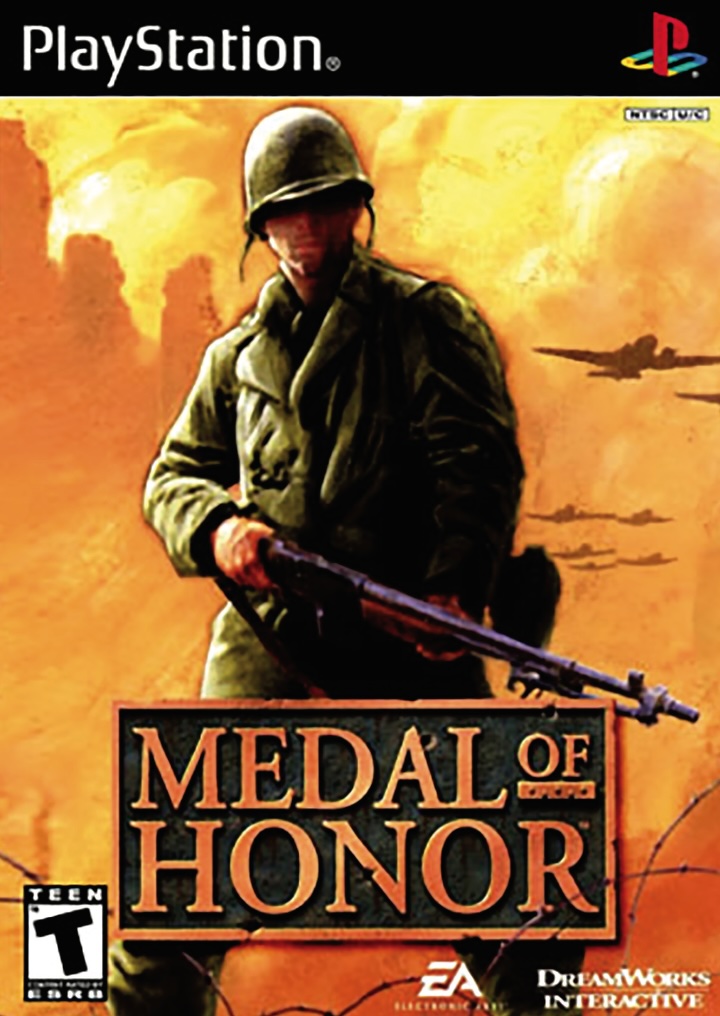
Electronic Arts was by that time already a legendary game developer and mecca for software artists who under EA’s imprimatur would be regarded, and credited, as actual artists. Tom’s pioneering stewardship of the new EA Partners division and his agreements with places like DreamWorks (Medal of Honor) and New Line Cinema (LOTR) would usher in a new gaming ecosystem that looked to TV and film for immersive gamer inspiration. Following a successful run, Tom’s time at EA would ring the curtain down on his foundational role in the now omnipresent and amorphous gaming space. There was one thing left to do.
“When I stepped down from EA Partners,” Tom says of this last go-round in the C-Suite, “They came up with a new role for me; Talent Development and Retention, they called it. Accompanying that title was a major investment they made in the School of Cinematic Arts at USC, to found a division focused on building video games. At the same time, the four universities in Vancouver pulled their money together to open up the Master of Digital Media graduate school up there.”
Tom Frisina had spent a career defining and establishing the gaming space. Now – splitting his time at the dais between L.A. and Vancouver – he was teaching the next gen of game developers and entrepreneurs to hone their individual contributions to the synchronous whole. He was finally conducting.
Christine Frisina discusses LOST in Silicon Valley – The Dawn of Robots, AI, and Video Games on Saturday, Nov. 15, from 3-4 pm at Tecolote Books; 1470 E. Valley Rd in Montecito’s
Upper Village, (805) 969-4977
You might also be interested in...




You must be logged in to post a comment.