
The Era of Astro-Cinematography Has Arrived
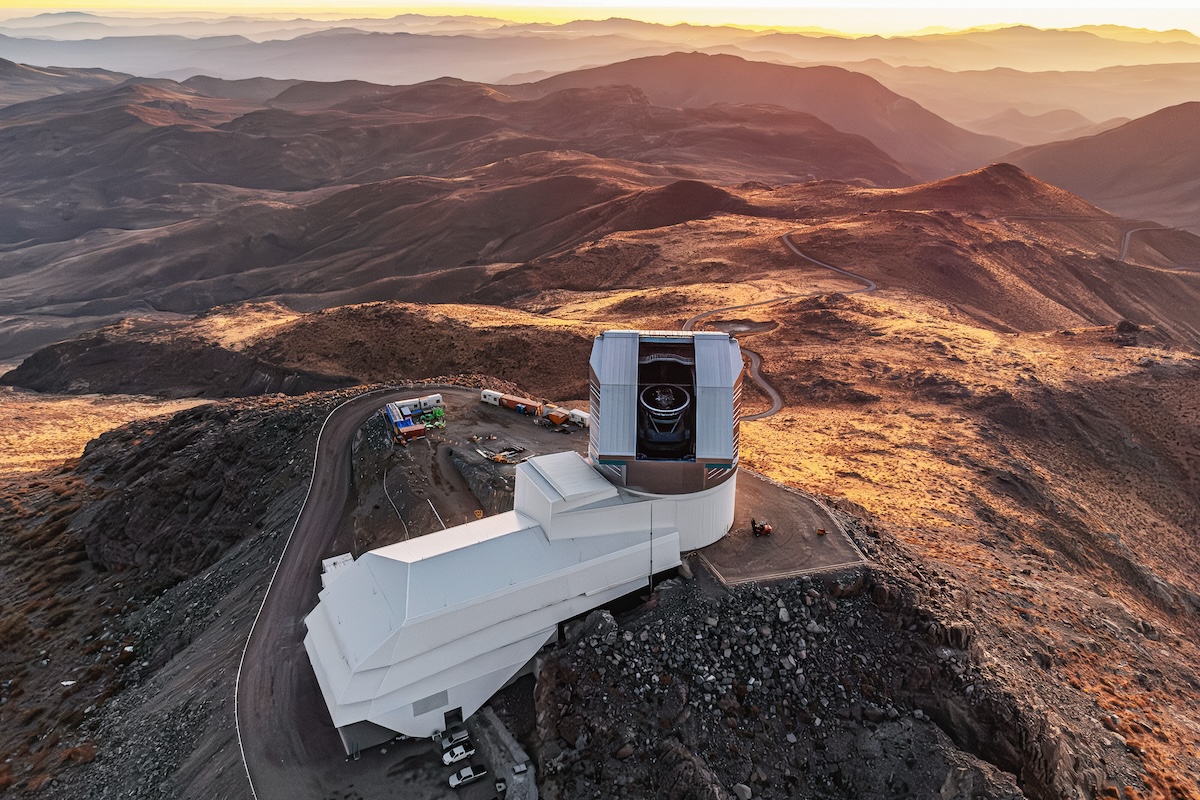
That’s correct, Mr. Spock! We humble humans are now viewing the first images made public by the NSF-DOE Vera C. Rubin Observatory, which is funded by the U.S. National Science Foundation (NSF) and the U.S. Department of Energy’s Office of Science (DOE/SC). The images were officially released the last week of June, and endearingly named by the Rubin as “The Cosmic Treasure Chest.” Its website is interactive and updated live. Images are downloadable for public use.
The Rubin Observatory Telescope in Chile, named after Vera C. Rubin, “the mother of dark matter,” has a 10-year galactic imaging mission titled, the Legacy Survey of Space and Time (LSST). The observatory holds the largest digital camera ever built to date. It is an 8.4-meter Simonyi Survey three-mirror telescope with a three-billion-pixel solid state detector digital camera. The camera records time-evolution six-color images for both still and motion pictures of our galaxy, producing approximately 20 terabytes of data daily to be processed and stored. The camera’s field of view covers an area equivalent to the size of 45 full moons in the sky.
The telescope records the entire night sky over the Southern Hemisphere every three nights. The data collected from that is set to provide more information on the nature of dark matter and dark energy, create an inventory of the Solar System, map the Milky Way, explore the dynamic sky, and more as events occur. According to Space.com:
“In a decade, Rubin will have collected data on an estimated 40 billion celestial bodies, meaning we will have seen more heavenly bodies than there are humans alive for the first time.”
One of its first images is the Virgo Cluster of galaxies located approximately 53.8 million light-years from Earth. The image contains 10 million galaxies, a vast array of stars and celestial objects.
Working with the Rubin Observatory is our own local galactic star, the Las Cumbres Observatory (LCO), founded by renowned American engineer Wayne Rosing, whom I featured in this column.His genius idea of creating the only global network of robotic telescopes, positions the LCO to track and study new cosmic events discovered by the Rubin in real time.

Rosing explained, “At LCO we have engineered and built the only global optical telescope network in the world, and it has been operating for 11 years. We are ready for the new age of astronomy being ushered in by the Rubin Observatory and we look forward to observing the newly discovered objects and the cutting-edge science that will result. LCO scientists have been instrumental in shaping the project through their leadership in the LSST Discovery Alliance, a collaborative network supporting the Rubin survey’s scientific goals.”
LCO Senior Scientist Dr. Rachel Street, an active member of the Rubin Science Community since inception – who also led an equity grants program for Rubin Research scientists – added, “I can’t wait to see the first data from the Rubin Observatory! This survey is going to transform virtually all areas of astrophysics, from a census of previously undetectable objects in our own Solar System and Milky Way out to supernovae in distant galaxies.”
The Santa Barbara Museum of Natural History in collaboration with the LCO held an event on June 25 to view the livestream from the Rubin detailing its history and first images. The public follow up will be on July 12 at the museum’s Space Sciences exhibit. The museum’s Astronomy Programs Manager Ila Jade Komasa stated, “Our Gladwin Planetarium allows us to make space more accessible and bring it a little closer to home. We have an amazing opportunity to take these remarkable images from Rubin Observatory and explore them in our planetarium. I am thrilled to collaborate with LCO to celebrate this milestone of astronomy.”
For more detailed info on the progress of the Rubin images and the LCO, see the 411.
You might also be interested in...




You must be logged in to post a comment.