
All the World’s a Stage: Taking Ballet Beyond the Theater
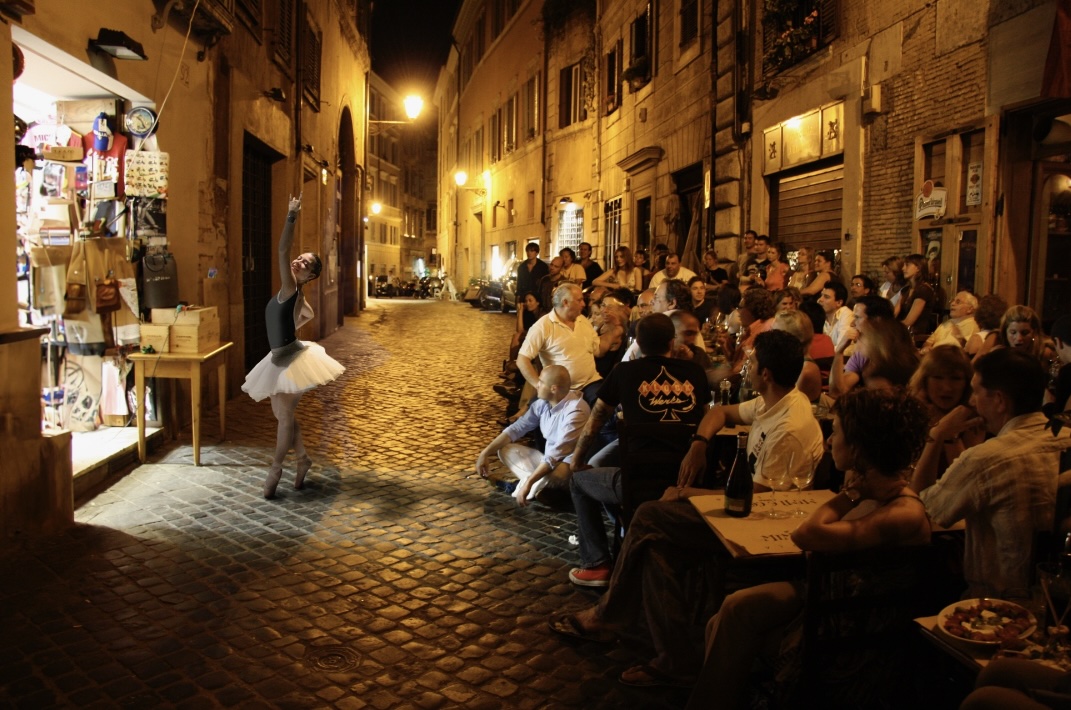
Shakespeare famously declared that all the world’s a stage.
John Behring appears to have taken him rather literally.
For his latest photographic series, the Santa Barbara artist and television director has recruited accomplished ballet dancers and sent them into the world beyond the theater. City streets become performance spaces. Desert landscapes provide dramatic scenery. Architecture takes on an unexpected supporting role.
The resulting photographs will be featured in The Ballerina Paradox, opening December 3 at Art & Soul.
Working with dancers from Selah Dance Collective and Novus Contemporary Ballet, Behring explores what happens when classical movement encounters environments that were never designed for a pirouette.
Apparently, Shakespeare was onto something.
Although he probably hadn’t considered the logistical challenges of dancing in pointe shoes on pavement.
The idea began during an outdoor dance performance that had been relocated out of the elements because of inclement weather. Behring found himself unusually close to the performers, where the physical demands of ballet became impossible to overlook. Without the separation of a traditional stage, he could appreciate the extraordinary strength, precision, and athleticism required to make those graceful movements appear effortless.
Naturally, he wondered what would happen if the dancers ventured even further from their natural habitat.
The answer became The Ballerina Paradox, a photographic exploration of classical dance in decidedly unconventional surroundings. Working with performers from the two Santa Barbara companies, both under the artistic direction of Meredith Ventura, Behring creates compositions where the familiar elegance of ballet encounters the occasional absurdity of everyday life.
A ballerina in a desert. A dancer commanding a city intersection. An elaborate pose framed by architecture that has probably never encountered a tutu.
The contrast is precisely what makes the photographs interesting. The dancers bring years of discipline and training to environments that offer none of the usual accommodations of a theater. Their movements become simultaneously extraordinary and strangely at home.
Behring, meanwhile, knows a thing or two about creating a scene.
His television directing credits include Law & Order, Blue Bloods, FBI, Gotham, Arrow, The Flash, and The Vampire Diaries. After decades working with actors, cameras, and elaborate productions, he has developed an appreciation for the narrative possibilities of a single image.
“Photography is a means to use a visual metaphor to tell a story,” Behring explains. “As a still photographer I aspire to tell a complete story in one single image.”
His fascination with the medium began considerably earlier than his television career. Growing up in South Dakota, Behring won a plastic camera in a newspaper subscription contest at age eight. What began as a childhood prize developed into a lifelong interest in photography, particularly the dramatic possibilities of natural light and expansive landscapes.
These days, his camera equipment has presumably improved.
The storytelling instincts, however, remain.
The photographic series also builds upon Behring’s short film Paradoxical Ballerinas, presented at the Lobero Theatre in September during a performance featuring Selah Dance Collective and Novus Contemporary Ballet. The December exhibition gives the images an opportunity to stand on their own, inviting viewers to consider each composition without the accompanying movement of film.
Presented during Santa Barbara’s holiday season, the exhibition offers a playful alternative to the usual December traditions. There are no sugar plum fairies or elaborate theatrical sets, although the dancers themselves would probably feel perfectly comfortable in either.
Instead, Behring offers a world where the stage can appear almost anywhere, provided someone has the imagination to recognize it.
Shakespeare, it seems, had the right idea.
Behring just brought the ballerinas.
You might also be interested in...