
Mental Health Awareness: The Diagnosis
In a bright, spacious room, an oncologist told us my husband’s cancer couldn’t be cured. I felt a shock run through me. With everything else going on, I knew I couldn’t handle it alone. As soon as we left his office, I took out my phone and called Dennis. He was not only a good friend but also a psychiatrist.
After parking at the Sansum Clinic Psychiatric Department, I walked up two flights of stairs. Dennis’s office was softly lit by a few lamps, with the overhead fluorescents off. Three big boxes of Kleenex sat around me as I took my seat.
“Dennis, I don’t think I can handle Geoff dying. I’m not worried about Geoff or the children. I’m worried about myself. My dad died when I was seven… “
I started to cry and shared details about my childhood. I grabbed a Kleenex as I spoke. It felt like a confessional, except there was no wooden knee rest or dark window hiding the priest. I told Dennis how we were poor when I was a child, and things got even harder after my dad died when I was seven. I talked about my dad’s bad temper, how scared I was, and how my mom had to raise five wild kids alone. I confessed things from my past. “In college, I screwed anyone in sight, mostly strangers at bars. I had sex night after night. I don’t know how many guys I had sex with…”
The room felt quiet.
It reminded me of talking
with my grandmother in her parlor, with the soft yellow
light making me feel safe.
Dennis stopped me. “So you were promiscuous. Go on.”
When Dennis said ‘promiscuous,’ it sounded almost harmless. It didn’t seem so bad, maybe even normal for someone my age. I was surprised by how calm he was about something I had kept secret for so long. I had never gotten over the shame it brought my family. After his comment, I didn’t have much more to say.
In the end, I met Geoff in graduate school, we got married, had kids, and now he was dying. Dennis already knew that last part.
“I guess I came to see you because I’m sad, but more than that, I’m scared.” I pulled another Kleenex out of the box and blew my nose. I didn’t look up at Dennis.
I let out a long breath and relaxed in my chair.
I felt relieved. Even before Dennis said bipolar, I knew something wasn’t right.
Then Dennis started asking me a series of questions.
“How long have you had this feeling of being scared and not able to handle life?” he asked.
“Since Geoff’s diagnosis,” I answered.
The room felt quiet. It reminded me of talking with my grandmother in her parlor, with the soft yellow light making me feel safe.
Dennis asked, “Do you ever feel like killing yourself?”
“No, never.”
“Does anyone in your family have a history of mental illness?” he continued.
“I’m not sure. I don’t know the details. It was just a rumor that circulated through our family, but I think my father spent time in a mental hospital. He might have just worked there, but he had been to one while in the military. My mother once said he was never the same after he came back. But, of course, my family didn’t speak openly about it, like so many things surrounding my father.”
“Are you sleeping at night?”
“I usually sleep about five or six hours. I wake up around two in the morning from a nightmare. Sometimes I sit up screaming, and Geoff reassures me it was just a dream, so I go back to sleep. I have the same nightmare every night.” I paused to think about his question. “In the mornings, I feel anxious and full of nervous energy. I don’t let myself get up before five. If I get up at four forty-five, the next day I wake up even earlier, like four thirty. It’s hard for me to stay in bed. Something deep inside is bothering me.”
“Were you ever depressed while in college?” he asked.
“I was only depressed once. I remember going to a house party, taking a Quaalude, and after that, the depression was gone. That’s when I started sleeping with guys…” I said, sobbing and blowing my nose.
Dennis stopped asking questions and said, “Dale, I am pretty sure you have a Bipolar II Disorder. Do you know what that means?”
“Not really. I’ve heard the word before,” I said.
I let out a long breath and relaxed in my chair. I felt relieved. Even before Dennis said bipolar, I knew something wasn’t right. I could never put my finger on it, because I didn’t have a word for it. There was a balloon filled with air inside me, and Dennis had popped it – by knowing what was wrong and giving it a name. Years would go by before I knew all the implications of being bipolar. But at that moment, I was happy.
“First, let’s get you a good night’s sleep. You should be sleeping 7.5 to 8 hours every night. I’m prescribing Klonopin. Take it three times a day; when you first get up, at noon, and at bedtime. I want you to come back in a month.”
He offered me a yellow three-by-four-inch piece of paper. More sleep sounded good. I thought he was giving me something like an antibiotic that cured bipolar disorders.
When I swallowed my first orange Klonopin tablet,
I hoped I’d “get well” from being bipolar. But having a bipolar disorder is part of me.
I stood, took the prescription from him, and noticed his illegible writing, “How long do I take it, ten days, two weeks?”
“Well, let’s just see how things go,” he answered, standing and walking me to the door.
I didn’t realize all this after my first meeting with Dennis. I also didn’t know I had a life sentence of daily medication. When I swallowed my first orange Klonopin tablet, I hoped I’d “get well” from being bipolar. But having a bipolar disorder is part of me. No matter what medication I took, how long I took it, or how deep I went into therapy, being bipolar remained.
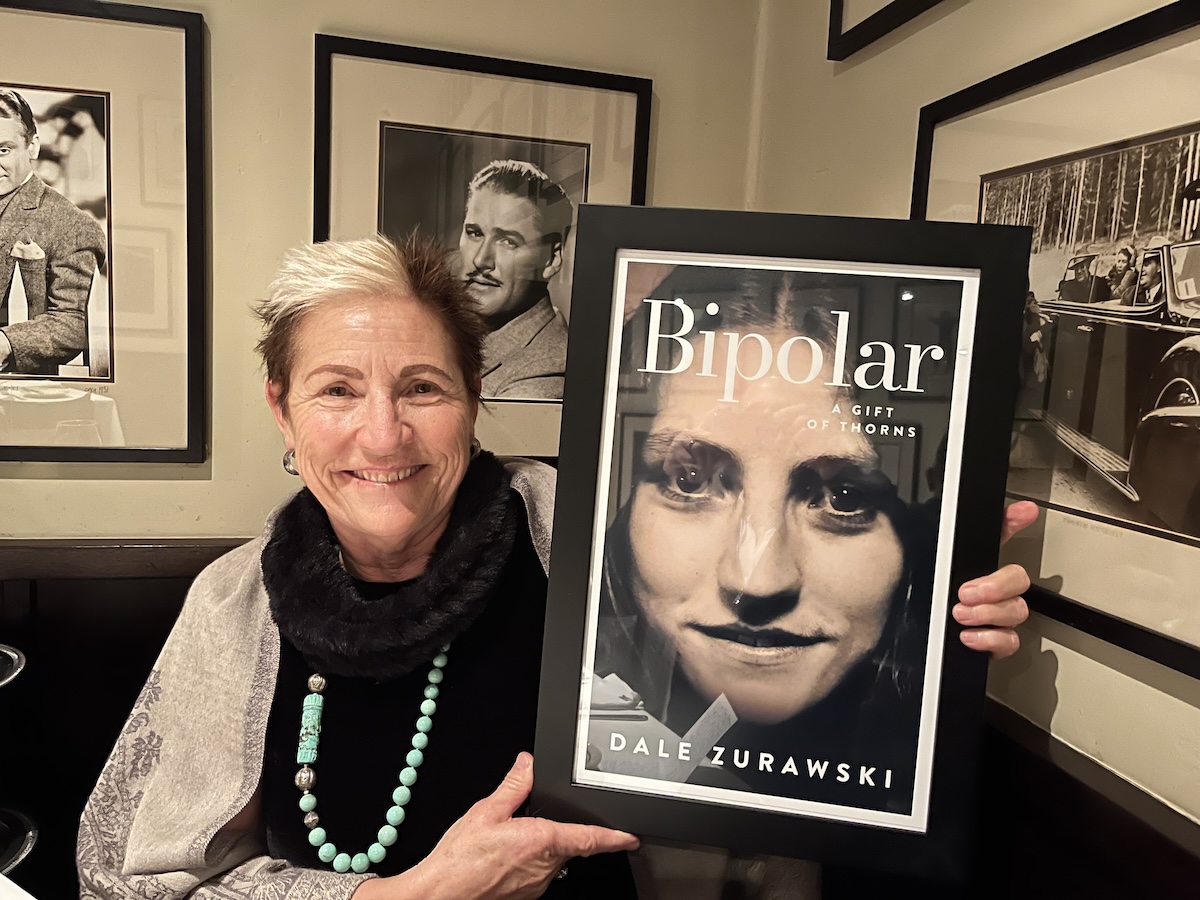
May is Mental Health Awareness Month. The following is an excerpt from Dale Zurawski’s Bipolar: A Gift of Thorns.
You might also be interested in...



