
Frank McGinity Opens His Riven Rock Home to Irish History
By Maria McCall
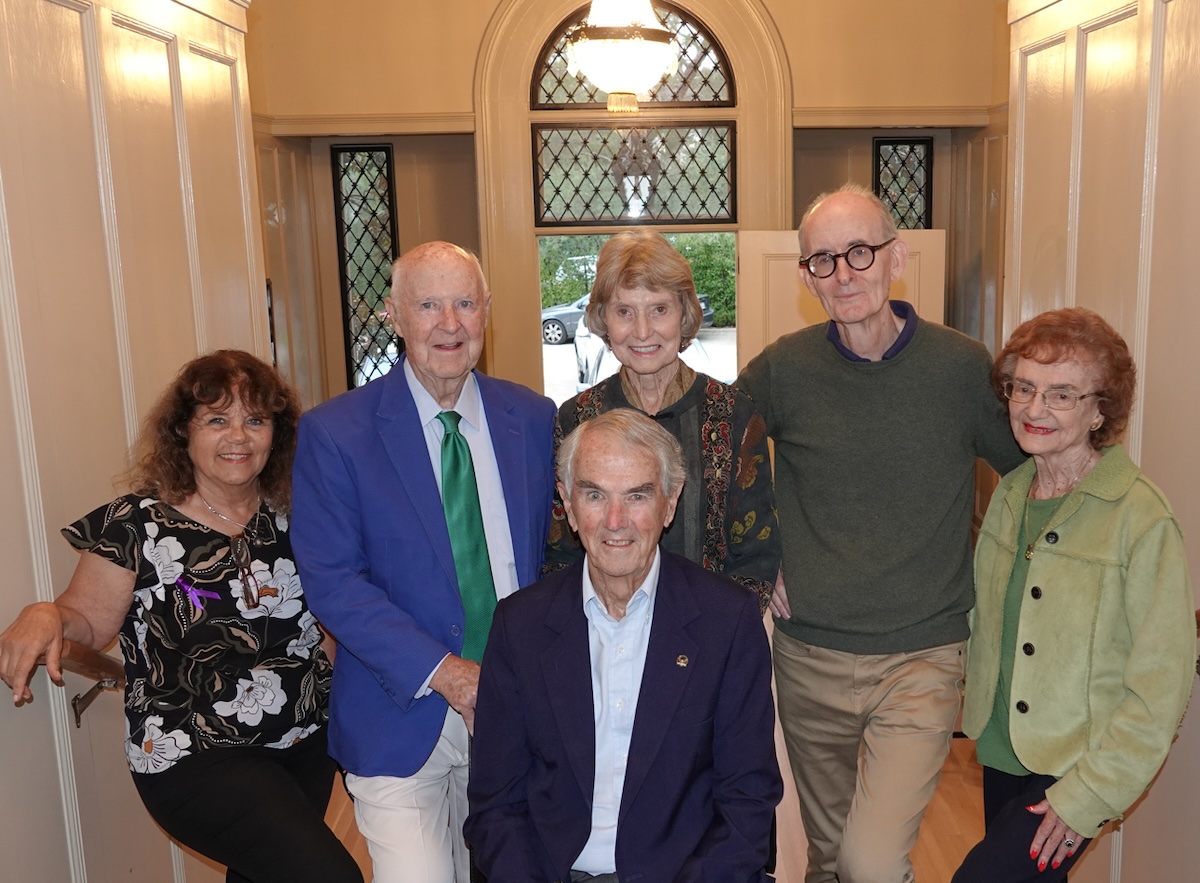
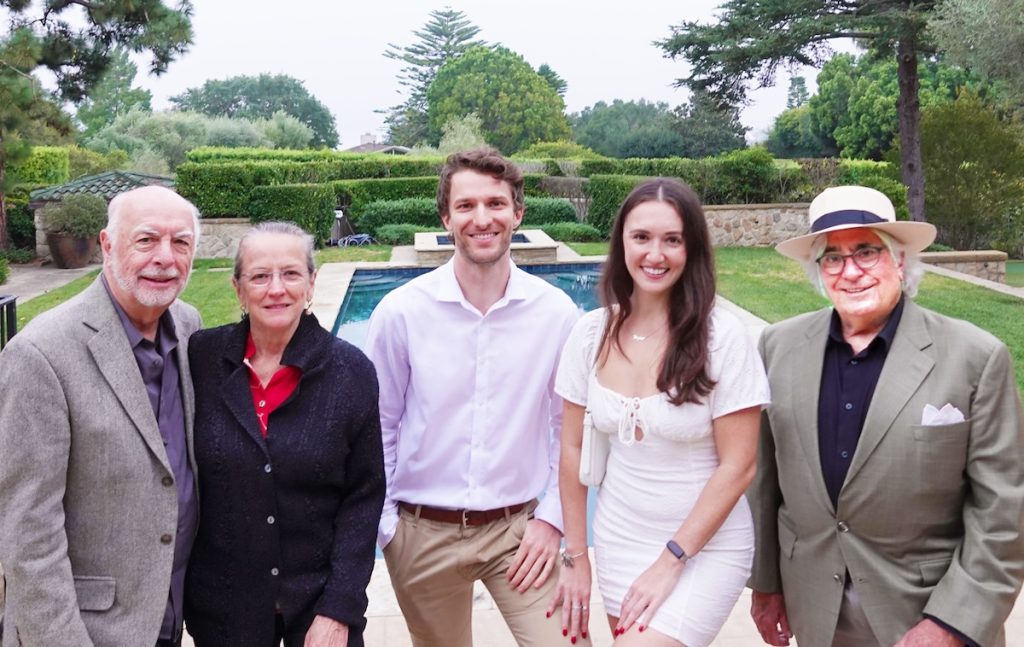
Frank McGinity invited members of the American Irish Historical Society (AIHS) to his storied home, the Music House on the Riven Rock Estate in Montecito – “only a tiara’s toss from Harry & Meghan’s!” as Richard Mineards would say. The society gathered for a talk by Enda Duffy, Ph.D. on the potato famine titled “The Great Hunger: Starvation, Relief, Clearances and Making of Modern Ireland.”
Frank offered a wonderful Irish welcome complete with delicious passed hors d’oeuvres and a variety of local wines. Adam Phillips, founder & director of the Folk Orchestra of Santa Barbara, performed Irish tunes on the pastoral pipes and folk guitar singing a lovely rendition of “The Fields of Athenry,” a song about the famine. The original Vermiculite walls in the music & movie room of the house created perfect acoustics.
Frank opened the program by thanking his loyal board of directors and supporters for sustaining the West Coast Chapter of AIHS for forty-two years before introducing the speaker, Enda Duffy, Professor of English at UCSB. With his lyrical Irish brogue, Enda warned the audience they might “weep quietly” as he shared stories of the Irish famine of 1845 to 1849.

“It’s hard to get your head around dying of hunger, right? It was really an ecological disaster – a spore, a fungus – and it happened very fast,” he said. Drawing from his home region on the border of Counties Roscommon and Mayo, Enda painted vivid scenes of starvation, disease, extreme poverty, forced evictions, and mass emigration. Many, he reminded us, were driven to dangerous workhouses simply to survive. More than 1.2 million lives were lost and 2.5 million emigrated during those harrowing years making it one of the worst famines in modern European history.
The AIHS was founded in 1897, a half century after the potato famine. President Teddy Roosevelt was one of the founding members. Its purpose was ‘that the world may know,’ written on the emblem representing the society. This quote references the famine and the more than one million Irish people who came to America. As we know, they were often unwelcomed into American culture. The society was conceived to defend the rights of the Irish immigrants.
Irish History lovers included Phil & Margaret Conran, Judith and Patrick McDermott, Viviana Marsano, Mary Louise Days, Marty Bell, Mike & Laura Cleary, Michele Neely, John & Tracie Doordan
You might also be interested in...




You must be logged in to post a comment.