
Mercy
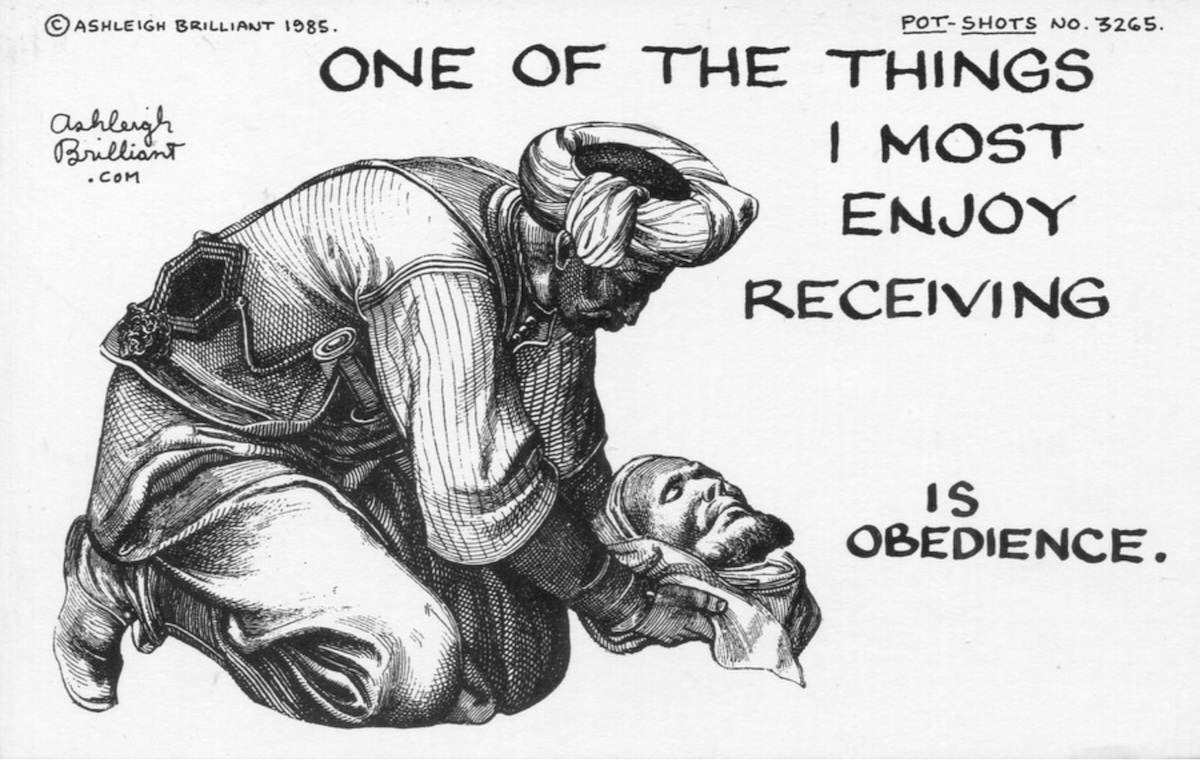
In a famous passage from Shakespeare’s Merchant of Venice, the character Portia, disguised as a lawyer, is defending Antonio from being required to pay Shylock, to whom he is indebted. By the laws of the time and place, the debt is legitimate – and only by being shown mercy can Antonio escape paying it.
Portia’s speech begins with these words: [The word “strain’d” means “forced.”]
The quality of mercy is not strain’d.
It droppeth as the gentle rain from heaven
Upon the place beneath. It is twice blest:
It blesseth him that gives, and him that takes.
To find out if Portia is successful, you will have to read the play.
But our use of the word “mercy” has been extended over time, and is now applied to various humanitarian efforts, such as medical aid supplied without payment to poor people in need, especially in countries stricken by natural disasters or by domestic troubles such as guerrilla activity or even civil war.
Then there is “mercy killing,” which has been legalized in many jurisdictions to permit the painless ending of human life when there is no hope of relief; no alternative but extended suffering. This is also known as “euthanasia.”
The idea of crimes committed by belligerents in wartime is also a relatively new concept, and only came to full realization as “War Crimes” during and immediately after World War II. There were separate trials for these offenses held by the victorious powers in Europe, and in Japan. The Nazi leaders (those who were still alive and had not evaded capture) were put on trial in the south German town of Nuremberg, which had sustained relatively little damage by air raids. Considering all the circumstances, these men got surprisingly fair treatment. They had defense lawyers, who succeeded in having some of their clients avoid execution, and even got one or two of them acquitted.
Since then, thanks to the absence of a World War, the cases of alleged war crimes have been few and little publicized. An exception was the episode in the Vietnam War involving the American Lieutenant William Calley Jr. who in 1968 was held to be responsible for the killing of a large number of civilians in what came to be called the “My Lai Massacre.” (Place name pronounced like “Me Lie.”)
Calley was at first convicted of 22 counts of “pre-meditated murder” for which his original penalty was Life Imprisonment with Hard Labor. But this was progressively “commuted” to 20 years, and then to 10 years, and finally, by President Richard Nixon (under whose administration the war was still being waged) to three years of “house arrest.” Calley finally died in 2024, at the age of 80.
But the idea of being kind to wrong doers is essentially a religious concept, and is particularly associated with early Christianity. In his celebrated “Sermon on the Mount,” Jesus is quoted as saying “Blessed are the merciful: for they shall obtain mercy.” (This comes at the very beginning of the New Testament.)
In Buddhism, Mercy is regarded as a fundamental concept, and it refers to the act of showing compassion towards all sentient beings. A “sentient” being would be one with feelings – and who could tell if an ant has feelings, let alone all those further down the hierarchy of animal life?
The religious cult known as Jainism has most of its adherents in India, and some of them are so devout that they can be seen walking pavements on city streets, always carrying a little broom, so that they can sweep ahead of their own footsteps, to avoid stepping on ants, or any other visible creatures.
In the U.S. and many other countries, the idea of giving convicted criminals a “Second Chance” has taken firm hold in recent years. This action is taken not necessarily on any religious basis, but mainly because our whole prison system has been proven unworkable. Not only can this be seen in obvious overcrowding, but with prisons themselves encouraging criminality. This of course contributes to the high rate of recidivism; i.e. the tendency of people, after being released from punitive confinement, to relapse into criminal activity – and in consequence find themselves being once again incarcerated.
Part of the problem apparently lies in the inadequacy of the probationary system, which is supposed to provide a sort of half-way supervision and assistance to help released offenders. Let me conclude with my own comment on this situation:
Some people make their greatest contribution to society
just by staying out of trouble.
You might also be interested in...



