
Matriculate
“Undermatching” might sound like a snafu on a dating app, but what the concept actually refers to is the unnecessary tragedy of high-achieving high school students from low-income backgrounds not even trying to attend a top college or university appropriate to their level of learning and ability.
The problem exists because a large number of graduating high school students who have the skills and desire to pursue higher education at a highly-rated institution simply lack the resources, information, or even encouragement to make that happen.
Studies show that nearly half of high-achieving, low-income students don’t apply to a single college or university that might be considered an academic match. Sometimes, the students don’t even know where to begin to follow that dream.
Among the factors that cause the problem is that the large number of students who would be the first in their family to attend college lack the family support for the process. That issue is exacerbated when they reside in a low-income community or in a culture that has traditionally discounted opportunities for which students might be qualified.
That’s where the national nonprofit Matriculate comes in. The organization has been working for a decade to solve the undermatching phenomenon by connecting thousands of high-achieving high school juniors and seniors to highly-trained undergraduate advisors they call Advising Fellows (AFs).
These college students are themselves currently studying on campuses across the country that have high graduation rates – just the sort of institution the high school students qualify to attend. The AFs are able to provide highly personalized support to small cohorts of only three and four high school students per academic year, advising on college selection, application and enrollment processes, applying for financial aid, and on the social nuances of campus life – offering the kind of attention that may not be available from the students’ high school counselors.
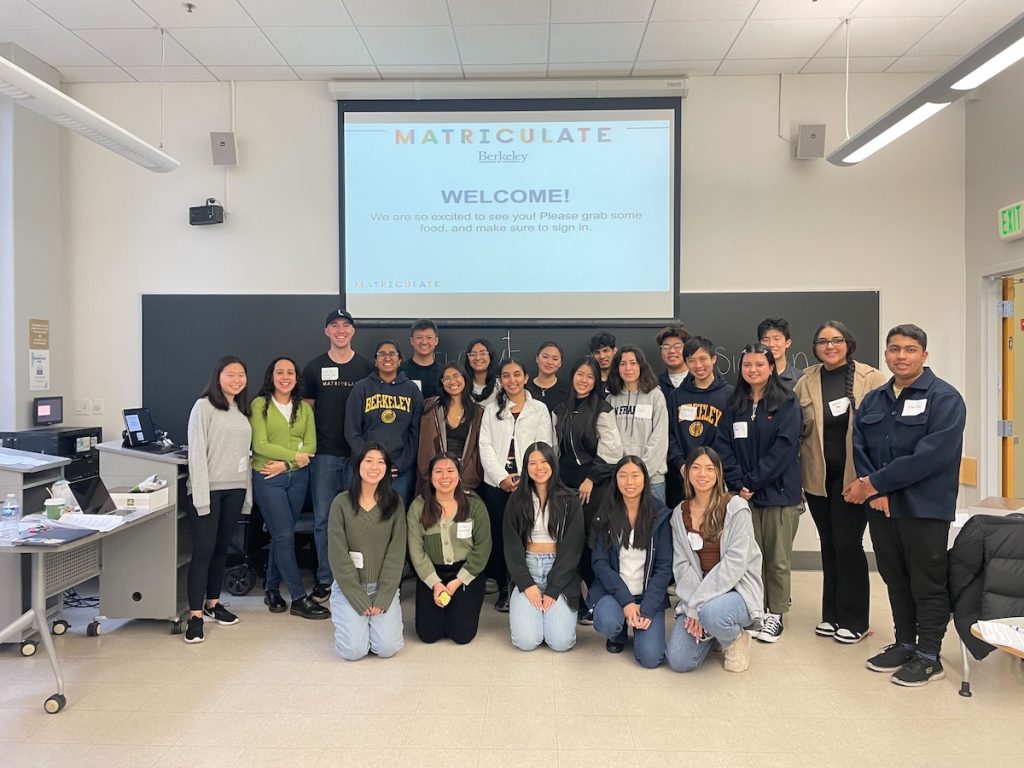
“These near-peer advisors have recently gone through this application process themselves,” explained Bryan Contreras, Matriculate’s Managing Director of Program Partnerships & Growth, who was a college counselor for decades. “They can speak to their own application experience and college experience itself, which even some of us who have been counselors and advisors are a little bit farther removed from.”
In order to serve as Advising Fellows, the college students – nearly all of whom are volunteers – undergo rigorous training that includes broad-based knowledge of the college ecosystem, key procedural knowledge on financial aid and FAFSA, and helping aspiring students with the minutiae of the applications processes.
“We show the Matriculate fellows how to help with everything from explaining why it’s important for the high school students to balance their college list, to how to get through all the aspects and elements of an application, including writing essays, getting recommendation letters and doing everything in a timely way,” Contreras said.
The AFs are then able to walk the high school juniors and seniors through the 18-month journey until they matriculate to a college. The program is particularly effective because the AFs recently went through the process themselves, often share a similar background, and offer proof of how to succeed at a top institution.
Even though everything happens virtually – via video chat, document sharing, texting, phone calls and email – the personal connection of one-on-one support can be much more inspiring than simply reading through generic resources, Contreras said.
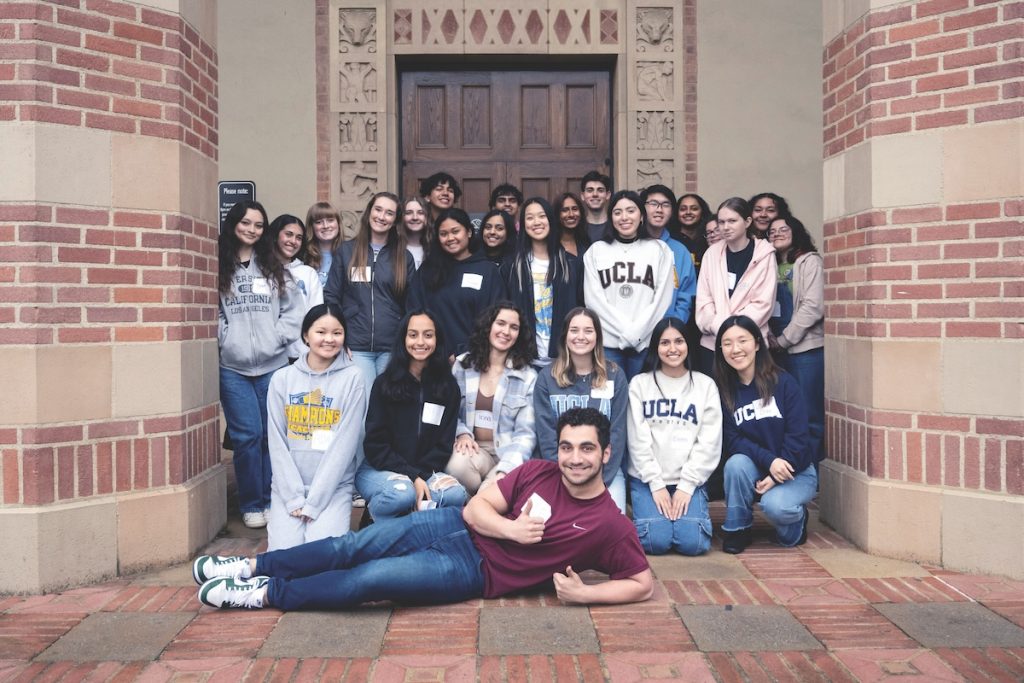
Matriculate does maintain a portal for the high school fellows to access 24 hours a day to find static information such as deadlines and details, all cross-checked to ensure accuracy. But the organization’s key model is to employ technology and virtual tools to transcend geographic limitations while preserving authentic relationships, leveraging data to enhance human judgment. Matriculate is developing its technology ecosystem to employ AI as a resource and a tool for advising both fellows and high school fellows, as well as to aid in the consistency and quality of information that is delivered to the 3,500 high school juniors and seniors served every year.
“Automating some of the workflows allows our advising fellows to spend time with their high school fellows in a more individualized manner, with more meaningful conversation customized to what that student needs,” Contreras explained. “They can answer more complicated questions, or pose ones the high school student might not even have thought about, including steering students toward a college or university that serves who they are as a person socially, not just academically – what we call the ‘college fit.’”
Beyond helping the future college matriculants get what they need to attend a top-notch school, the AFs also get benefits of their own, particularly among those who return for a second or third year of serving as mentors, even beyond the initial training, Contreras said.
“They are able to develop some competencies and skills that include communication, collaboration, data literacy and analysis, and the use of technology in a professional role, experiences that can prove very valuable when they enter the job market,” he said. “They learn how to prioritize their time to focus on the HSF’s most complicated needs, a skill that’s very important all through life.”
Matriculate’s key college partners include Stanford, Princeton, Notre Dame and Johns Hopkins as well as all of the UC system schools. Its team has also launched a streamlined strategy with refreshed partnership tiers and criteria to target colleges where high-achieving students thrive. And while the nonprofit does not provide financial help of its own, its Pathways Partners program, launched late last year, connects with institutions willing to commit to meeting the full financial need for at least two admitted Matriculate HSFs every year. Bucknell and Susquehanna University are among the inaugural six.
Since its founding a decade ago, Matriculate has supported over 20,000 high-achieving, low-income students including nearly 80 percent first-generation college students. The great news is that students who complete the program are 30 percent more likely to enroll in a selective college that is a true match, which in turn vastly increases the likelihood of graduation. “Undermatching” has met its match.
That’s a lot more important than a great first date.
Visit https://matriculate.org for more info.
You might also be interested in...




You must be logged in to post a comment.