
Flood Concerns Bring La Vuelta Residents, County Together
As forecasters continue warning of a potentially strong El Niño pattern this fall and winter, residents along La Vuelta Road are pressing Santa Barbara County to take additional steps to reduce flood risks before the rainy season begins.
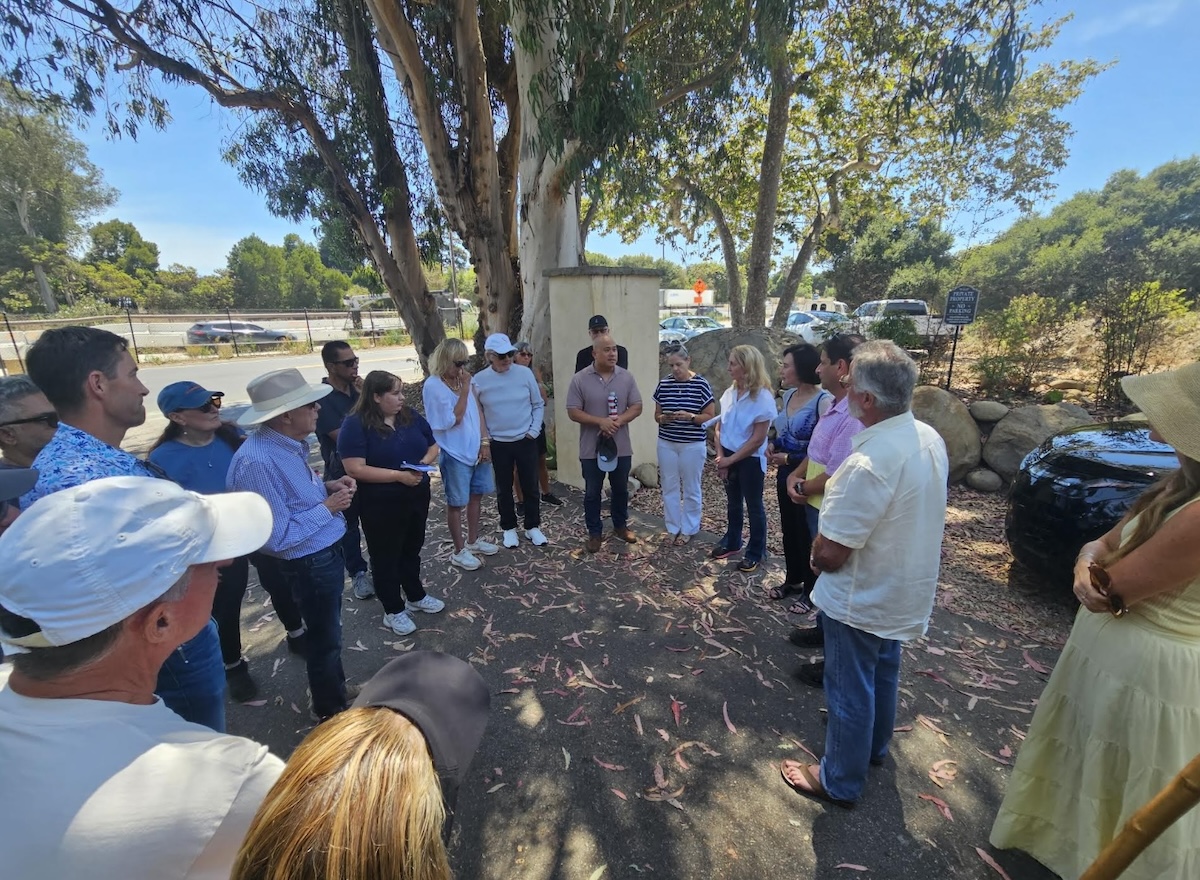
Roughly two dozen neighbors met July 24 with 1st District Supervisor Roy Lee and representatives from the Santa Barbara County Flood Control District along San Ysidro Creek to voice concerns about sediment buildup, vegetation, and debris they believe could impede water flow during a major storm. The meeting followed requests from residents who urged county officials to inspect the area before heavy rains arrive.
Much of the discussion centered on the stretch of San Ysidro Creek near the Highway 101 and Union Pacific Railroad bridges, where residents said years of accumulated silt have significantly reduced the creek’s capacity.
Neighbor Mitch Chupack told officials that what was once several feet of clearance beneath the bridge has steadily disappeared as sediment accumulated over time. He said residents are concerned that a high-volume storm could cause water to back up before it reaches the bridge, increasing the risk of flooding for nearby homes and roadways. Several residents urged county officials to work with Caltrans to remove sediment beneath the state-owned bridge.
Other residents echoed similar concerns, recalling that creek channels were historically cleaned before each rainy season. They argued that current maintenance practices have not kept pace with changing weather patterns or increasingly intense storm events.
Flood Control officials said the county already performs annual inspections and maintenance within the limits of its permits. Crews identify problem areas each spring before beginning seasonal work in August, and officials encouraged residents to continue reporting new concerns as they arise. They also noted that maintenance is governed by environmental regulations and endangered species protections that limit how much material can be removed from creek channels.
Officials acknowledged that a longer-term solution is already being planned. As part of the Montecito Master Plan, the county intends to realign San Ysidro Creek beneath the railroad crossing to eliminate two sharp 90-degree bends that currently slow water and create bottlenecks. However, the project remains in the planning and permitting stages, with no construction timeline established because funding and regulatory approvals are still pending.
For many residents, that timeline offers little reassurance ahead of the coming winter.
Several homeowners described repeated flooding over the years, including water entering homes, washing through private roads and threatening access to Crane Country Day School. Others pointed to islands of gravel, vegetation, and large boulders that they believe have reduced the creek’s capacity and could worsen flooding if another series of intense storms arrives. Residents also raised concerns about King Tides coinciding with heavy rainfall, saying tidal conditions could further restrict water flowing toward the ocean.
The meeting also explored potential solutions beyond the current maintenance program. Chupack suggested creating a local assessment district that could generate dedicated funding for creek maintenance, while others asked whether regulatory agencies such as the California Department of Fish and Wildlife could be brought into future discussions. Flood Control representatives said environmental permitting remains one of the primary constraints on creek work and encouraged continued dialogue as planning moves forward.
Supervisor Lee’s office committed to organizing a follow-up meeting that would include Caltrans, Flood Control and state resource agencies to discuss next steps and potential improvements before the rainy season. Lee’s staff said the supervisor’s office would take the lead in coordinating the discussions and keep residents informed as they progress.
Following the meeting, Chupack said residents appreciated how quickly Supervisor Lee’s office responded by arranging the on-site discussion and expressed cautious optimism that additional coordination between agencies could produce meaningful action. Still, several neighbors stressed that they hope preventative work can occur before another major storm tests the creek’s capacity.
You might also be interested in...



