
Talk it Out: Plenty of Verbal Exchanges at SBWC
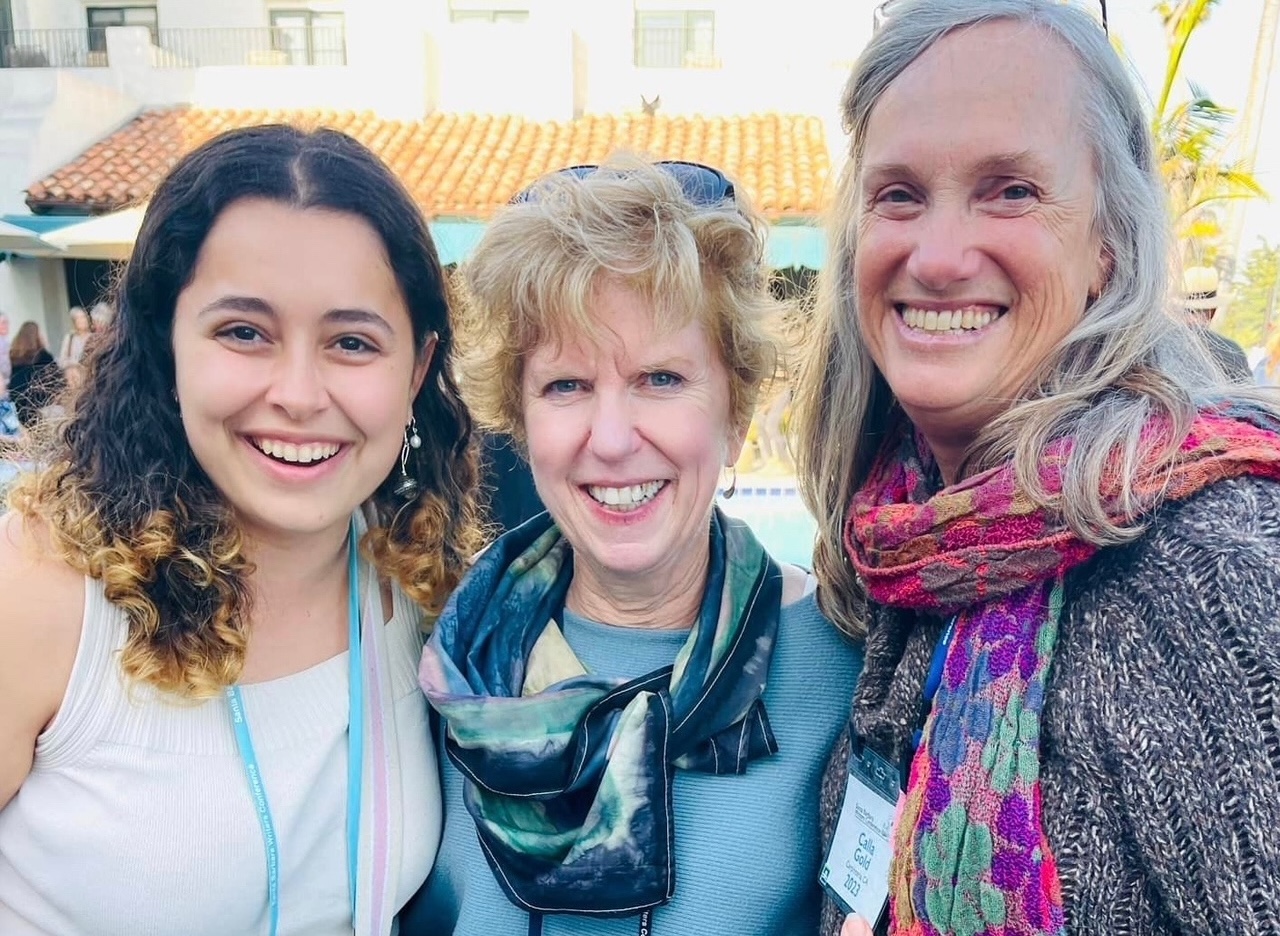
What is the Santa Barbara Writers Conference doing in a column about the spoken word?
It’s a good question, given that writing is a seriously solo endeavor, with the work coming down to a single person sitting down at a keyboard, putting pen to paper or, maybe, dictating into a recording device. No matter how you slice it, there’s no other way. (Unless you’re cheating by simply cutting and pasting from AI prompts. But let’s not go there.)
But the part before and after the process of actually writing is another thing entirely. Which is where the SBWC comes in. The venerable conference, founded more than half a century ago by Montecito author, painter, bullfighting aficionado and jazz pianist Barnaby Conradand his wife Mary, was created for the purpose of fostering a supportive environment where writers of all levels can congregate, get feedback from both peers and professionals, discuss approaches and problems, network with agents and publishers, and hear authors and poets in daily speaker and panel events. The conference also features twice daily instructional workshops in just about every literary genre imaginable, all week long. (The most ambitious might actually get some writing done at night, alone in their hotel rooms.)
“With pretty much everything at the conference, the communication is verbal,” said SBWC Grace Rachow, who has been a part of the conference for more than 30 years, first as an attendee. “Authors talk about their work. The workshop leaders instruct verbally. People are speaking to one another about the work and giving feedback verbally. Which is actually very helpful. Writing sounds very different when it’s read aloud, especially when it’s someone else who may interpret it differently than you had in mind.”
It’s almost a magical process for writers, Rachow said.
“People toil over polishing their work for hours and days and then weeks, and then suddenly they’re in a workshop and they realize, ‘Oh man, now I see what I should have done,’ because they’re hearing it out loud.”
Hearing published authors talk about their books (as well as their process, their struggles, and their aha! moments) can be remarkably inspirational for writers, Rachow said. Especially when they’re SBWC success stories – folks who attended the conference before going on to find success with their own books.
Such is the case with Fannie Flagg, the longtime Montecito resident who will kick off the speaker series for this year’s conference, which takes place June 21-26 at the Mar Monte Hotel across the street from East Beach. The actress fed her desire to write at SBWC decades ago, won a contest at the conference (the writing prize astoundingly conferred by her idol, Eudora Welty), and shortly thereafter published two successful books in a row, including Fried Green Tomatoes at the Whistlestop Café, which was later turned into a hit movie. (Flagg was nominated for an Oscar for writing the screenplay.) “She’s a big star author now, but she didn’t have confidence around writing until somebody said, ‘Hey, you did a good job,’” Rachow said. “She’s been a friend of the conference ever since and we’ve really appreciated it because she just lights up the room when she speaks.”

Rachow also raved about the rest of the speaker lineup, which includes novelist Kerri Schlottman (Tell Me One Thing) who has a new book called Daytime Moon; Jess Walter, a National Book Award finalist whose best-selling novels include Beautiful Ruins and his new So Far Gone; Rachel Howzell Hall, New York Times bestselling author of 16 novels whose latest, The Cruel Dawn is a romantasy in her Vallendor series; and Adriana Trigiani, another NYT bestselling author with 21 titles to her name, as well as plays, TV scripts, and the film adaptation of her debut novel, Big Stone Gap, which she also directed.
“The lineup is fabulous, even if they’re not as famous as some of the speakers in the old days,” Rachow said. Among those were Ray Bradbury, Alex Haley, and James Michener – just in the first year – as well as Charles M. Schulz, who returned year after year. His son, Santa Barbara resident Monte, has owned the festival since shortly after Conrad’s death.
“We try to keep as close to the format founded by the Conrads as possible, because it was what Monte’s dad loved so much,” Rachow said. “To a very large degree, it’s a lot like it was 20 or 40 years ago except we’re not at the Miramar. I mean, our mascot is Snoopy.”
What has changed over the years, particularly recently, is how authors and would-be writers can engage with the SBWC. No longer restricted to the full week as the only option, people can now come as many or few of the six-day conference as they wish, including non-consecutively, or even choose just a single workshop.
New this year is the happy fact that the speakers and panel discussions – which include a poetry panel comprised of seven Santa Barbara Poets Laureate – no longer have an admission charge at all, which never rose above $15 to begin with.
“We wanted to open it up partly because with the internet and so many author events in bookstores around town, there’s a lot of ways you can hear an author speak,” Rachow said. “I don’t know if $15 stopped people from coming, but hopefully now they buy a book they previously may not have following the event.”
However people engage, Rachow hopes they’ll give the conference a try, even if they only want to write, but don’t think they can.
“There’s so many things going on and a lot of really smart, talented people who are putting their heart and soul into helping other writers become better,” she said. “Everybody’s writing sucks until you get it hammered out. I love what happens at the conference and I really want more people to be a part of it.”
Visit www.sbwriters.com
Chaucer’s Choices: The Power of Poetry
The midtown bookshop’s calendar remains crowded even over the summer months, including on Monday, June 22, when Ojai poet Hannah Turner reads from her new book The Clarity of Chaos. Turner began writing something of a memoir while studying in Paris, where she also began her journey of sobriety. Almost four years later, she channels her experiences with addiction and recovery into poetry that is raw, honest, and deeply human. The work has been described as full of breathtaking grace, a chronicle of the turmoil of alcoholism, the desperate nights and fragile days, and the quiet, unyielding strength it takes to build a new life, with each poem is a testament to the resilience, grit, and fierce spirit she discovered along the way.
A poetic journey of healing is also the subject of an evening with Swamini Brahmaprajnananda, a Santa Barbara native who goes by Swamini B., on Tuesday, June 30. I’m Not My Story is a poetry collection centered on healing, resilience, and the journey back to wholeness that is rooted in lived experience, as the author writes about what it means to face the past without being defined by it. Through poetry, she separates what happened from who she is, reclaiming identity with clarity and dignity. Divided into three sections – Turmoil, Insights, and Freedom – the collection follows a progression from silence toward self-acceptance. The poems bear witness to grief, anger, shame, and trust, while honoring the gradual rebuilding of inner safety.
Tecolote Takes to ‘Paradise’
Tecolote Books in Montecito’s Upper Village hosts an afternoon with local author Michael C. Armour on June 20 at 3 pm for a discussion of his novel Last Light in Paradise. The Montecito Journal partially serialized the novel in its weekly pages, and is publisher of the book itself.
Visit the following website:
You might also be interested in...




You must be logged in to post a comment.