
Will AI Put Us in the Dark?
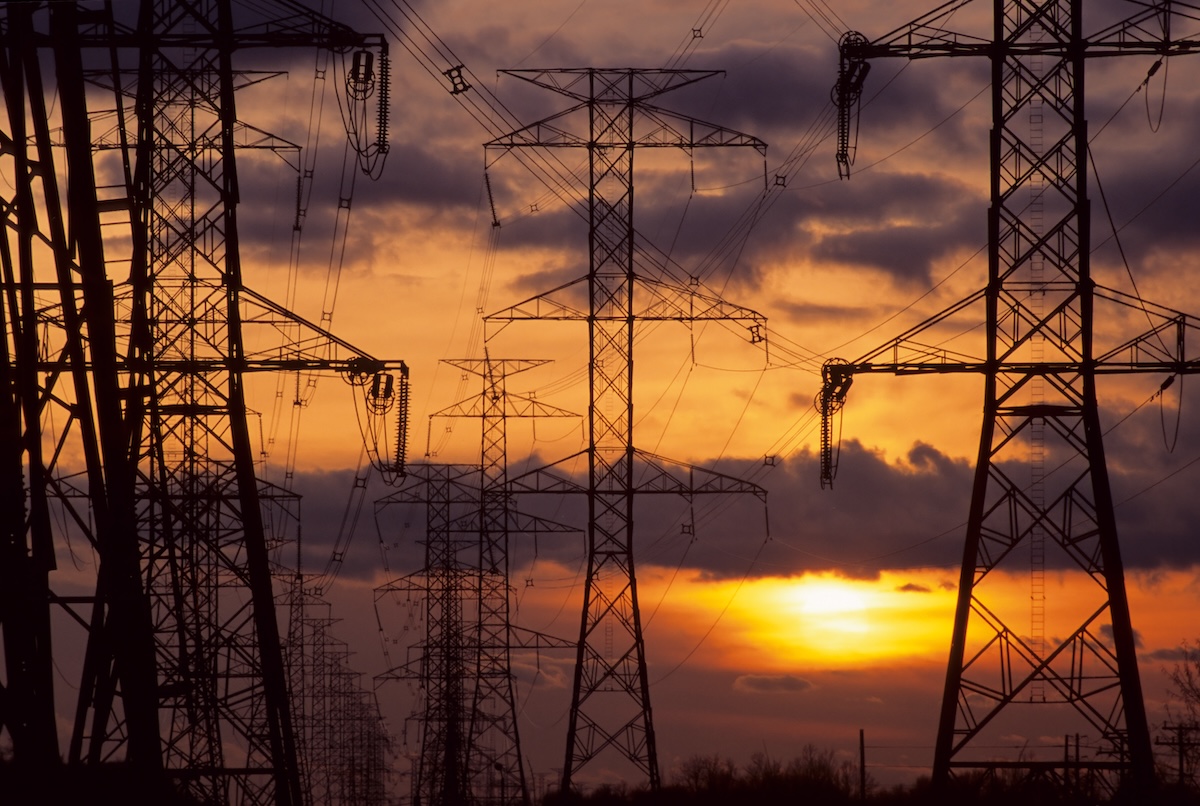
How artificial intelligence is driving a surge in electricity demand — and what it means for the rest of us.
For years, we’ve talked about “the cloud” as something invisible and weightless. But the cloud has a physical footprint. It lives in massive data centers filled with servers and cooling equipment that run day and night. As artificial intelligence becomes embedded in everything from search engines to medical research, those facilities are multiplying quickly.
Here’s the uncomfortable truth: AI doesn’t just compete for talent and computer chips. It competes for electricity. And electricity is not like most resources. When the grid is strained, everyone feels it through higher bills, slower interconnections, and more frequent outages. This isn’t an argument against AI. It’s an argument for awareness.
The scale and speed of this new demand is colliding with another major transition already underway. California is electrifying homes, vehicles, and appliances while relying on an aging power system that was never designed for this level of load. That combination matters. Utilities and grid operators across the country are revising their forecasts upward, largely because of data centers. These facilities draw enormous amounts of power and they do so around the clock. At the same time, state policy is accelerating electrification. Gas furnaces are being replaced with heat pumps. Gas stoves are giving way to induction. Gasoline cars are being swapped for electric vehicles. Individually, each of these shifts makes sense. Together, they represent one of the fastest increases in electricity demand the state has ever seen.
The challenge is timing. Grid infrastructure takes years to build. Substations, transformers, and transmission lines cannot appear overnight. When demand grows faster than infrastructure, the system becomes more fragile and more expensive to operate. You may have heard that major technology companies are lining up massive energy deals. In many cases, this simply means applying for utility service like any other customer, but at a scale of hundreds of megawatts. In other cases, companies are exploring direct connections to power plants, bypassing parts of the traditional grid. Federal regulators are reviewing these arrangements because of concerns about reliability and fairness. At the same time, tech firms are pursuing an “all of the above” energy strategy. While many continue to invest in renewables, they are also turning to gas to meet immediate, 24-hour needs.
Meeting demand quickly may solve a private problem. But when enormous new loads arrive quickly, who pays for the upgrades and who absorbs the risk?
I was recently listening to “Conversations with Tyler: An interview with Sam Altman,” when something he said stood out. According to Altman, the biggest constraint on AI expansion is not talent or computer chips. It is electrons. In other words, electricity.
That single comment reveals how central power has become to the future of AI. It also helps explain a trend now emerging quietly across the United States. Major tech companies and data-center developers are increasingly building or contracting their own power supplies, often natural gas plants, sometimes paired with solar or batteries. Some observers describe this as a kind of “shadow power grid.” These privately built, behind-the-meter energy systems are designed to fuel AI data centers directly, bypassing traditional grid timelines and constraints. From the tech companies’ perspective, this makes sense. Grid upgrades take years. AI demand is happening now.
From a public perspective, however, this shift raises important questions. When large customers solve their energy needs privately, they may avoid some of the delays and costs of the shared system, while the rest of us remain dependent on aging infrastructure. Meanwhile, utilities still have to plan for rising regional demand, reinforce transmission lines, and maintain reliability. Those costs do not disappear. They are often spread across everyone’s bills. Even more concerning, much of this fast, private power is coming from fossil fuels because gas plants can be built quickly. That risks locking in new emissions just as California is trying to decarbonize and just as households are being encouraged to electrify everything from heating to transportation.
Electricity has always been political. Who gets it, who pays for it, and how it is generated are fundamentally public questions. AI is forcing those questions into the open. And this conversation is happening in a state where electricity is already expensive. California has the second-highest residential electricity rates in the country, behind only Hawaii, with prices close to double the national average. Those bills already reflect the cost of wildfire hardening, undergrounding power lines, modernizing aging infrastructure, and building new solar, wind, and battery systems to replace fossil fuels.
For everyday customers, the impact shows up in three ways: cost, reliability, and climate.
In regulated utility systems, major grid upgrades are often paid for collectively through rates. Even when new infrastructure is driven by concentrated demand, the costs can be spread across millions of customers. California’s ratepayer advocates have already warned that serving large new loads could require billions in transmission upgrades. They also point to a planning problem that rarely makes headlines. Developers sometimes submit multiple interconnection applications while intending to build only one site. This can inflate demand forecasts and trigger investments that may not be needed right away. When planning is based on inflated projections, households risk paying for infrastructure long before it delivers real benefits.
One of the downsides often cited about renewable energy is intermittency. But traditional energy systems are not immune to disruption either. Global energy markets remain deeply exposed to geopolitical risk. Ongoing tensions involving Iran, including uncertainty around the Strait of Hormuz – a critical passage for a significant share of the world’s oil supply – are a reminder of how quickly fuel prices can shift. Even if California generates much of its electricity locally, global oil and gas volatility still influences energy markets, infrastructure decisions, and ultimately the cost of power. In other words, the system we rely on today is not inherently stable, it is
simply familiar.
This is all happening in a state where electricity is already expensive. In other words, Californians are already paying for a grid in transition. Now layer rapid AI-driven demand growth on top of that, and the cost issue becomes immediate. If new transmission lines, substations, and generation must be built quickly, and if those investments are spread across ratepayers, households could feel additional pressure on their monthly bills.
Reliability may be the more immediate concern. California is asking residents to rely on electricity for nearly everything, including heating, cooling, cooking, driving, and water heating. Wildfire mitigation already includes planned outages, and extreme heat increasingly strains the system. Add AI-driven demand growth on top of that, and the reliability stakes rise sharply. If grid expansion cannot keep pace, utilities are left managing scarcity through emergency measures, delayed interconnections, and demand restrictions. Outages become more likely. Restoration takes longer. Communities at the far ends of transmission lines, like Santa Barbara, feel it first. Electricity is becoming more central to daily life just as the system supplying it is under greater stress. That is not a theoretical risk.
It is structural.
There is also a climate dimension. When new demand arrives quickly, the fastest power to deploy is often fossil based. If AI growth leads to a new wave of gas infrastructure, it could lock in emissions at precisely the moment we need to accelerate clean energy.
None of this means we must choose between innovation and stability. We can support technological progress and protect the public interest, but only if the rules evolve with reality. Large new loads should pay their fair share of grid upgrades. Planning should be transparent and based on credible commitments. Reliability standards for private power arrangements must protect the broader system. Clean energy additions should be real and additive, not accounting exercises.
Oversight from agencies like the California Public Utilities Commission and grid operators such as the California Independent System Operator will be critical in getting that balance right.
For households, the takeaway is practical. Expect continued volatility in electricity rates and infrastructure debates. Expect resilience to matter more. Solar paired with battery storage is no longer just about environmental values. It is about stability. It is about keeping the lights on when outages happen. It is about protecting your household from systemic uncertainty as we electrify our lives.
AI does not have to put us in the dark. But if we do not pay attention to how power is being secured, financed, and allocated, everyday customers could end up subsidizing a private race for electricity while living with a grid that feels harder to rely on. We can build intelligent systems and resilient communities at the same time. But it starts with paying attention, because electrons are now shaping not just technology, but the everyday security of our homes.
You might also be interested in...



