
Between the First Sentence and the Last
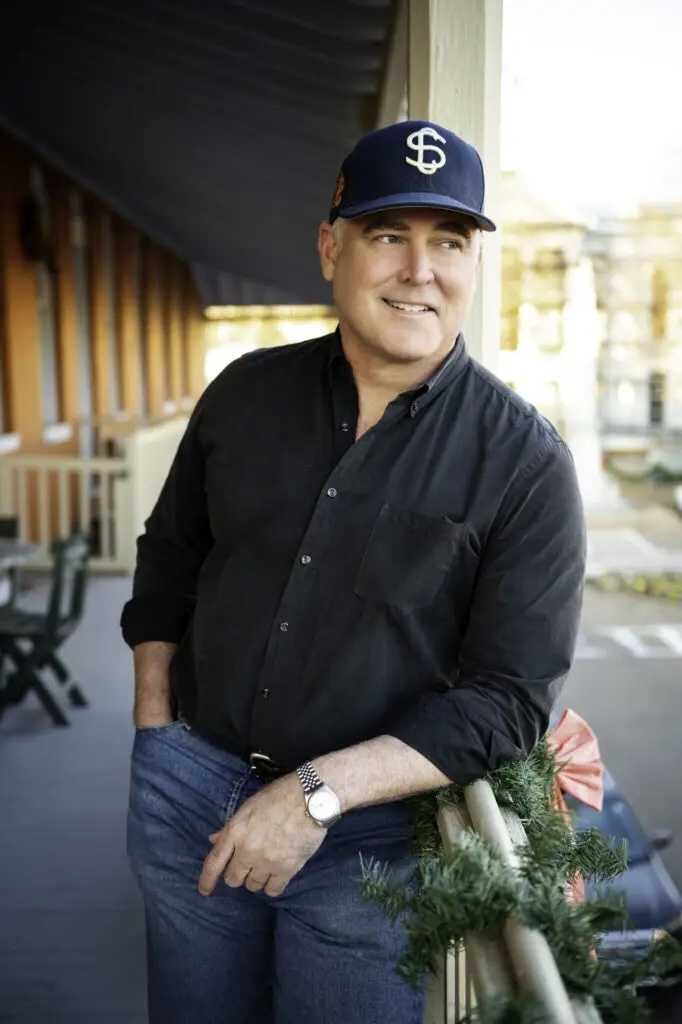
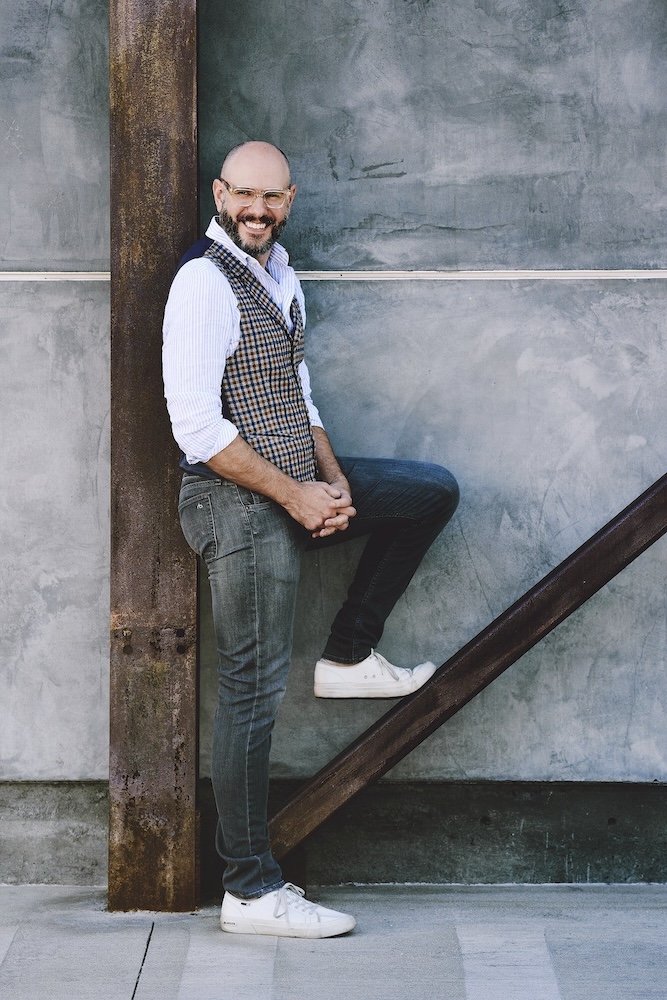
The first thing Ace Atkins and I discuss is that writing used to be slower. Not the thinking, not the storytelling, but the act itself. Notes taken by hand, facts checked line by line, interviews reconstructed from memory and scribble. Now there are recorders, transcripts, digital trails that can be followed and revisited. The work is faster, cleaner. However, he admits, “there’s something you miss about the good old days too.”
There’s a moment, somewhere between the first sentence and the finished book, where writing stops being an idea and becomes a life. Not a glamorous one, necessarily, but a persistent one. It’s built on curiosity, solitude, and the slow accumulation of experience. Speaking with Atkins and fellow New York Times bestselling author Steven Rowley ahead of the Santa Barbara Literary Festival, it becomes clear that while their paths differ, the shape of that life shares a similar rhythm.
For Atkins, that pace was set early in newsrooms and on the crime beat. Before the bestselling novels, there were long days chasing leads, learning how to listen, and figuring out what made a story worth telling. Journalism, he says, teaches you how to recognize narrative in the raw. It also demands discipline. Facts matter. The line between truth and invention cannot blur.
Still, the work leaves its mark in fiction. Years spent covering murders, disappearances, and cold cases gave Atkins more than research. They gave him a sense of how the past lingers. One case in particular, a decades-old killing that continued to echo through the lives of those connected to it, reinforced that truth. The story may end on paper, but it rarely ends in life.
That understanding carries into his novels, where resolution is often partial and truth feels just out of reach. Crime fiction, for Atkins, is not about restoring order so much as searching for it, if only for a moment.
Rowley arrived at writing from a different direction, though the impulse began just as early. He describes himself first as a reader, a child shaped by library visits and the quiet discovery that stories could travel far beyond where they were written. Growing up in Maine, writing felt distant at first, something that belonged to other places. But when he became a young fan of Stephen King, the idea of becoming a writer from rural Maine no longer felt so out of reach.
His path to publication was anything but immediate. Years of work filled drawers before his first novel found its way into the world. When success came, it carried the label of “overnight,” though it had been decades in the making. Even now, there is a sense of surprise in how he speaks about his career, as if the identity of Writer is still settling into place.
Where Atkins builds from structure and investigation, Rowley often writes toward emotion. His work balances humor with grief, searching for a tone that allows both to exist without mutual cancellation. Too much of one can flatten the other. The process becomes a matter of adjustment, shaping scenes until they hold that tension without breaking.
Despite those differences, both writers circle the same core idea. Writing begins with curiosity. It depends on a willingness to ask questions and to follow them further than is comfortable. Atkins speaks about the importance of continuing to seek truth, even as our information gathering methodologies change. Without that instinct, he suggests, the work loses its purpose.
Rowley approaches the same idea from another angle. He speaks about a human yearning for the perfect sentence, one that feels specific yet somehow universal. It is a distinctly human ambition, tied as much to process as to outcome.
That shared commitment is part of what gives events like the Santa Barbara Literary Festival their particular energy. Writing is solitary by nature, but storytelling invites conversation. For a few days, that conversation becomes visible. Authors step out of their routines and into rooms filled with readers, other writers, and people simply curious about how stories come together.
The festival itself moves through the city rather than settling in one place. Events unfold across theaters, galleries, and smaller venues, creating a kind of rhythm that mirrors the act of reading. You pick up an idea in one space, carry it with you, and find it again somewhere else.
Panels range across genres and forms, from crime writing to memoir, from journalism to film. Some discussions focus on craft, others on the broader role stories play in shaping how we understand the world. Keynote conversations lean into the emotional side of writing, exploring how tone is built and why certain stories stay with us.
What emerges, both from the festival and from conversations with writers like Atkins and Rowley, is a clearer sense of what it means to build a life around writing. There is no single entry point. One path begins in a newsroom, another in a childhood library. Both require time, persistence, and a tolerance for uncertainty.
The work itself remains largely unseen. Drafts are written and discarded. Ideas shift. Progress is uneven. Even success does not settle things completely. It simply changes the questions.
By the time these authors arrive in Santa Barbara, much of their journey is already behind them, though it never truly feels finished. What they bring with them are not just books, but the accumulation of years spent paying attention.
And somewhere between that first sentence and whatever comes next, the life they’ve built on the page continues.
On Sunday, May 3rd, Steven Rowley will be giving a keynote speech and Ace Atkins will be part of the “CrimeTime” panel. Visit www.santabarbaraliteraryfestival.org for more information and tickets.
You might also be interested in...




You must be logged in to post a comment.