
Raising Rosemead: The Story That Wasn’t in the Lexicon
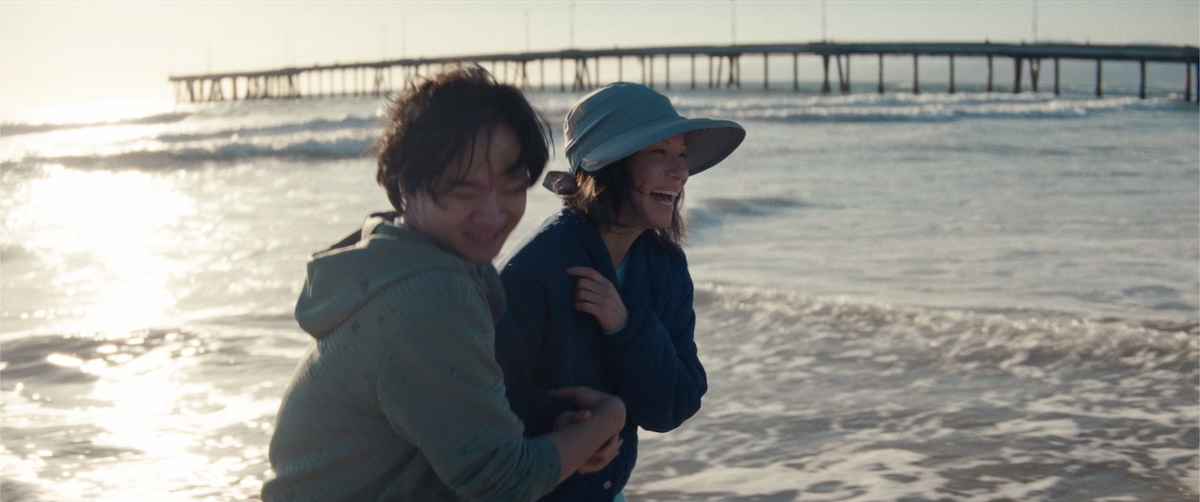
As Lucy Liu’s new film Rosemead comes to the Santa Barbara Cinema Society, the actress discusses where the film falls – and where she herself falls – on the American cultural landscape.
Lucy Liu is speaking from NYC, though she won’t be there long. Award season has come in like a lion, and with it comes its commensurate press tours, panels, and Lucy getting ten thousand steps a day just doing press line “step and repeats.”
One such junket will be here in 10 days, wherein Liu will attempt in a matter of hours the punishing sprint from Los Angeles to Santa Barbara and back for an Academy screening of her new film Rosemead – a movie that, by her own reckoning, didn’t exist in any recognizable cultural framework until she helped will it into being.
“This is a movie I don’t think is in our” – she pauses, searching carefully – “lexicon,” she says. “And I thought it was really important to add this story into our library, not just for Asians or Asian Americans but for the broader community.” The film gets its title from one of the counties in the San Gabriel Valley that is majority Asian, a place the LA Times once referred to as “the place Asians go to never assimilate.”
Rosemead, directed by Eric Lin and adapted from an award-winning Los Angeles Times article by Frank Shyong, tells the harrowing true story of a Chinese immigrant mother with not long to live (Liu) who takes drastic measures to protect her troubled and, it turns out, schizophrenic teenage son. The film had its world premiere at the 2025 Tribeca Festival and went on to win the Prix du Public Audience Award at the Locarno Film Festival, where Liu also received a Career Achievement Award. When it arrives at the Santa Barbara Cinema Society on December 13 courtesy of Montecito’s Kelly Mooney, it will mark another stop in a festival run that has seen Liu honored at nearly every turn – Snow Leopard Awards, Trailblazer Awards, Precious Gem Awards – in what’s been described as a “career-redefining performance.” And this from an actress who has had more than a few iconic and culturally significant roles.
But for Liu, the film’s importance extends beyond personal accolades. The actual events behind the movie occurred in 2015. The article was written in 2017. And the screenplay came to Liu in 2019. “The script devastated me,” she says. “The story number one. But number two, that it wasn’t that long ago. And so 10 years later here it is that we’re finally releasing it. It’s been a very long journey because the story almost presses the boundaries of plausibility – except of course that it’s100% true.”
The film centers on mental illness within an Asian American family – territory that, as Liu notes, carries particular cultural weight. “It’s a love story between a family dealing with multiple simultaneous tragedies,” she says, “and also not dealing with them. I think it’s not uncommon for people to keep what’s happening at home quarantined to the home… There’s an external presentation of what we are, how our family is, but then there’s also a reality that’s so often kept under wraps. And I think that level of shame can be incredibly isolating and damaging, especially for younger people.”
When asked about cultural shame around mental illness, Liu is direct. “Sadly, I think there is still shame around mental struggles for pretty much all cultures,” she says. “It manifests itself in silence and that lack of communication can obviously be quite limiting if not smothering to positive outcomes.”
Liu reflects on her own upbringing in the ‘70s and ‘80s, when conversations about mental health simply didn’t happen. “Mental issues were not talked about, plain and simple. I mean, we didn’t even have the ADHD or ADD diagnosis in schools. It was just like, ‘Oh, this kid brings a lot of trouble. Stay away from that guy – he’s a bad egg.’”
This context shapes Liu’s approach to the character she plays in Rosemead. “I tried to humanize what happened as much as possible because the real-life Irene (named Lai ‘Eva’ Hang) never got that chance.” Liu explains. “The headlines really don’t tell the full story of what happened in that family. With limited resources this matriarch tried to do the things she was supposed to: care for her son, obey the law, and so forth. But at the end of the day Irene just didn’t have anyone advocating for her. She needed help.”
Our conversation turns, inevitably, to the arc of Liu’s career – and to her place in the American cultural canon. Liu was launched in the hit series Ally McBeal where she played an American character (the lawyer and later judge Ling Woo) who just happened to be Asian American. Liu auditioned for a different role (that eventually went to the sometime Montecitan Portia DeRossi) but David Kelly fell in love with Lucy’s charisma so he created a character from whole cloth just for her. The result was an Emmy nom for Liu and her career was off to the races.
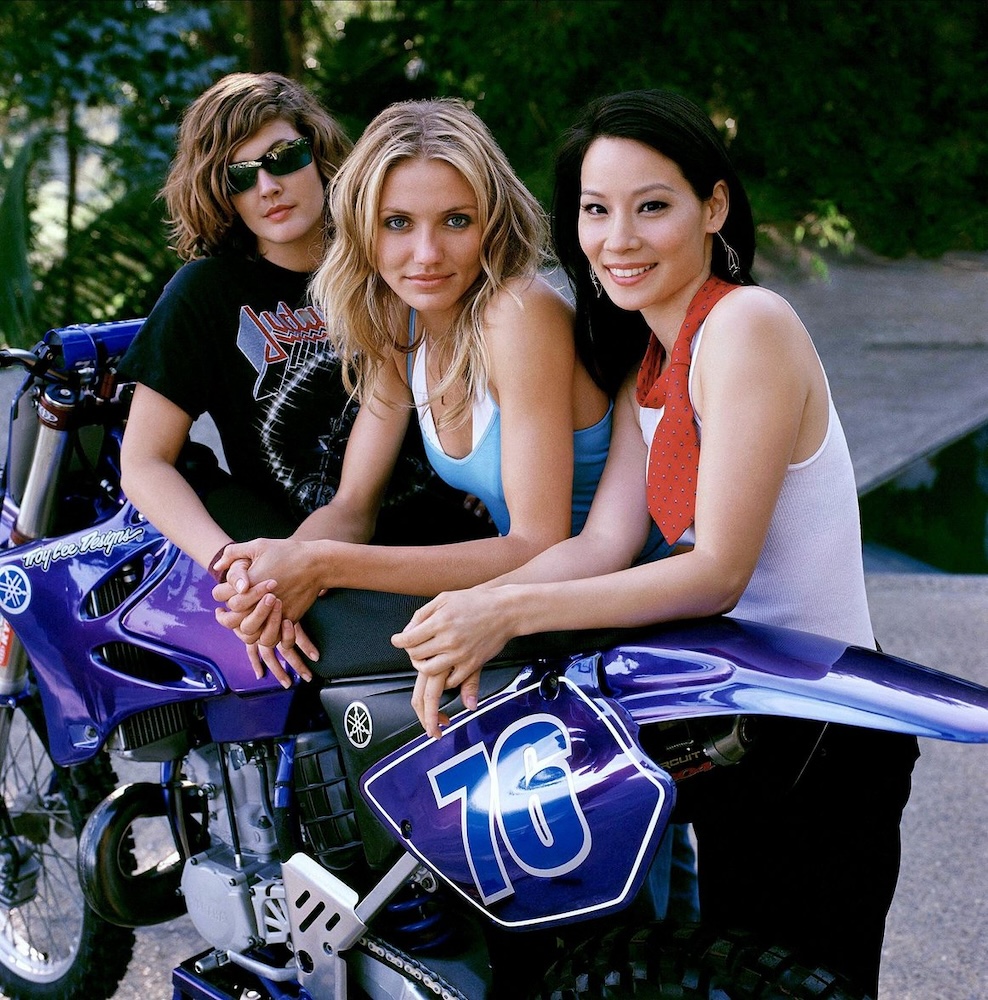
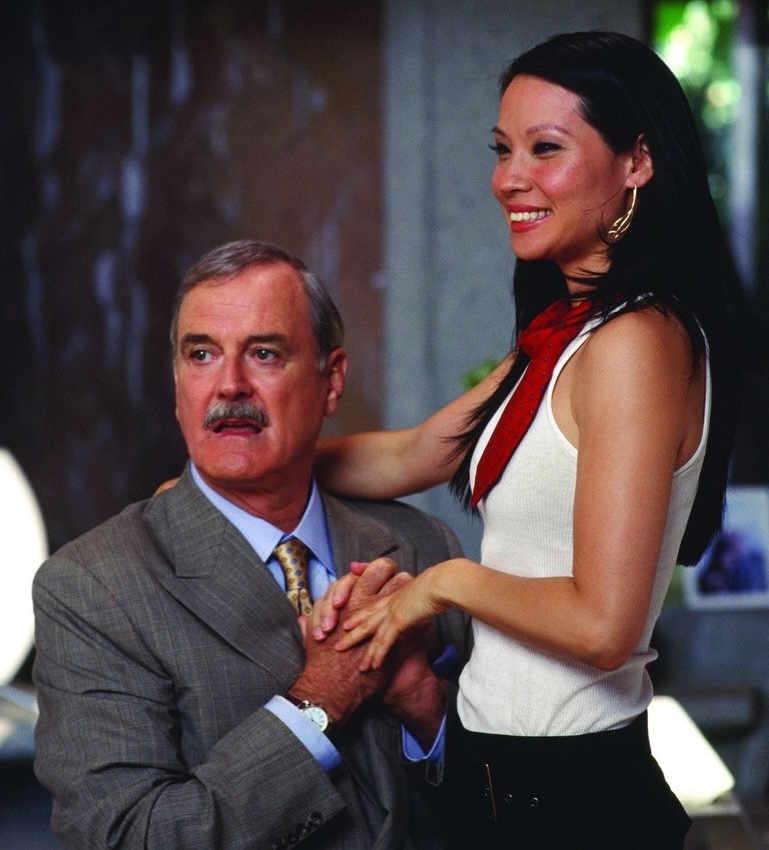
Lucy landing the role of Alex Munday in Charlie’s Angels took her cultural crossover next level. Because if Ally McBeal’s Ling Woo just happened to be Asian-American, with Angels’ Alex Munday, Lucy played a bona fide all American. In Angels, her character’s father was played by John Cleese (another former Montecitan) with no explanation offered. “We never talked about that,” Liu recalls. “It was just that Cleese was my dad… Because he was simply the best guy for the role. And he had the humor and the gravitas of being a comedy legend. It all just kind of aligned with what we were looking for. Which hopefully was a cinematic meritocracy of sorts.” It was also boffo box office.
Hey Ya
Charlies Angels was followed by an iconic role in Quentin Tarantino’s Kill Bill, co-star billing in her own CBS series Elementary, and global brand deals with Mercedes, Bruno Magli, and Stuart Weitzman. Almost inevitably Lucy got her star on the Hollywood Walk of Fame and she is mentioned by name in not one but two pop songs: “All you Beyoncés and Lucy Lius, get on the floor.” Last year Lucy starred in Presence directed by Steven Soderbergh. Her place in the American cultural landscape is undeniable and irrevocable. Lucy is here to stay.

As she prepares for the next round of screenings and panels, including ours up here, Liu seems aware that she is carrying something larger than a single film in her overworked tote bag. Rosemead is the first narrative feature from L.A. Times Studios, the first American film investment from Taiwan Mobile, and a production whose above-the-line creative team is almost entirely Asian American. For an actress who once played an angel with a British father and no questions asked, the movie represents something new – a story that insists on specificity while reaching for universality.
“It can get muddled,” says Liu of how such stories are typically received. But with Rosemead, she seems determined to unmuddle it – to add something to the lexicon that wasn’t there before.
I ask Lucy if, after decades in the biz, she had any special perspective on getting cast, or not cast, on account of her heritage. “I’ll put it this way,” says Liu, “I actually think audiences are more sophisticated and inclusive than they’re mostly given credit for. The audience cares if they’re being entertained, first and foremost.”
If you want to be entertained by an iconic actress giving a riveting performance in an untraditional story, go see Rosemead.
Rosemead opens in New York on December 5 and in Los Angeles on December 12 and screens at The Santa Barbara Cinema Society this coming Saturday, December 13. This screening has been generously underwritten by Montecito’s Kelly Mooney, Founder & CEO of Equipt Women. Equiptwomen.com
You might also be interested in...




You must be logged in to post a comment.