
Who Was Ashleigh Brilliant in My Life?
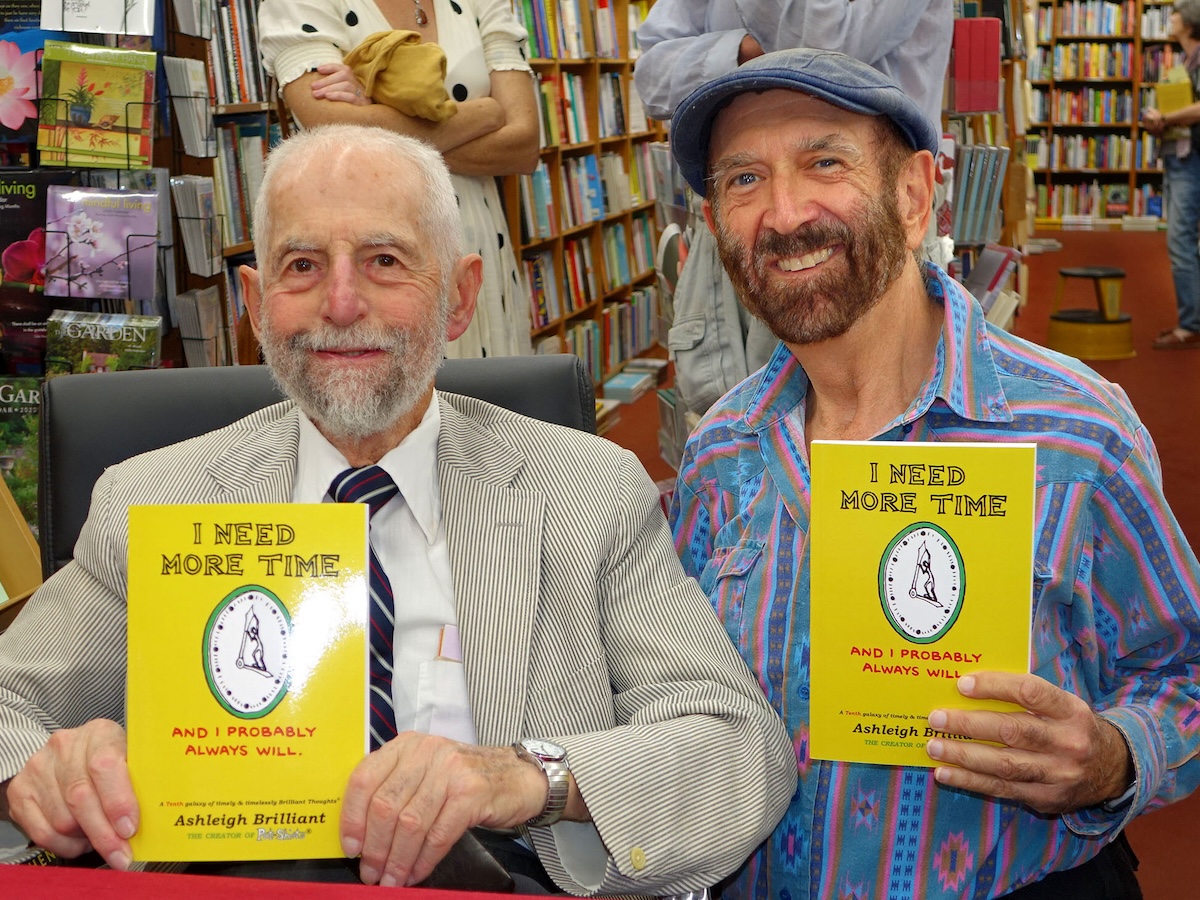
I first “met” Ashleigh Brilliant on a family trip to Chicago in 1969. I saw a rack of his Pot-Shot postcards and bought two of them. One of them showed two iguanas on a rock with the caption: “Why are you so hard to ignore.”
In the early 1980s I was at the July 4 Mission Art Show and was honored to meet Ashleigh in person.
When he learned that I was a science and engineering person he invited me to his home to set a timepiece. I later helped him with other technology from computers to digital photography. I was honored to be a part of his life.
Like me, he avoided driving as much as possible, preferring to bike, walk or ride the bus. His UC Berkeley PhD history dissertation was on the history of the automobile in Southern California. He would think nothing of walking from downtown Santa Barbara to UCSB and coming home on the bus.
Like me, he had a strong distaste for people unnecessarily driving. It made him crazy that his wife Dorothy regularly drove 100 miles round trip to go skating. And that she flew all over the world often just to get airline miles, not even to leave the airport and see anything!
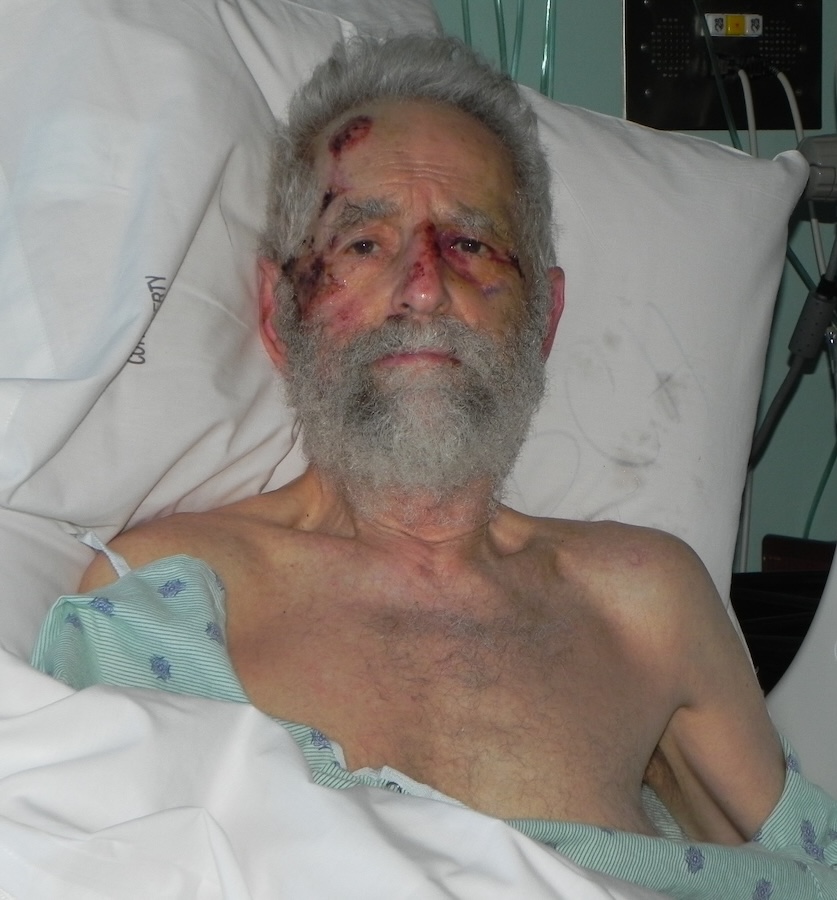
We each had our turn at being hit by a car and nearly being killed. He visited me in the hospital and later it was my turn to visit him. He wanted me to photograph his horrific injuries and show them to the City Council to shame them into doing more for pedestrian safety.
We both lived in Europe and the U.S. as children. We were both from a Jewish background yet we were not believers. But there were notable differences. I grew up in an activist family. Ashleigh was not much of an activist except when something got him fired up. Famously fighting to ban dirt blowers in Santa Barbara, for instance.
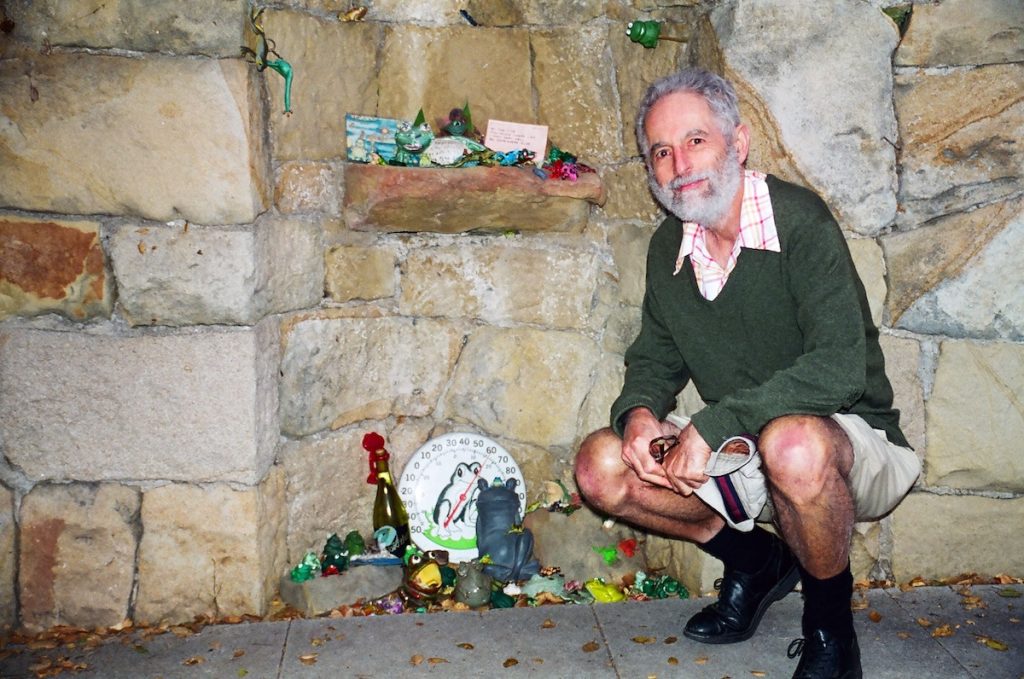
We both enjoyed discovering quirky finds and he shared some with me that I might never have noticed otherwise. The Frog Shrine on the Riviera before it was widely known. Nearby Steps to Nowhere. A natural bridge at Goleta Beach.
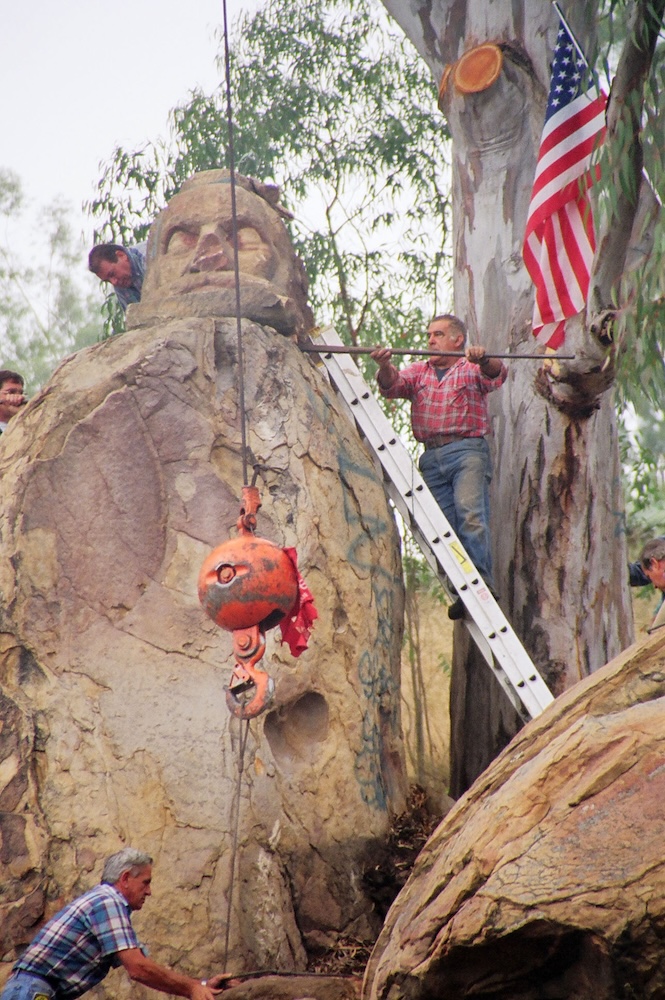
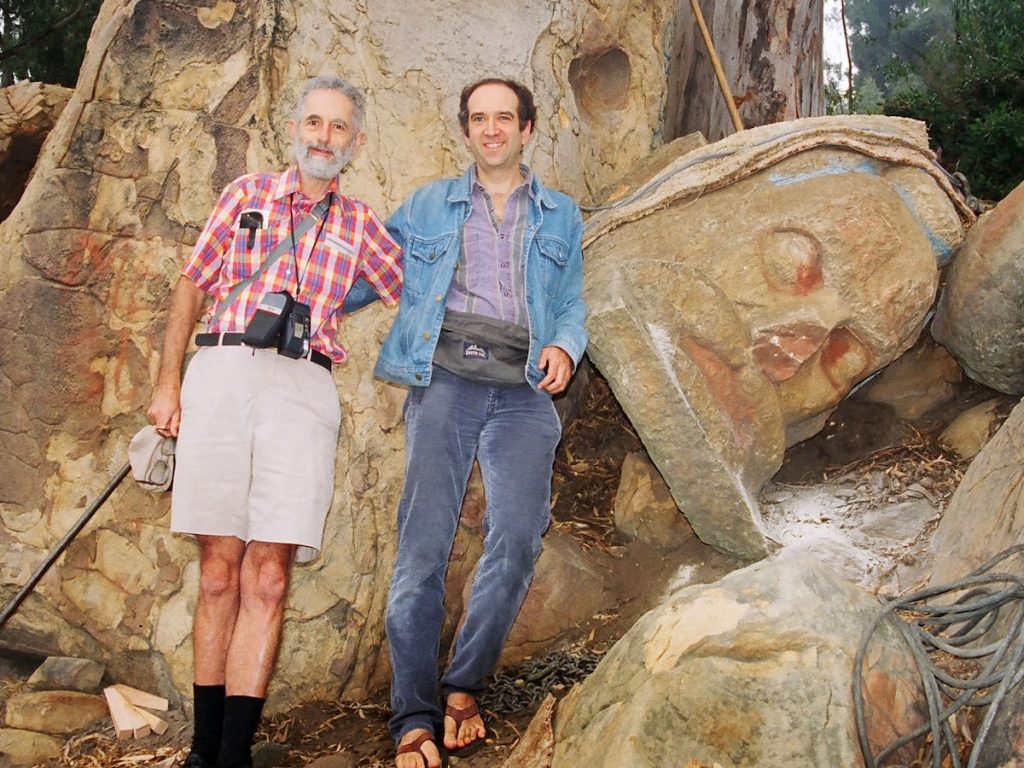
And then there was the time he was out walking the Riviera and a young couple asked him about the stone head in the brush at the bottom of Franceschi Park. What stone head? Ashleigh had walked past that spot for years and never had seen it. It was a bust of Franceschi. Perhaps toppled when the U.S. was at war with Italy in WWII.
As a physics and engineering person, he asked if I might know how to put it back on its pedestal rock. I reached out to an engineering professor at UCSB to see if maybe it could be a student project. This proved to be a dead end.
But Ashleigh didn’t give up. Engineering wasn’t the answer. Cultural identity was the answer. There was an Italian American Boot Club. And some of their members were in construction and other trades.
They happily adopted this project. On July 12, 1993, they showed up with a massive crane to lift the head back where it had been about 50 years earlier. Another craftsman restored its nose that had been broken in the fall.
Ashleigh was sure it would loom large over the entire City. He was a bit disappointed how small it was in the landscape. But he should be proud of his persistence in getting the job done.
We had other connections. Ashleigh suffered from depression and even wore a button to remove the stigma of mental illness. My mother suffered similar mental illness.
Ashleigh and I both were columnists at Montecito Journal. My mother had me cut out each of Ashleigh’s articles and mail them to her along with my own.
He taught me a valuable writing trick: Carry a pad. When you get an idea, write it down before you forget.
We also hiked together. One time we got to a very challenging rock. I looked down and realized he was wearing leather dress shoes!
Ashleigh spoke to our Humanist Society of Santa Barbara in 2018. He said he isn’t sure whether he is a Humanist or an atheist because he is not one to join organizations. And he is not sure enough about anything to call himself an atheist. And he thinks “agnostic” is a cop-out.
He confessed that he sometimes watched televangelists. He particularly liked Joel Osteen. He liked that Osteen has a positive message that God is always on your side. A message of the Power of Faith. Many of Ashleigh’s own Pot-Shots are along these lines. Like this one:
“There is always room in my faith for you and your doubts.”
At the end of that talk, he was asked only one question: Does he think life is worth living. Before he had a chance to answer I reminded him of this:
The other Pot-Shot card that I got in Chicago as a child was a simple drawing of a man leaning on a shop counter. “No. Life isn’t what I wanted. Haven’t you got anything else?”
Ashleigh then offered his answer to the question:
“Compared to what?” Asking if life is worth living has to be compared with some alternative!
You might also be interested in...




You must be logged in to post a comment.