
The Nature of Taste: A Beer Adventure at the Museum of Natural History
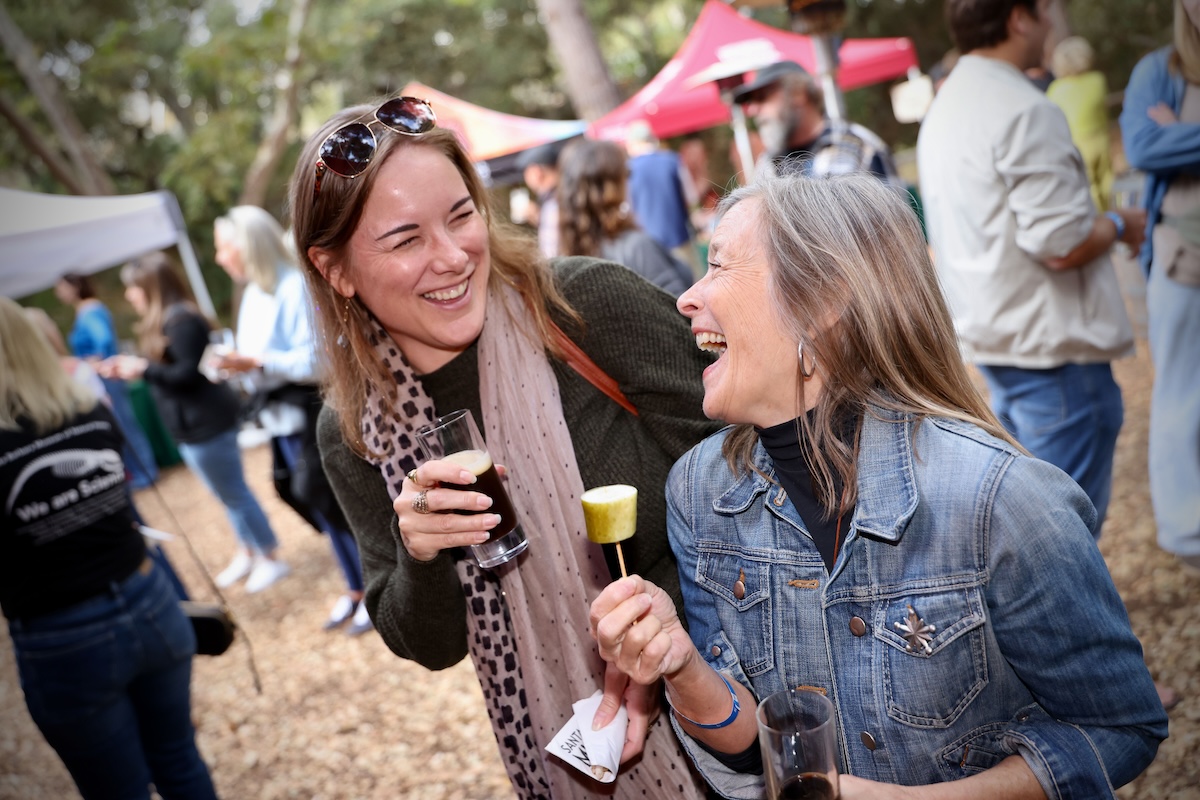
The Santa Barbara Museum of Natural History is about to turn its oak-dappled woodland into a living, breathing canvas of taste with the return of the Mission Creek Beer Festival. On Saturday, October 18, 2025, this unique celebration of hops, food, and curiosity will transform the grounds into a flavor expedition unlike anything else on the Central Coast. This year, I’m delighted to help organize the event, collaborating on its playful new theme: The Flavor Field Guide.
Imagine wandering from Bitter to Sweet, from Sour & Salty to Umami & Beyond, each path marked not by signposts but by the clink of glasses, the shimmer of foam, and the aroma of roasted, salted, and caramelized delights. It’s a journey where beer is not just a drink but a compass, guiding you through a field guide of flavor designed to tease, surprise, and inspire. With every sip and nibble, you’re not only savoring local creativity – you’re fueling science, helping ignite wonder in thousands of curious young minds. Here, at the intersection of hops and habitat, malt and mission, flavor and fun, you’ll find that a beer festival can be more than a party. It can be a story.
But first, a statement on taste… as I type, wearing plaid and polka dots…
Some Flavorful Facts
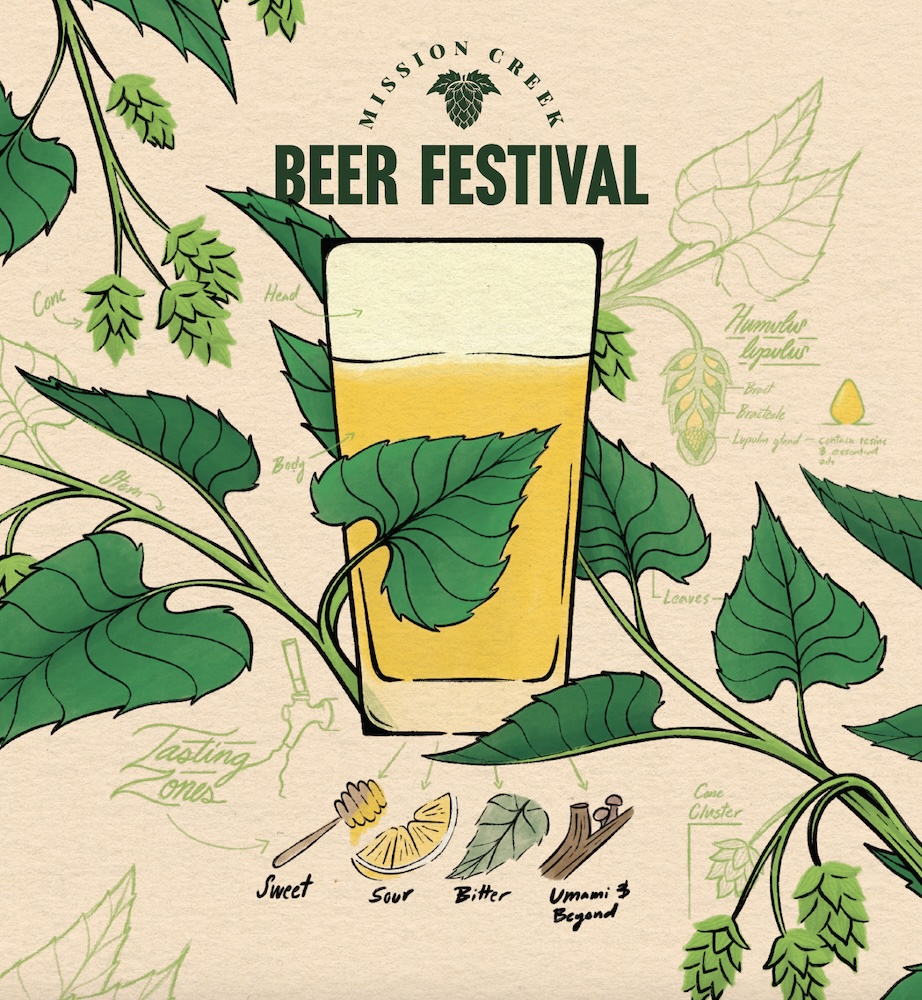
You’ve probably seen one of those tongue maps showing where on your tongue you taste at – yeah, that thing’s wrong. Nature is rarely mapped out so cleanly. Did you know you have taste receptor cells in your lungs? In your intestines?
Those tongue maps show where we have higher concentrations of particular taste receptor cells, but these seemingly distinct tongue regions are by no means the only place where these cells are located. Without going into a full science lesson here (not to mention the fact that scientists are still working out the details on how this all works) – we taste with our tongue and we smell with our nose. To broadly oversimplify here: Taste is a form of chemical communication for liquid and solid substances entering our body, while aroma helps communicate the chemistry of gases surrounding us.
There are five basic tastes: sweet, bitter, sour, salty, and savory (umami). There are actually other sensations (think spicy foods or metallic notes) and proposed tastes (carbon dioxide), but these are the main ones and each serves as identifying a primary function of whatever it is you’re eating. Sweet relates to sugar (energy source); sour communicates acidity (spoiled foods); salty is about ion and water balance (cellular functioning); and umami/savory relates roughly to the amino acid L-glutamate (protein, muscles, and brain function).
Bitter is the kind of weird one. It’s basically a catchall system to communicate that the substance does not provide an elemental function – and may even be poisonous. (This is actually why not everyone likes bitter foods or drinks.) If you were to go out in the forest and start putting random stuff in your mouth (please, please do not do this)… a lot of it would taste bitter since a good portion of it would poison you. This is why you have bitter taste receptor cells in your lungs – inhale a bunch of particulates, it’ll probably be “bitter.” Those cells are not wired to your brain (you can’t taste in your lungs) but rather the surrounding muscles. It’s an emergency system that will open up your pathways and flood the lungs with air in an effort to remove the particulate. Isn’t nature cool?
On Roses, Noses, and Jellybeans
But really, what is the difference between taste and aroma? Or flavor for that matter? Once again, taste: tongue; aroma: nose. When you are eating something there is a blending that goes on though. The classic putting your nose up to the roses and smelling is actually called orthonasal aroma. When you are chewing, aroma particles go up a back passageway in your throat and enter the nose (actually the nasal conchae where you smell from). This is called retronasal aroma.
So when you eat, there is a mixture of taste and aroma, the result of which is called flavor. An apple will have a ratio of sweet and acidic tastes – but really it is the aromatic compound’s complex chemistry that gives the apple its flavor. Cicerones and Sommeliers will spend years learning how to balance and blend ortho- and retronasal smelling through their breath (I’ve personally identified about two dozen breathing patterns one could use).
I’ve always personally described the aroma-taste-flavor relationship as looking at an illustration. Taste is the linework, giving structure to the object. Aroma is the color and shading, bringing life to it. And flavor is the overall picture, blending the two together for that image in your mind. There’s actually a fun jellybean test to teach people how to differentiate between these three elements and you better believe we’ll have a table at the event for people to try it out.
A Taste of What’s to Come
If flavor is like a picture comprised of taste and aroma, then let’s have you be the artist. The different flavors zones at Mission Creek Beer Fest will be mapped to the main beer taste, and the foods served around them will be curated to play with all of the beers in that zone. Rather than a linear pairing where one beer and one food go together – each guest will get to explore how beer and food pair with different elemental tastes.
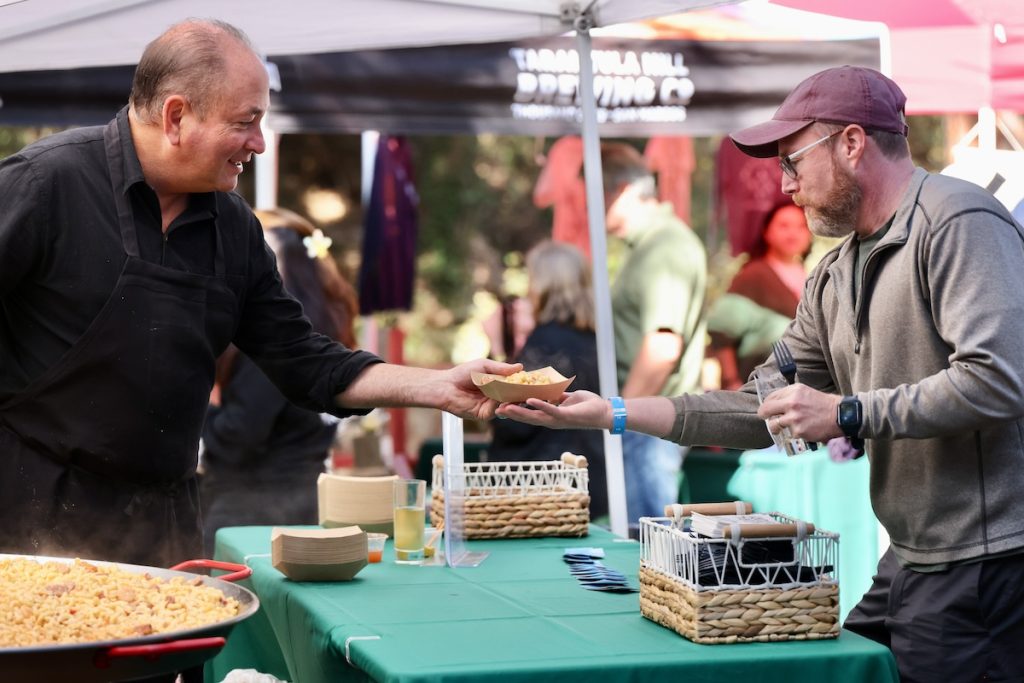
Part of the goal is to help remove judgements and preconceptions each drinker has about beer flavor. Think you don’t like sweet beers? Maybe try the Island Jubilee Ale with a charcuterie cup from A La Carte Santa Barbara. This Scotch-style ale brings together notes of plum, black cherry and a touch of toast that will meld and soothe the spicy salami and crystallized salts of the nutty, aged gouda in the charcuterie bite.
Many of the brewers will be pouring two beers that play off the flavor zone that they inhabit. Island Brewing Co. will also be tapping a fresh batch of their Avo Honey Ale. Do you know that honey is basically 100% fermentable sugar? This means that it actually leaves the beer dry and crisp, with an aromatic hint of the wildflowers, orange blossom, or whichever type of honey is used.
Elemental Pairings
There are two main approaches for pairing: compare or contrast. Put a like with a like (compare) or use a positive and negative attribute together (contrast). For example, the Italian espresso-based dessert, affogato, from Beacon Coffee Co. is a natural fit with the S’more Stout that Night Lizard Brewing will be bringing – that’s a like with a like that will be hard not to like. But as a contrast, have you ever had a pistachio gelato with a Gose? The tart, salty wheat beer style brewed with coriander that originated from using the brackish water of the Gose River blends perfectly with the sweet nutty dessert.
Barrelworks – the specialty barrel-aging arm of Firestone Walker – will be bringing two versions of their fruited sour ale, Primal Elements, for the Sour & Salty zone. A tropical one using mango, pineapple, nectarine, and tangerine, and a berry-themed one that is aged on whole Washington blueberries and marionberries. The State Street family-owned Cuso’s Creamery will be whipping up something fun to play off this cornucopia of flavor.
Sweet and bitter are pretty standard tastes in beer, but what about umami? Longtime friend and close collaborator Dan Reyes of CARP Homebrewers will be helping us fill this section. Inspired by the Umami Monster brewed by Garage Project out of New Zealand, Dan and I will be brewing a Belgian-style dubbel with harvested kelp, dried fermented bonito flakes, and oak-smoked mushrooms. The beer, naturally, will be called Dub’Ami. How will it taste? You’ll just have to attend to have a sip. Maybe alongside some barbecued ribs from Convivo or a sesame-mushroom dirty rice from Finch & Fork…
Science, But Make It Delicious
Yes, there will be hops and malts. Yes, there will be food so good you’ll want to high-five a chef. But at its core, the festival is also about science – with 100% of the net proceeds going directly to the museum’s science and nature education programs. Every pint poured is basically a tax-deductible act of goodwill for local kids, school field trips, and the kind of hands-on science learning that may inspire the next generation of inventors and ecologists.
As the Museum’s Marketing Director Jonah Haas puts it, Mission Creek Beer Festival is like the cool younger sibling of the institution’s long-running Santa Barbara Wine Festival®. It’s a little wilder, a lot fizzier, and entirely devoted to making science fun, delicious, and approachable.
What’s a festival without a cherry – or in this case, a hop – on top? This year’s raffle grand prize is a private beer cruise hosted by yours truly for 50 on the Condor Express. I will even help curate the selection of beers to the winner’s taste. Imagine you and your closest friends afloat on the Pacific, raising glasses while dolphins surf the bow. And best of all, someone else does the cleanup.
But before you can get there, you’ll first have to trek your way through a Flavor Field Guide at the museum.
You might also be interested in...




You must be logged in to post a comment.