
Believe It or Else
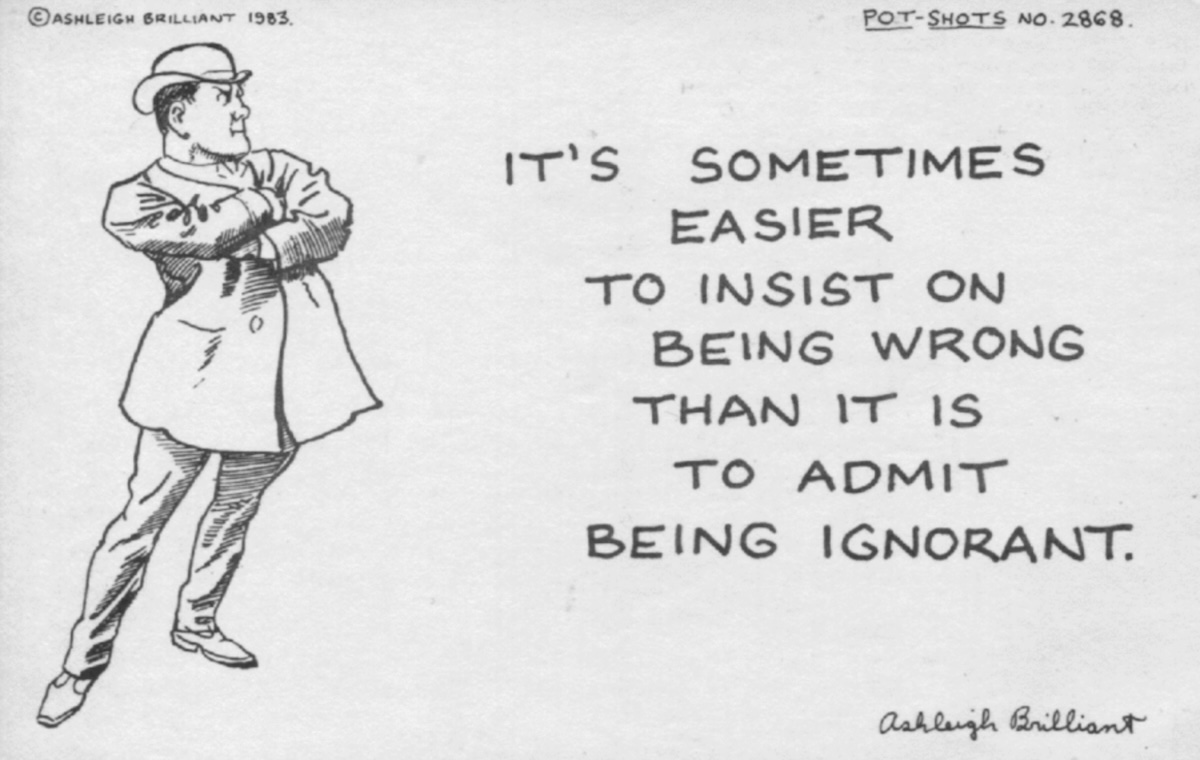
Many people believe in many different things – yet (speaking personally), I find it hard to believe in anything at all. Of course, the primary “belief” hurdle is whatever people think of as “God.” And there is nothing new about this. There is a whole field of study concerning belief without proof, called “Theology.” But other fields of study also require unsubstantiated belief. One is called “Ethics,” which has to do with matters of behavior, in terms of “Right” and “Wrong.” Another is “Aesthetics,” which is concerned with how things appeal to the senses. You can trace such teachings back at least as far as the thinkers of Ancient Greece. But they always start with something we have to call a belief.
Philosophy – which means the Love of Wisdom – can’t help us with this problem.
The famous dictum of Descartes that “I think, therefore I am,” applies only to the human individual. We don’t know what animals think or believe.
One thing we do know is that leadership depends largely on belief. Whoever we follow is likely to have qualities which make us believe in him or her. Unfortunately this doesn’t necessarily make them someone we ought to follow. The classic example is Adolf Hitler, who was so gifted as a speaker that people who heard him were almost hypnotized into making him their leader, even when it meant being led into a war in which, ultimately, their whole country was destroyed. The key was in telling people what they really wanted to hear.
Hitler told the German people that they had been wrongly mistreated in the Versailles peace settlement that followed their surrender after World War I. That Conference had imposed heavy “Reparations” on the losing side, and even deprived Germany of all her colonies. As a result, barely 20 years later, a rearmed, energized, vigorous, and believing Nation was ready to follow the leadership of Hitler and his minions – now known as Nazis – into what was for them a truly disastrous Second World War.
But others considered by History to have been great leaders also inspired belief in themselves and in what they were seen to represent. One modern example was Abraham Lincoln, who was believed in (whether or not he really wanted to be) as symbolizing the cause of ending slavery. Another was Winston Churchill, who was believed in by the British people at a time when it seemed they had little else to believe in.
But Religion in general is, of course, founded on believing in what would otherwise be unbelievable – also known as “Faith.” Often it starts with some actual person like Jesus or Buddha or Mohammed. What still surprises me as a student of History, is how believers, instead of being drawn together, tend to divide into groups, sects, or factions which are bitterly opposed to each other. The most vivid demonstration of this phenomenon was the religious wars of only a few centuries ago in Europe. Various peoples who all called themselves Christians were so bitterly opposed to each other that one major conflict is still known to History as the Thirty Years War. And even into our own time, a geographical entity called Ireland can be riven with conflict between followers of that same religious leader named Jesus, who lived two thousand years ago.
And my own homeland of England still has what is called an “Established Church.” In this case, it is known as the Church of England, and only its followers can enjoy certain privileges, such as being married in its churches by its ministers. There are also political benefits which, until recently, affected a community’s representation in Parliament.
And even the organization of religions has been an important factor in their influence. For centuries, the Pope in Rome was recognized by all believers as their leading Authority in all religious matters. Not till about 500 years ago, with a movement which became known as the Reformation, did that leadership begin to be challenged. Remarkably, despite the lapse of time, there is still a Pope in Rome, who is recognized – by Christians called Catholics all over the world – as their religious leader.
To end on a lighter note, the story is told of W.C. Fields, who was a notorious imbiber. He was once somehow persuaded to be baptized – which required being dunked in a river several times. Each time he surfaced, he cried out “I Believe!” until the last time, when it became “I believe I’ll have another drink!”
You might also be interested in...



