
Marbles
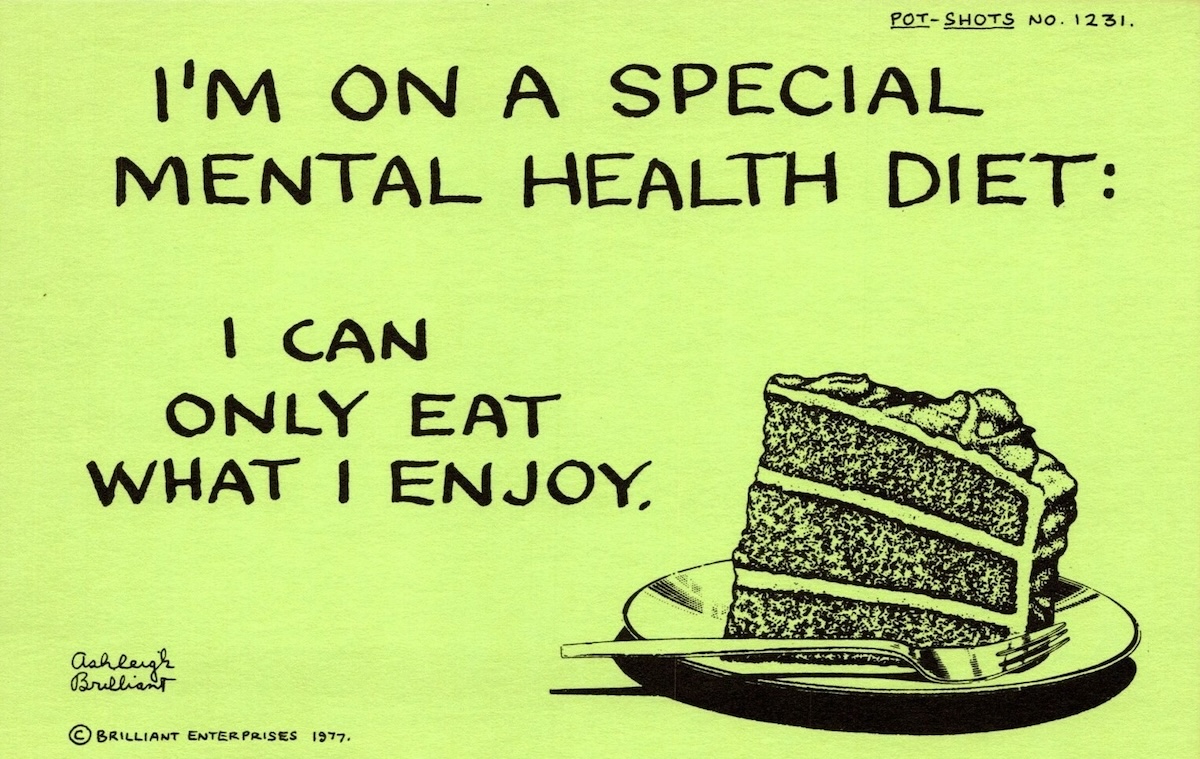
The little glass balls we call “marbles” today were once probably made of real marble – but they were no doubt being played with by children thousands of years ago. Just when “having all one’s marbles” became a semi-humorous metaphor for being sane is probably much more recent in origin. And not having all of them of course came to indicate the opposite. There are other less kind but more medically approved terms, such as “dementia” – but the whole field of Mental Health is relatively new. In past times, insane people were just “crazy” or “lunatics” – a term derived from the supposed influence of the Moon.
I myself, at various times in my life, have been a patron of that industry in its modern guise. Fortunately, the most serious episode occurred in England, at a time when the entire costs were covered by the National Health Service. Since coming to America, where psychiatrists get rich, I have never been able to afford any serious mental trouble.
Ironically, one factor in improved recognition and treatment of mental problems has been modern warfare. It was in World War I that aberrant behavior on the Front Lines came to be called “Shellshock.”
Incidentally, the game of Marbles has had other effects on our language. No doubt, you’re familiar with the expression “This time, it’s for keeps,” meaning “This time, it’s really serious.” In the game, there were two options. The players could agree in advance that whoever won would return his winnings to his opponent at the end of the game – OR that the winner could retain all the marbles he had won. That was called “Playing for keeps.” I remember that being said in World War II, when Americans recalled that as recently as two decades earlier, in World War I, our boys were being sent “over there” to fight the same enemy, Germany. So it was only natural to think and intend that this time, it would really be for keeps, and the outcome would be permanent.
In the two schools in Washington, D.C., which I attended as a child – Whittier Elementary, and Paul Junior High, marbles may have been played, but I don’t remember it as having been a particularly widespread activity. But my family was only living in Washington because of World War II, and when it was over, we returned to our home country of England. On the way, however we made an extended visit to my mother’s hometown of Toronto, Canada. I was still only 12 years old, and, although I didn’t like the idea, I was enrolled in a local school, on Brock Avenue. At that school, however, I made a surprising discovery.
All the kids there seemed to be crazy about Marbles. At recess and lunch time, the entire playground area seemed to be covered either with kids playing marbles, or with other kids standing around watching them. And these were no ordinary marbles games, in a circle drawn on the ground. Some kids had made elaborate cardboard structures with little numbered loopholes towards which marbles could be rolled, aiming to score the most points.
The next part of this story may sound like something I made up – but it really happened. I had no interest in the marbles games and just stood around. But I was obviously a stranger, and other kids were curious about me. They began asking me questions about who I was, and where I was from. I was probably better-read than most kids my age and began supplying other information with my answers. This apparently made me something of a curiosity, and people would come to me just to see how I would answer their questions. I soon had the idea of charging for this service, and began asking for a marble for each answer. Soon my pockets were bulging with marbles.
I wish I could remember some specific questions and answers. But I wasn’t smart enough to write anything down. All I know is that, by the time I had to leave, I had several large jars full of marbles. Sadly, I left them all behind when we finally sailed for England.
But before that, word had got around about what was going on. And my best evidence of this was that the teacher of my English class, in illustrating a grammatical point, wrote on the blackboard (without ever saying anything about it directly to me):
“The foolish children give marbles to the boy in the playground.”
You might also be interested in...



