
William Holden Masks Collection
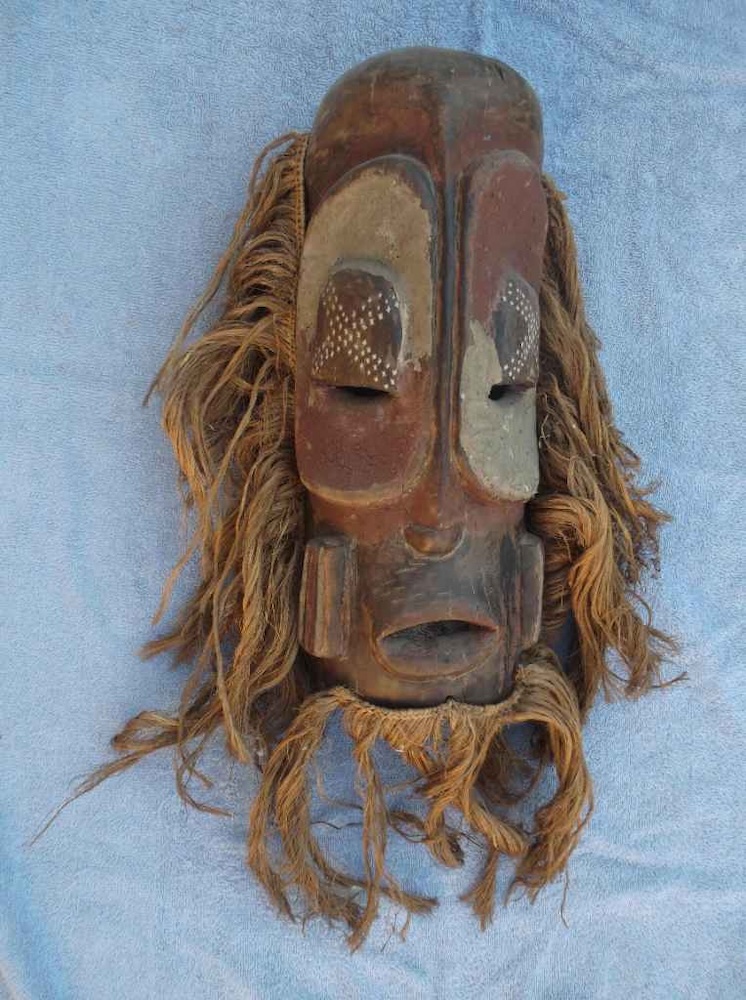
This frightening but beautiful African work of art is a wooden and polychromed (painted with many colors) carved BaPende mask from Zaire, part of a group collected by a world famous celebrity. The owner of these masks queries, “Where can these masks best be sold?” Indeed this collection is superb, and varied in age and origination.
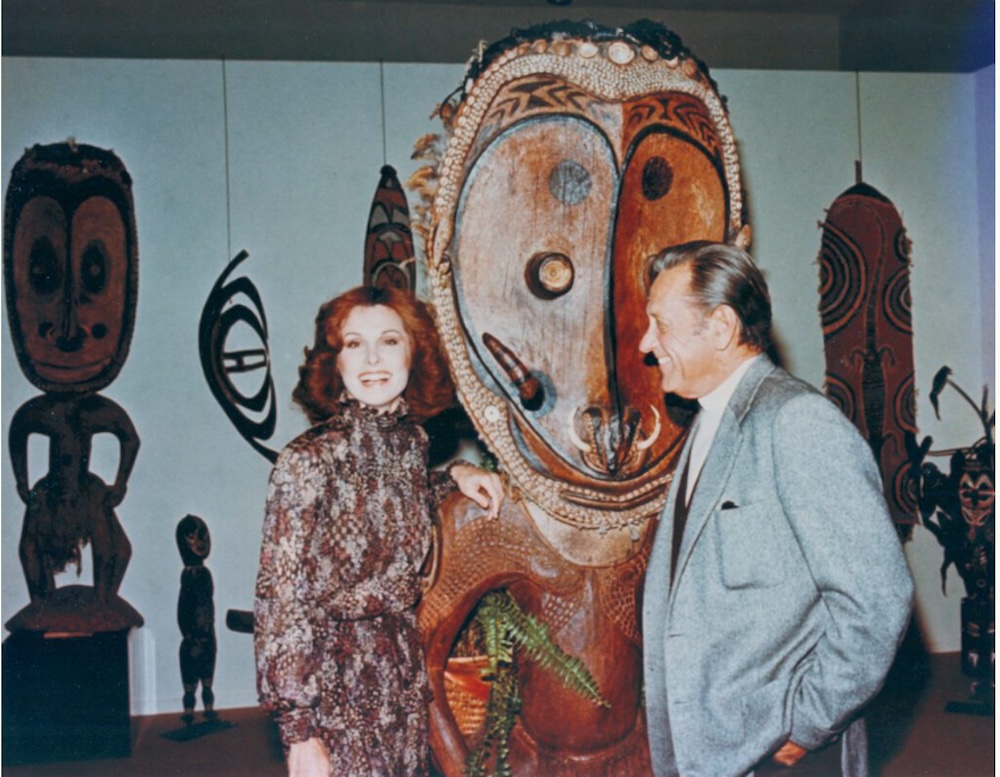
The masks were purchased by the late wife of a Journal reader in the early 1980s in Nairobi, Kenya, from the collection of Hollywood icon William Holden. The masks were sold by Holden’s partner, Stefanie Powers, to benefit The William Holden Wildlife Foundation, which she created after his death. The foundation is still in existence and operates an educational facility in Kenya. The Academy award-winning actor amassed a world class collection of masks, one of which was donated to the Palm Springs Art Museum in 1982.
African masks collected during the Colonial era are culturally sensitive material. Many were acquired by colonial exploiters, the French, English and Belgian dealers who – in the 1920s – realized the market potential inherent in the public’s taste for the exotic, and the growing understanding of how these elements were appearing in abstract modern art as conceptualized by artists such as Klee and Picasso.
The collection amassed by Holden (1918-1981) was known for its connoisseurship. He co-founded the Mount Kenya Safari Club (1959) and established a game ranch focused on wildlife preservation. As he grew older he became increasingly concerned with various animal species declining in population.
Another mask in the group is a Baule mask from the Ivory Coast. In the 1980s I served in the Peace Corps and took long weekends in the Ivory Coast. The Baule people – a subgroup of the Akan people of West Africa’s Ghana – inhabited the east side of the Ivory Coast, having migrated there in the 17th century. The Baule are known for their gold talismans, brass castings, and wooden figural sculptures. Their masks are their foremost art form. I purchased mine in the mid 1980s and it hangs on a white wall in front of my desk.
From the last half of the 19th century to the first quarter of the 20th century, only an important individual from a powerful family would have owned such a Baule mask. When worn, the soul of the mask is transmuted through the “dancer’s” face, and he (the dancer was always a male) was transformed into the representation of the mask; he became a deity, an ancestor, or animal spirit. The mask allowed the spiritual world to interact with the physical world, facilitating communication between ancestors and heirs, humans and deities, humans and animals, low born villagers and high born, men and women, earth and sky.
Two divine beings are at the heart of Baule spirituality: the creator god Nyamien, and Asiè, the God of the Earth, lord of humans and animals. In Baule spiritual tradition the soul is immortal, and therefore beholden to its ancestors.
The mask pictured is a portrait mask and might have depicted a forebear of the dancer. This mask has the physical features of an honorable person: the slit-eyes represent modesty, the open mouth and folds – age, the hair and beard – wisdom.
Let’s imagine this mask as it was “danced” in a ceremony in the early 1900s. Before the ceremony, this mask may have been kept “sleeping” in a personal shrine until its command performance in a “masquerade.” The masker or dancer wears a fiber costume, and danced to drums, to singing, and spoken words. The mask became the actor in a skit and the actor became the mask.
Here’s the cultural conundrum, and why the sale of these masks is a delicate topic. Although this mask is a stunning 3-dimensional work of art, the mask was not intended to be wall-hung. Why? The mask initiated movement. The mask had the power to act, and its static display on a wall belies its power. I am to blame as well; my Baule mask is on my wall as I write this. I “see” form, color, texture, and abstraction of the human face. I KNOW I should feel, as did the Baule masker/dancer in 1900, its power of action and creation.
The static, formal properties of the mask “create” value for it in the European and U.S. marketplace. The mask, if sold at auction, would realize over $2,000. I would suggest Bonhams Skinner auctions for the sale of such a mask.
You might also be interested in...




You must be logged in to post a comment.