
Kids & Museums: A Match Made in Chaos
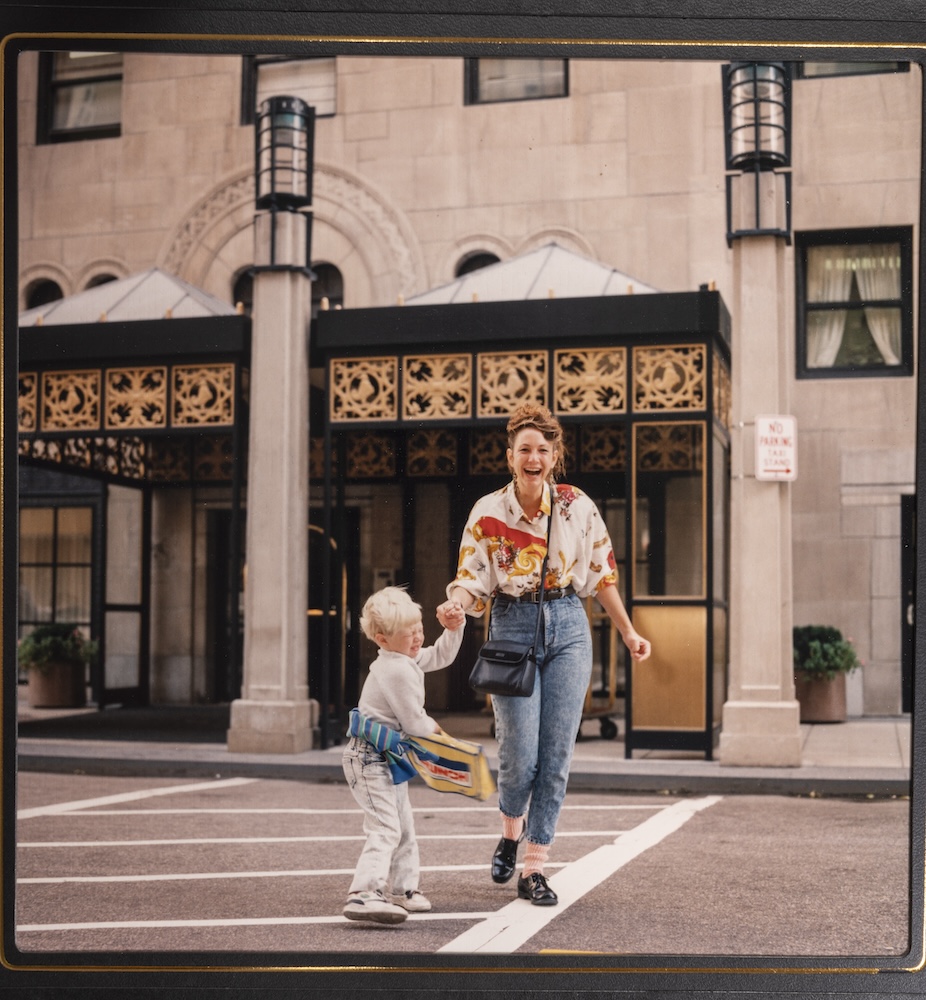
My two grandchildren (both under six years) are now old enough to experience an art museum; thus I “family” membershipped the Santa Barbara Museum Art, the Maritime Museum, the Contemporary Art Museum, the Natural History Museum, and the Santa Barbara Historical Museum. I am ready for my second set of new eyes with which to share some of our great museums. I remember with fondness the first museum show Adrian and I showed Lock (our two-year-old son), and I remember a little hand going out to touch the Braque at the Picasso-Braque exhibit at the MET in New York.
I wondered, looking back 35 years, about damage innocently caused by kids in museums, liability issues, and who pays for the restoration. Some museums have attempted to bill or charge parents (who are claimed as negligent) for restoration when their kids damage an object.
Maybe the Shanghai Museum of Glass is not the place for kids. In 2016, two parents filmed two kids pulling at a wall sculpture made of delicate glass (the kids had climbed the platform). The sculpture was titled Angel is Waiting in the shape of two glistening angel wings. One of the kids broke the bottom of one wing. The artist, Shelly Xue, turned this mishap into a noble gesture: she renamed the artwork Broken Angel, augmenting the work with surveillance camera video of the boys torturing her piece. Five years ago, in the same museum of glass, two kids were chasing each other, and collided with a display case that held 30,000 pieces of glass that comprised a 1/6 scale model of Disneyland’s Enchanted Storybook Castle by the Arribas brothers.
In another tragedy, a young boy was so intrigued by a work of art completely created out of Legos that he pulled the six-foot sculpture down at a museum in Ningbo, China, one hour after the display was opened to the public. The boy, who loved this Fox character from Disney’s Zootopia, apologized for destroying the $15,000 work to the artist, who accepted the apology.
Two Norwegian kids attempted to dig a little deeper into the lines of a 5000-year-old petroglyph on the island of Tro: the glyph is the oldest representation of “skiing” and was the theme of the design for the Olympics. Likewise, a young man who was on a trip to visit the monuments of Luxor in 2013 carved on the bottom of a 3,500-year-old hieroglyphic “Ding Jinhao visited.”
Large stone works of art thought by museum staff to be safe are threatened by a misapprehension of just how fast a four-year-old can climb. In Southend-on-Sea in England, a display of Roman artifacts containing an 880-year-old child’s coffin was mounted by a six-year-old who played dead.
A group of young men climbed an 18-million-year-old stone landmark in Oregon, one of the climbers breaking his leg in the effort. The group later achieved revenge by toppling the rock formation to the ground. The vandals were never caught
At Tomahawk Ridge in Overland Park Kansas, the museum was rented out for a wedding and a young boy – in love with a sculpture in stone by Bill Lyons called Aphrodite di Kansas City – hugged it and pulled it over. Can we blame the young man for falling in love with Aphrodite?
Ceramic jars used to store water and oil were featured at the Hecht Museum in Haifa, Israel. A four-year-old wanted to see what was inside and pulled a massive jar closer to his face; peering inside, it fell over and shattered. The jar was from the Middle Bronze Age and had sustained no damage for 3,500 years.
Repeating ledges of blue glass traveling up a white wall to the ceiling – a work by contemporary modern master Donald Judd for the Tate Modern valued at $10M – was damaged when a child used the work as a playground ladder. Her parents explained that the piece was irresistible to kids, and it was the museum’s fault for tempting their child.
In Taipei in 2015, a Baroque painting (1600s) behind a rope barrier was damaged when a 12-year-old tripped, punching a hole through the work.
The most valuable painting to be damaged by a child happened just this year – a $56M Rothko Grey, Orange on Maroon, No. 8, 1960. Rothko intended the flat “color fields” to be intense – and at Museum Boijmans Van Beuningen, a young man could not resist the color and attempted to “feel” it, scratching the paint layer.
You might also be interested in...



