
Haircut
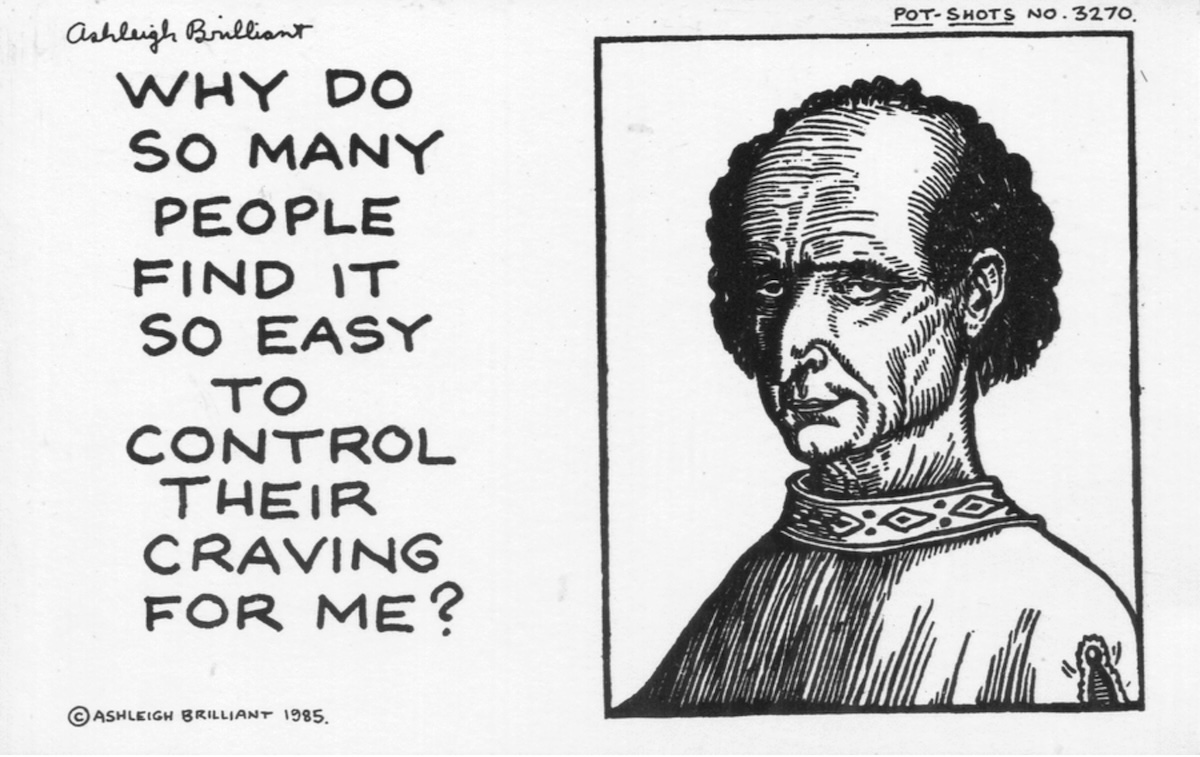
There is something special about a man’s relationship with his barber. The very essence of a barbershop is masculine. Unfortunately, it is no longer a place for singing quartets – but at least it’s not what it used to be – a place for surgery. The very word Barber is related to the word “Barbarian.” “Barb” meant beard, and Barbarians were so uncivilized that, unlike the Romans, they let themselves get shaggy. In battle, the Roman army had its primitive equivalent of medics, who specialized in treating wounds. Somehow, they also got into cutting hair. Thus there came to be a sort of linkage between barbering and surgery. Believe it or not, this explains why, even today, the trade-sign of a barbershop is a pole, bearing red and white stripes, which symbolize the blood and bandages of those early surgeons.
Of course, those pole-signs have become much more elaborate more recently, with the pole being glassed-in, and revolving electrically. But the actual practice of cutting hair has remained pretty basic. True, the chair the customer sits in is now adjustable in various ways, to go up and down, and to revolve, enabling the barber to get at the customer’s head.
I can tell you exactly the location of my first barbershop. It was in Toronto, Canada, at the corner of College and Havelock – a one-man shop, right across the street from the apartment building in which lived my mother’s parents, with whom we were staying. I was six years old, but was trusted to go across the busy street by myself, and pay the barber his fee of 25 cents.
But the first barber I had in this country enjoyed no such mechanical aids, and had to stand on a stool to get at the top of my head. Even more bizarre, she was an elderly lady, who worked out of doors.
It was during the year when, shortly after arriving in California, I was fortunate enough to secure a scholarship at what was then the Claremont Graduate School (now Claremont Graduate University). My award covered tuition costs, but nothing else. I was extremely poor and had to economize in every possible way. I was allowed to eat at no cost at a student cafeteria. But that was available for only two meals a day. For lunch I allowed myself one ten-cent can of sardines, which I had in my room.
So, when the time came that I needed a haircut, I couldn’t afford to patronize the local men’s establishment. And I was glad to learn of this little lady haircutter who only charged a quarter. I can’t remember her name, but apparently she was well-known in the community, and I was so satisfied with her work that I wrote an article in the student newspaper, headed “Try My Barber.”
The other barber who stands out in my memory was one I patronized for many years right here in Santa Barbara – until he retired. (That’s one unpleasant feature of living in one place a long time. Sooner or later, the professional people you have come to depend on – your doctor, your dentist, even your lawyer – leave the scene and have to be replaced.)
His name was Richard Long, and the barbershop was one he shared with two other men in the heart of downtown. Eventually, he and I became good friends. He had been in the Navy in World War II, and was on a ship that had to be abandoned after it was struck by a Japanese suicide bomber. Somehow, in that action, he lost the tip of one finger – but this did not prevent his becoming a barber. After the war, he was stationed in Japan, where he acquired a Japanese wife, whom I met, but who never learned to speak much English.
After he retired, he unfortunately began to show symptoms of dementia, and finished his days in a “retirement facility.” I visited him once or twice, but I’m not sure if he knew me. His son, however, works in a local market – and it was from him that I eventually learned the sad news that his Dad had
passed away.
I now have a barber named Arturo, whose name is on his shop. He is very skillful, and I always congratulate him on the excellence of his work.
As for my thoughts on hair in general, I offer you this:
“Isn’t it sad that so much hair is wanted where it isn’t, and unwanted where it is.”
You might also be interested in...



